
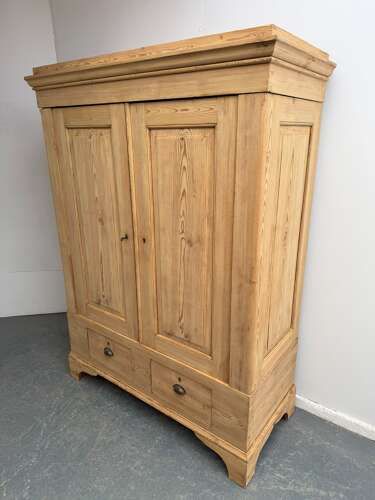
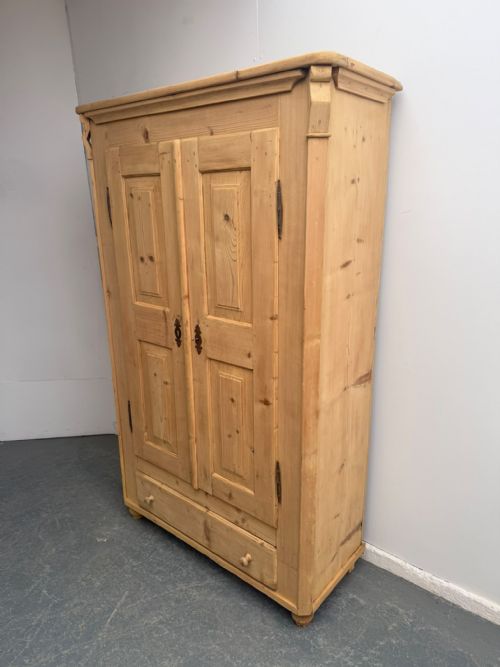
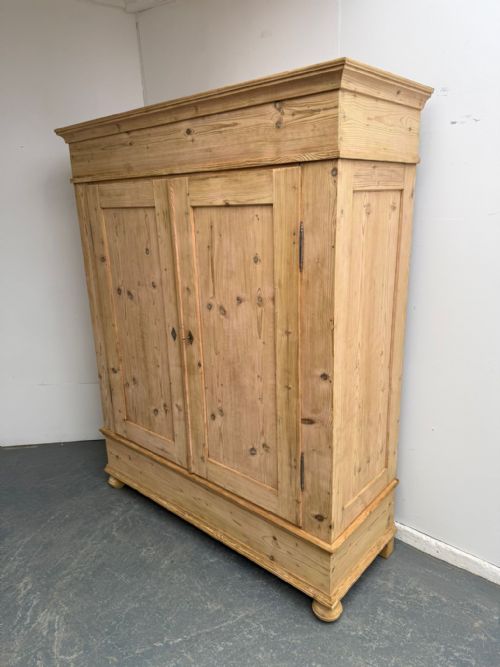

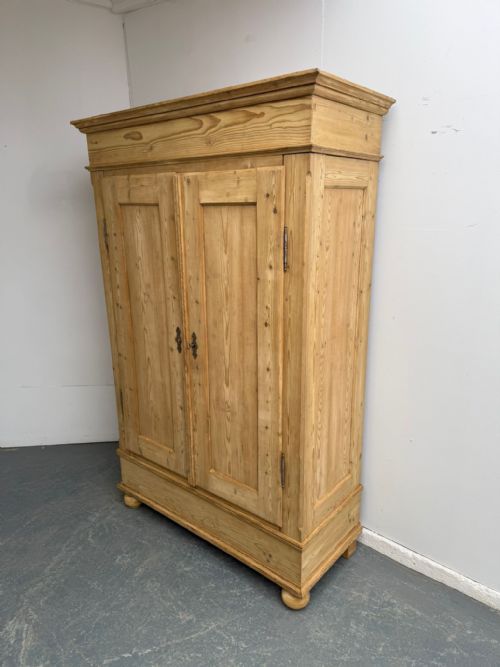


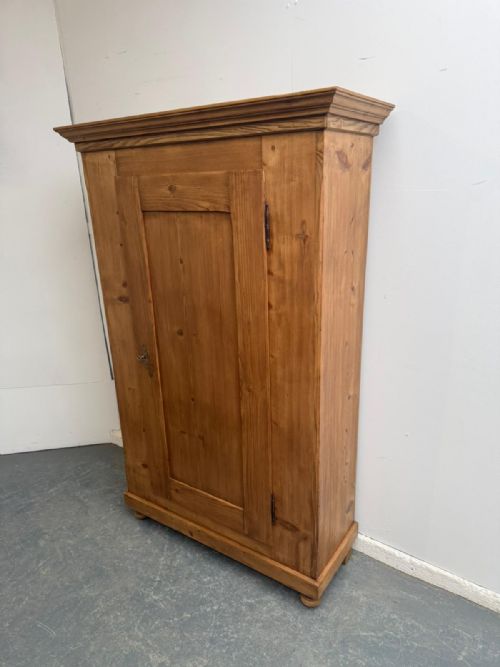
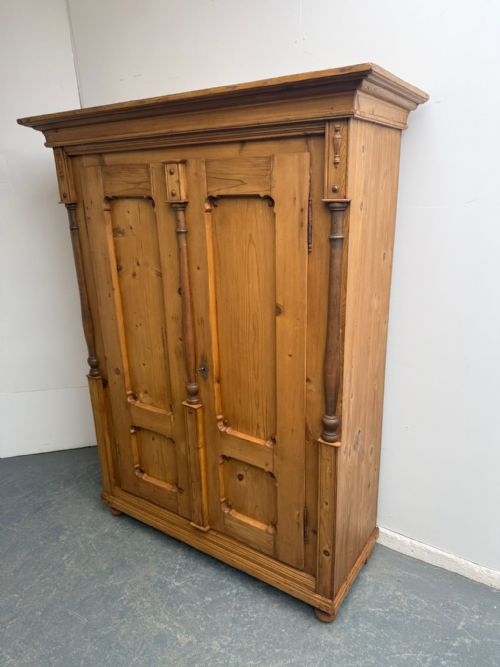


Georgian Pine Wardrobe
A georgian pine wardrobe brings practical domestic storage and honest vernacular character into a modern interior.
Georgian Pine Wardrobe
A georgian pine wardrobe encompasses substantial two-door knockdown cupboards, narrow hall pieces, and housekeeper's cupboards intended for domestic storage. These items emerge from the Georgian period through to the late nineteenth century, spanning English, Welsh, German, Hungarian, and Swedish origins.
The pieces on this page appear in various formats, including one-piece configurations and clever knockdown designs constructed for ease of transport. Buyers frequently encounter surfaces prepared for waxing or painting alongside examples finished in original or later green, grey, white, and black paint.
Beyond standard hanging spaces, the evidence includes linen presses, storage cupboards, and fitted interiors designed to accommodate textiles and household goods. Their proportions range from low cottage builds and shallow hall versions to massive structures suited to generous rooms.
Defining Quality in Vernacular Pine
Quality rests upon the integrity of the original timber and the survival of period construction methods rather than elaborate ornamentation. Pieces that retain their knockdown mechanisms, original backboards, and unaltered proportions command greater attention from discerning collectors.
Surface treatment significantly influences character, distinguishing items bearing original historic paintwork from those stripped or repeatedly painted in later eras. The crispness of fielded panelling and the balance of hardware proportions further separate standard utility pieces from finer vernacular examples.
Georgian Pine Wardrobe Retail Price Guide 2026
Typical asking prices for georgian pine wardrobe among the pieces listed under this phrase on Sellingantiques today, from the lower quarter to the upper quarter. They describe what is for sale here now, not the wider market.
Listings feature pine, fruitwood, iron, and brass across periods spanning the eighteenth century, the Georgian era, and the nineteenth century.
The Georgian Pine Wardrobe Glossary
- Knockdown
- A piece of furniture engineered to take apart into distinct panels and sections for transportation. This clever construction method allowed large wardrobes to move between rooms and properties easily.
- Housekeeper's Cupboard
- A large storage piece traditionally used for linens, dry goods, and household provisions. These utilitarian items typically feature a combination of cupboards and drawers.
- Fielded Panel
- A wooden panel with bevelled or recessed edges set within a heavier frame. This technique reduces warping while creating visual depth on cabinet doors.
- Linen Press
- A tall piece of furniture designed specifically for storing folded textiles, usually combining sliding trays in the upper section with drawers below.
- Vernacular
- Furniture built by regional craftsmen to local traditions rather than following strict metropolitan design dictates. These pieces prioritize practical utility and local material availability.
Georgian Pine Wardrobe: Frequently Asked Questions
What is a knockdown wardrobe?
A knockdown wardrobe is built to be dismantled into flat sections, such as sides, top, base, and doors, held together without permanent glue. This design enabled makers to transport bulky furniture up narrow staircases and through small doorways.
Buyers find that many large Georgian pine examples utilise this practical system, making modern placement much simpler than fixed carcases allow.
How do I choose between painted and waxed pine?
Waxed pine displays the warm grain and natural knots of the timber, developing a rich patina through handling over centuries. Painted pine offers a distinct decorative presence, whether the surface retains original historic layers or accepts a fresh colour.
Your choice depends entirely on whether you prefer the warmth of bare wood or the softening effect of painted pigment in a room.
Where were these wardrobes originally used?
These wardrobes served in domestic settings ranging from grand English country houses and farmhouses to provincial European homes in Sweden, Germany, and Hungary. Housekeeper's cupboards operated in service wings, while shallow hall wardrobes stood in entrance spaces for daily garments.
Their varied geographical origins reflect diverse regional tastes applied to the same practical requirement for storage.
How do I date a pine wardrobe?
Dating relies on observing construction clues such as hand-cut nails, timber seasoning, backboard thickness, and the style of hinges and mouldings. Georgian pieces often display specific proportions and panel arrangements distinct from later nineteenth-century vernacular builds.
Examining tool marks and interior framing helps reveal the approximate era of manufacture when documentation is absent.