



Georgian Pier Table Pair
A georgian pier table pair offers symmetrical grandeur for a formal hall, providing surface space and architectural presence against a wall.
Georgian Pier Table Pair
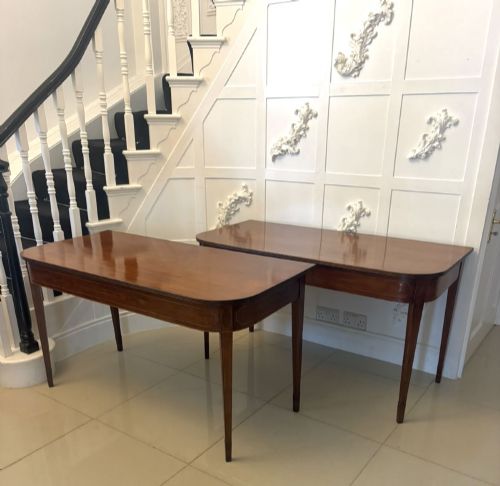
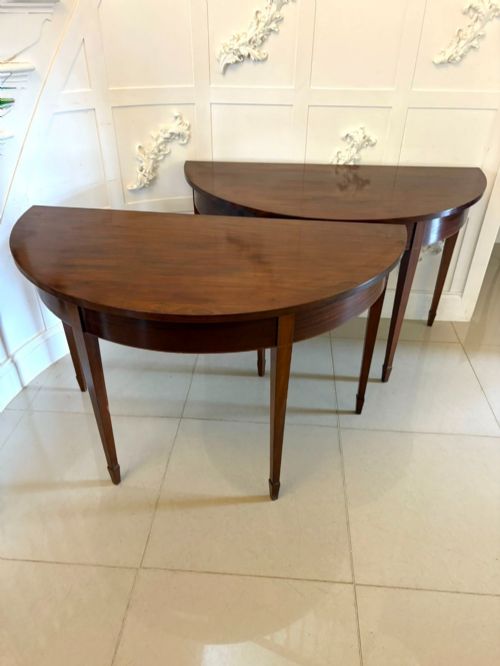
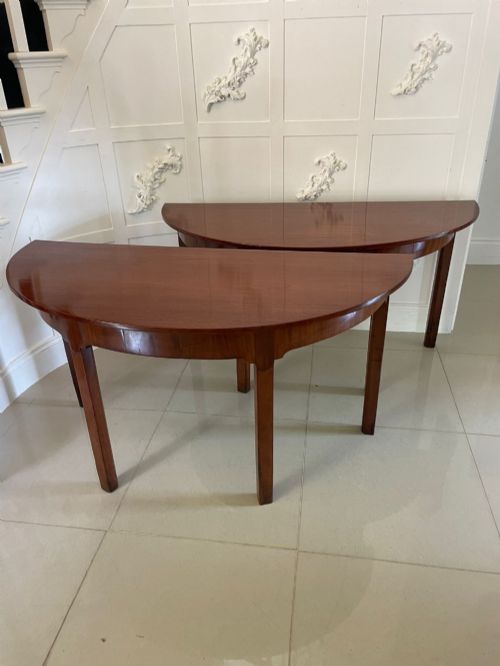
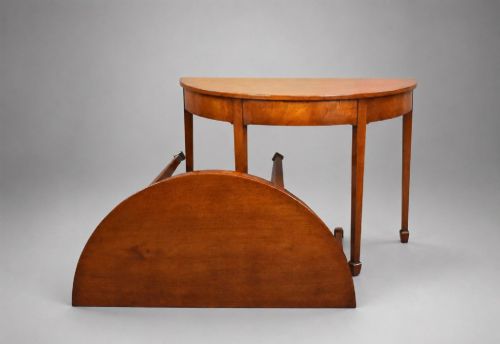
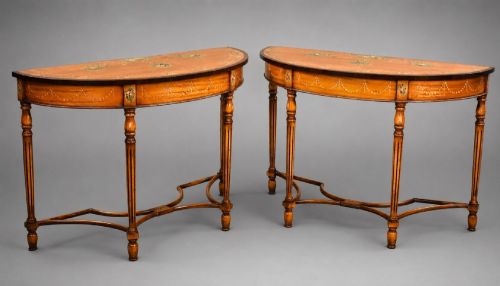
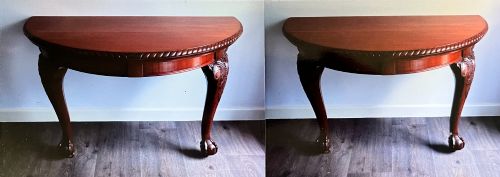
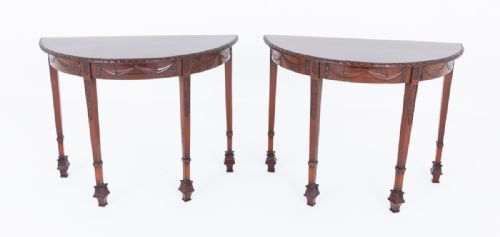
A georgian pier table pair consists of two matching console or side tables designed to stand against a wall, frequently between windows in a formal room. The items on this page span the Georgian, Regency and later revival periods, bringing symmetry to an interior scheme.
The dominant form in this selection is the demi-lune or half-round console table, alongside rectangular break-front and serpentine shapes. Mahogany is the primary timber observed, accompanied by painted satinwood and occasional giltwood examples from the eighteenth to the twentieth centuries.
How they were made
Cabinet makers utilised figured and solid timbers such as mahogany, satinwood and burr walnut, often framing the primary wood with contrasting boxwood inlay. Surface decoration involved hand-painting, gilding and detailed joinery to achieve curved demi-lune tops and serpentine facades.
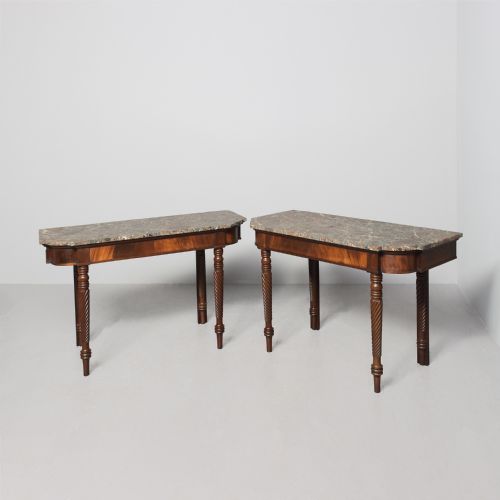
Structural elements incorporated timber frames supported by carved or tapering legs, with certain examples featuring marble tops or pierced brass gallery edges. Construction methods reflect the prevailing cabinet-making traditions of the Georgian, Regency and revival eras.
Some tables double as card and tea games surfaces, proving Georgian guests enjoyed a sneaky round of whist between courses.
What varies in quality
The grade of timber selection dictates the visual impact, with highly figured mahogany and finely painted satinwood commanding greater attention than plain woods. The crispness of carved details, stringing inlay and the integration of secondary woods reveal the competency of the workshop.
Proportion and scale distinguish standard production from exceptional pieces designed for prominent spaces. The harmony between the two tables in a pair, ensuring identical grain matching and structural execution, determines the overall standing of the items.
The Georgian Pier Table Pair Glossary
- Demi-lune
- A half-moon shape used for table tops and frames. This configuration allows the furniture to sit flush against a wall while projecting outward.
- Inlay
- A technique where contrasting materials are inserted into depressions in the wood surface. Boxwood stringing is frequently observed on these surfaces.
- Serpentine
- A gently undulating line forming a curved front edge. This contour requires precise woodworking to follow the sweeping profile.
- Console table
- A table supported against a wall by brackets or legs. These items served decorative and functional purposes in halls and reception rooms.
Georgian Pier Table Pair: Frequently Asked Questions
Where should a pair be placed?
These tables traditionally stand against a pier wall, which is the solid section of masonry between two windows. Placing them in a hallway or opposite a focal point creates balanced symmetry.
Because they arrive as a matching set, positioning them on opposite sides of a fireplace or flanking a doorway provides an intentional architectural arrangement.
How do I identify the period?
Dating relies on observing the timber choice, construction methods and stylistic motifs present in the design. George III pieces often show straight legs or crisp mahogany carving, while Regency examples lean towards classical lines and brass details.
Revival pieces from later centuries frequently emulate these earlier styles using characteristic woods like satinwood or walnut.
Can these tables hold heavy objects?
These tables are built from solid timbers and sturdy framing intended for displaying decorative items such as lamps, urns or ceramics. Marble-topped versions offer additional weight capacity for heavy display pieces.
Ensuring the wall fixings or leg placement remain stable helps maintain the structural integrity of older timber frames.