
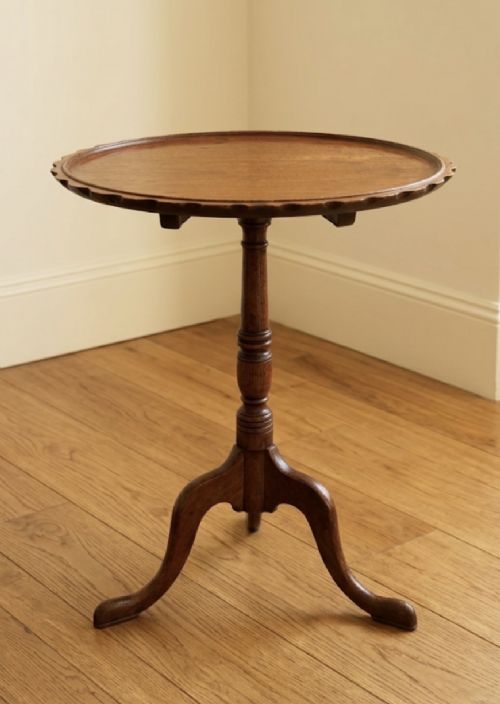


Georgian Piecrust Edge Table
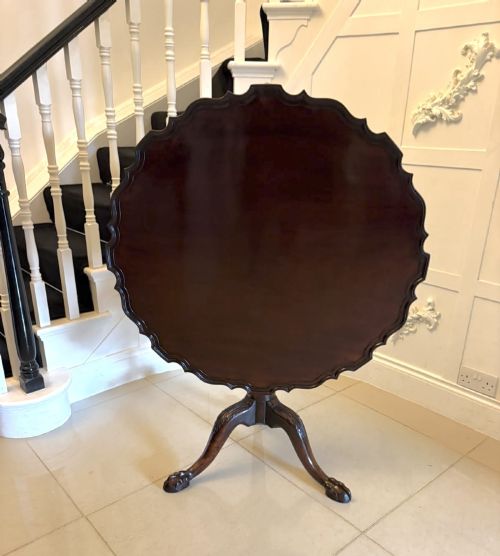
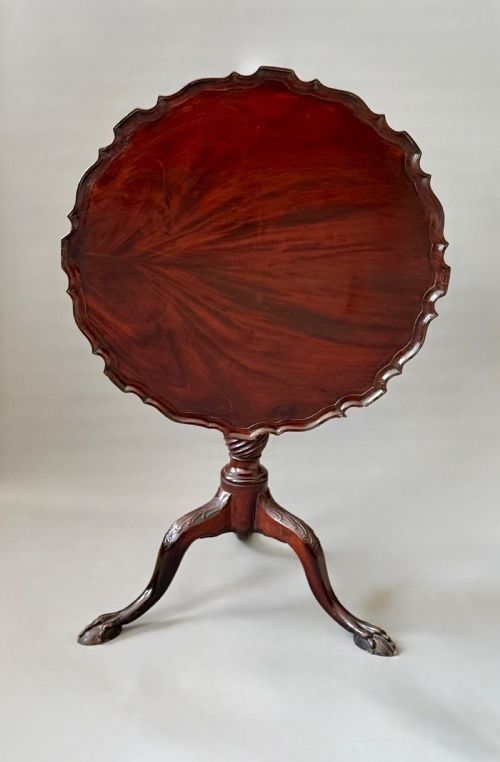
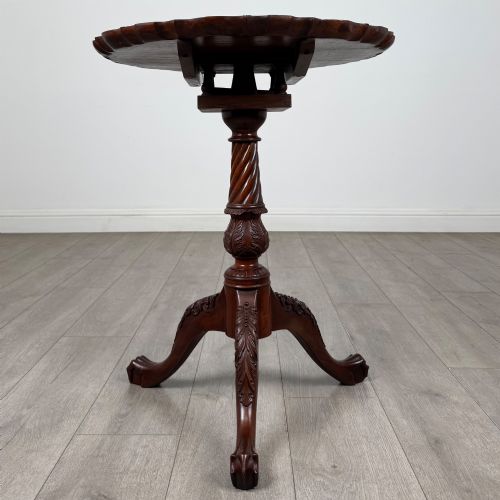
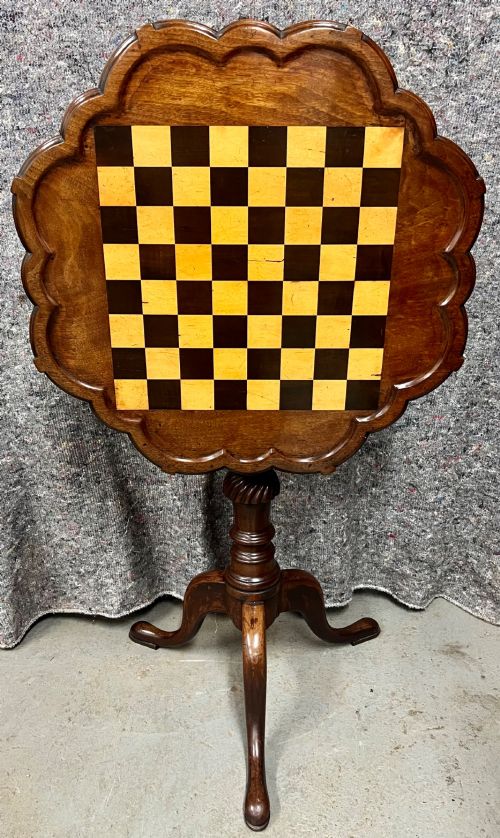
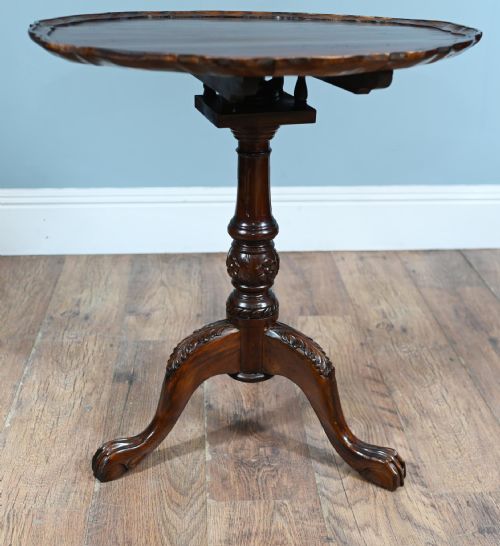
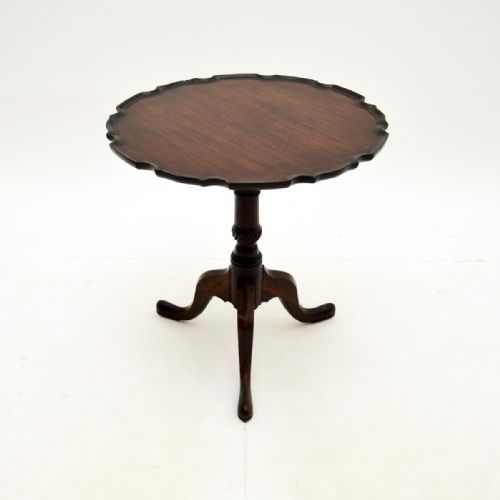
A georgian piecrust edge table is a tripod pedestal piece with a raised, scalloped rim, prized for its fluid carved silhouette.
Georgian Piecrust Edge Table
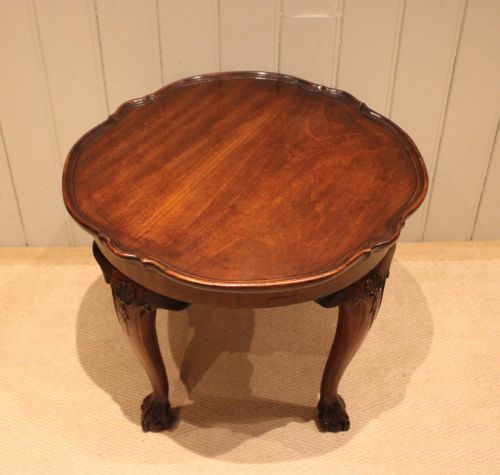
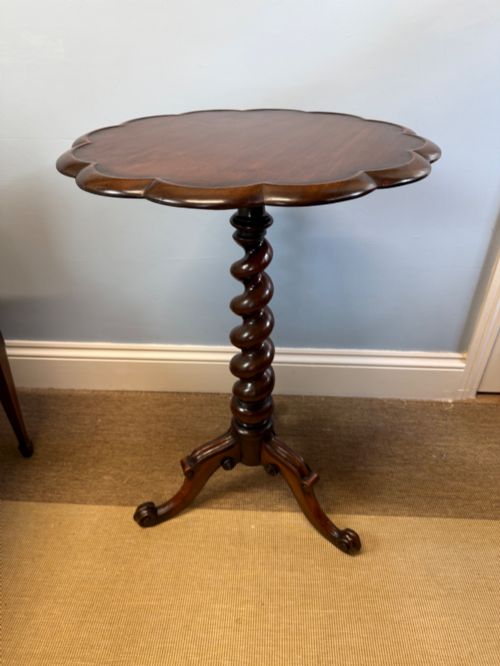
A georgian piecrust edge table is fundamentally a small circular pedestal support designed for tea, wine, or occasional use. The defining characteristic is the raised rim carved into undulating curves that resemble pastry work, set atop a slender central column and three-legged base. Most examples seen here date to the eighteenth century or belong to later revival periods spanning the nineteenth and early twentieth centuries.
The format frequently incorporates a tilt-top mechanism, allowing the circular top to pivot vertically against the column for storage when not in use. Some iterations include a birdcage mechanism beneath the surface, permitting the top to rotate as well as tilt. Forms range from compact wine tables and kettlestands to larger centre tables and occasional tables suitable for modern coffee use.
Materials and construction
Cabinet makers relied predominantly on dense timber such as mahogany, alongside figured walnut and occasional satinwood for decorative grain patterns. The raised rim was traditionally carved from a single thick solid board rather than applied separately, demanding immense skill from the woodcarver to shape the undulating lobes without splitting the grain.
Listings feature mahogany, walnut, and satinwood, spanning the eighteenth century through to the Edwardian revival period.
Distinguishing quality levels
The crispness of the carved rim dictates much of the visual success, separating pieces with sharp, deeply undercut mouldings from softer, more rounded later copies. Timber selection plays an equally vital role, with rich, figured mahogany grain commanding greater appreciation than plain, uniform boards.
Proportion and stability define the structural tier of these pieces, ensuring the slender pillar stands plumb and the tripod legs bear weight evenly without rocking. The integrity of the tilt mechanism and the subtlety of the catch further distinguish master craftsmanship from utilitarian production.
S and H Jewell London
The Georgian Piecrust Edge Table Glossary
- Piecrust edge
- A raised, scalloped tabletop border carved into alternating curves and points. This decorative moulding emulates the crimped edge of pastry crust.
- Tilt-top
- A hinged tabletop mechanism allowing the surface to fold vertically against the central column. This clever engineering saved floor space in period drawing rooms.
- Birdcage
- A wooden framework beneath the tabletop comprising small posts and two parallel boards. It enables the surface to both rotate horizontally and tilt vertically.
- Tripod table
- A small freestanding piece supported by a single central pillar resting on three spreading legs. This three-point stance ensured stability on uneven floors.
- Chippendale style
- A Georgian design idiom characterised by carved cabriole legs, ball-and-claw feet, and intricate fretwork. Thomas Chippendale popularised these flowing, ornate aesthetics.
Georgian Piecrust Edge Table: Frequently Asked Questions
What is a piecrust table used for?
These pieces originally served as tea tables, wine tables, or light stands in principal reception rooms.
Today, their compact footprint makes them ideal as bedside surfaces, lamp tables, or small coffee tables in sitting rooms.
How do you spot a tilt top table?
Look beneath the circular surface for a wooden block hinge connected to the top of the central pillar. A small brass or wooden catch usually secures the surface in a horizontal position.
When released, the entire tabletop pivots upright to stand flat against the central column for convenient storage.
What is a birdcage mechanism?
A birdcage is an ingenious assembly of four small turned posts sandwiched between two wooden plates directly under the tabletop. This allows the surface to rotate a full circle independently of the pedestal.
Combined with the tilt hinge, it gave eighteenth-century users maximum flexibility when serving drinks or positioning the table.
How do I date an old table?
Examine the timber species, the method of construction, and the wear patterns on the underside of the feet and the tilt block. Eighteenth-century examples often display hand-cut joinery, pegged joints, and dense, heavy mahogany.
Revival pieces from the Victorian or Edwardian eras frequently utilise machine-sawn components, standardised screws, and lighter secondary woods.