


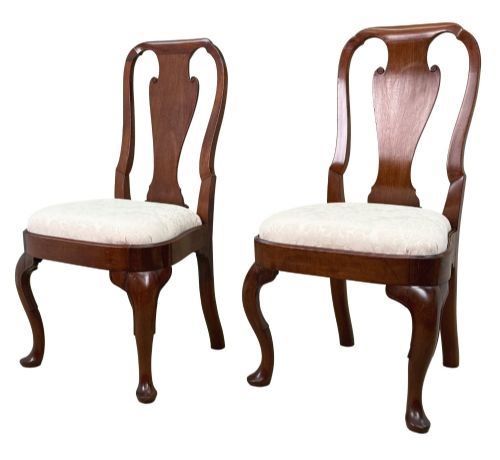
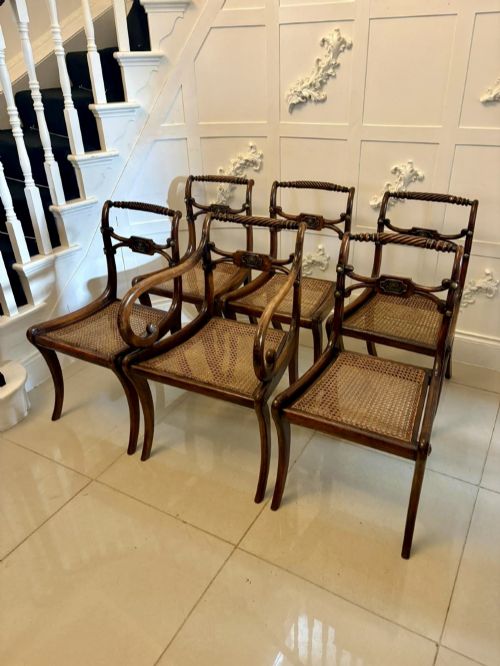
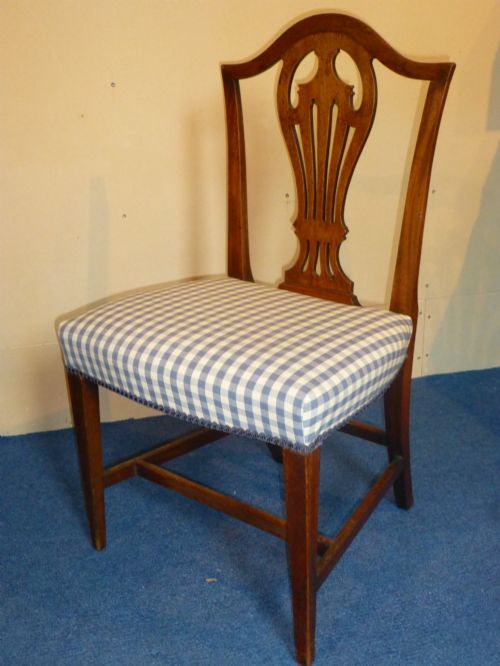
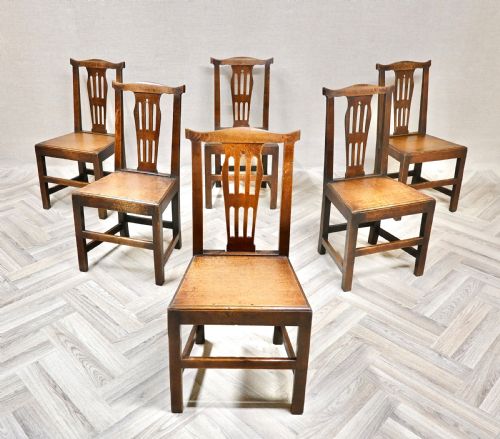
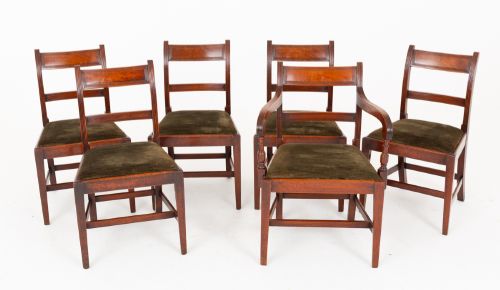
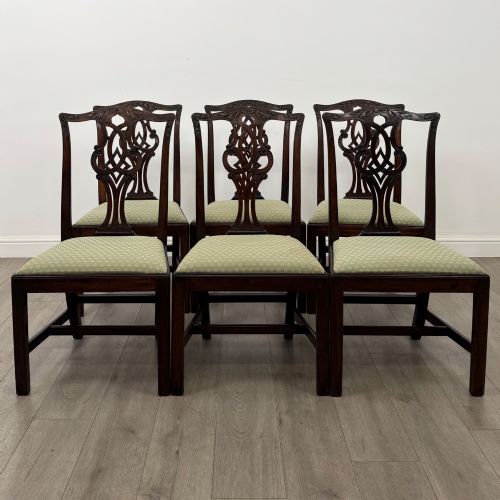
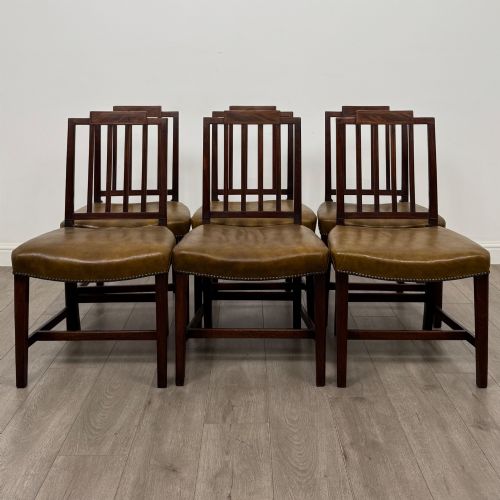
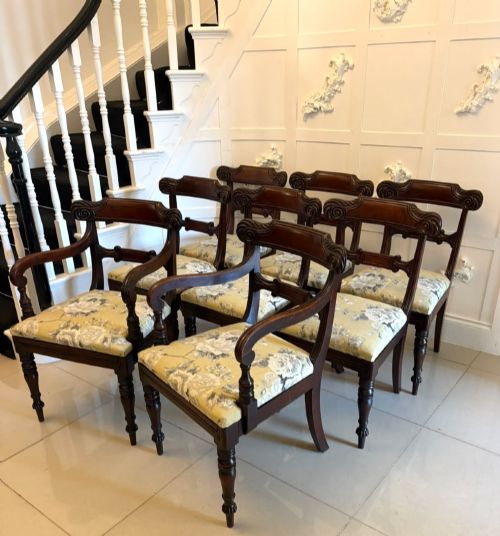
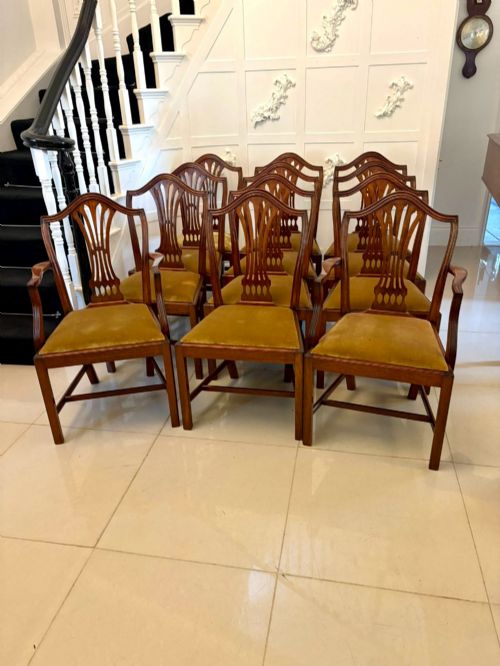
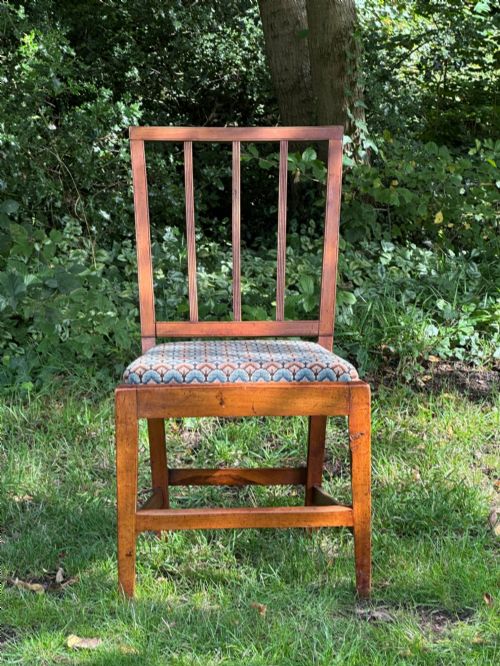
Georgian Period Side Chairs
Georgian period side chairs bring structural integrity and refined timber into modern dining spaces.
Materials and construction
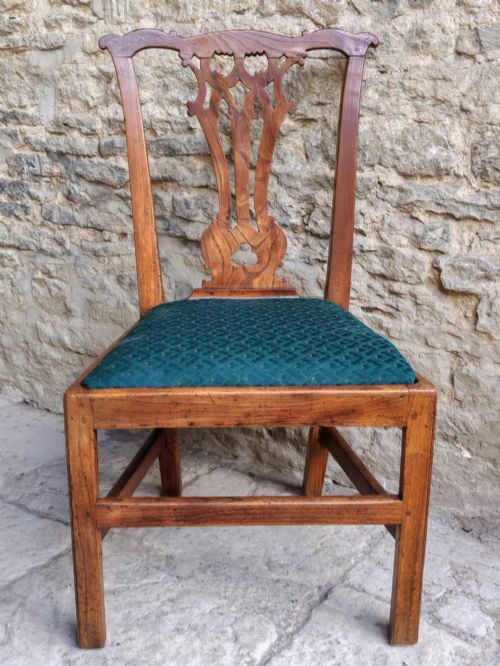
Makers relied heavily on dense hardwoods such as mahogany and walnut, utilising their grain strength to support slender splats and curved rails. Joinery depended on traditional mortise and tenon techniques secured with pegs, ensuring the framework remained rigid over centuries of service.
Seating areas incorporated both drop-in upholstery frames and woven cane panels, supported by secondary woods like oak or pine. Surface finishes typically involved hand-applied wax or polish, which highlighted the natural figures of the timber without obscuring the grain.
Factors determining quality
The refinement of the carving on splats, knees, and crest rails dictates the distinction between standard provincial pieces and high-status urban commissions. Crisp execution of details such as ball and claw feet or reeded sabre legs indicates superior craftsmanship.
Originality of components heavily influences the standing of a set, particularly where timber surfaces retain their early patina and unaltered structural framing. Greater uniformity across larger sets of dining chairs also separates exceptional examples from assembled groups.
Listings feature mahogany predominantly, alongside walnut, elm, fruitwood, and oak across the eighteenth and nineteenth centuries.
Hepplewhite·Chippendale
The Georgian Period Side Chairs Glossary
- Carver
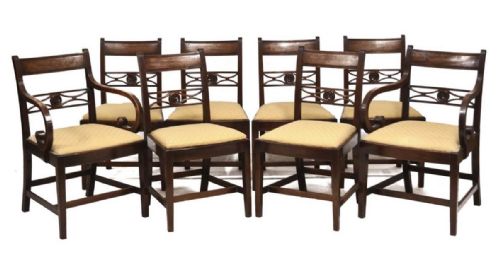
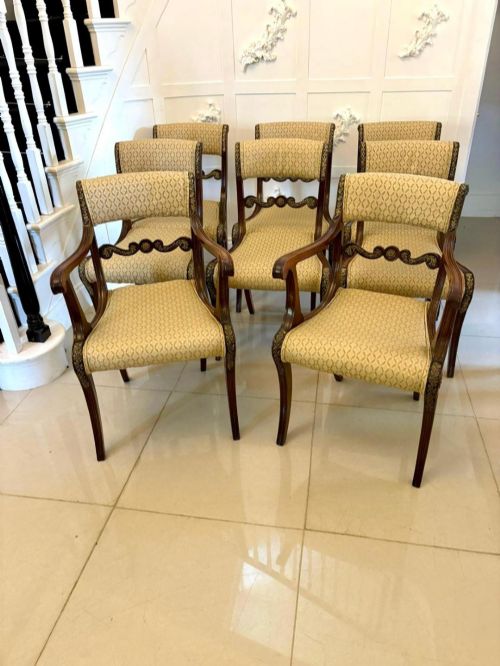
- An armchair designed to match a set of single side chairs, typically placed at the head of a dining table.
- Splat
- The vertical wooden strip down the centre of a chair back, often shaped or pierced for decoration.
- Sabre leg
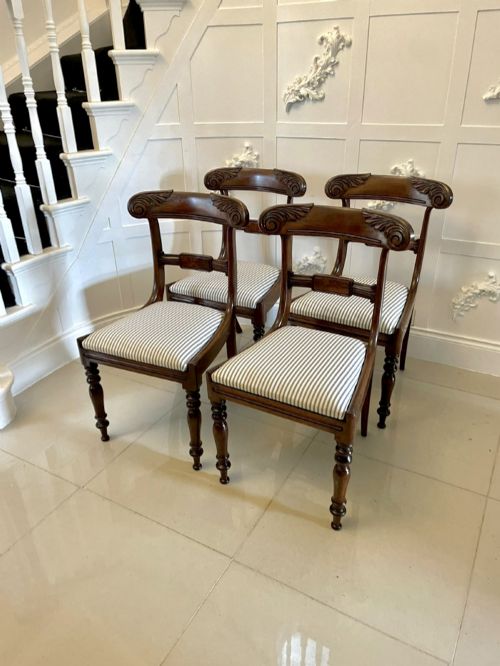
- A concave, outwardly curving furniture leg resembling a cavalry sword, common in the Regency period.
- Drop-in seat
- A removable upholstered frame that drops into a rebate in the chair rails.
- Bar back
- A horizontal wooden slat across the upper back of a chair, frequently seen in Regency designs.
Georgian Period Side Chairs: Frequently Asked Questions
Can I use these chairs for daily dining?
Most Georgian period side chairs were built for regular domestic use from durable hardwoods like mahogany and oak, making them structurally suited for modern dining.
Buyers should check individual frame stability and joint tightness before daily use, as centuries of atmospheric changes can affect historic glue and timber.
How do I spot a restored chair?
Restoration often appears as replaced corner blocks, minor timber grafts on legs, or updated surface finishes that differ from the original underlying patina.
Close inspection under natural light reveals discrepancies in wood colour and tool marks where repairs took place.
What is the difference between single and carver chairs?
Single chairs lack arms and were made in greater quantities to fit side-by-side around dining tables.
Carvers feature armrests and were traditionally reserved for the host and hostess at either end of the table.