



Georgian Paper Cutting
Georgian paper cutting brings together delicate profile work and early framing, offering a tangible connection to historical portraiture that collectors prize for its intimate scale.
Georgian Paper Cutting
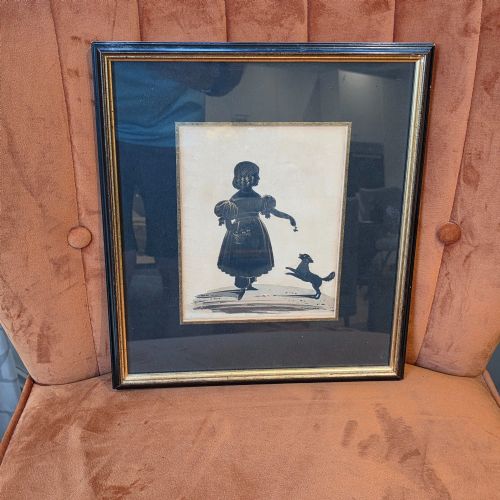
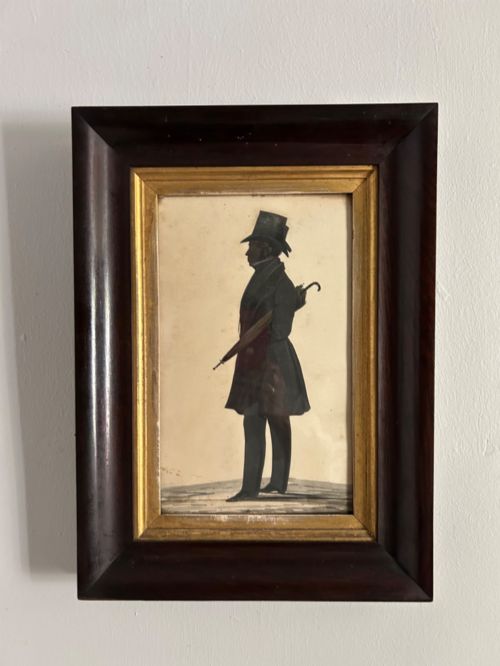
When you search for georgian paper cutting, you encounter intricate silhouette portraits, floral arrangements, and conversation pieces executed with scissors and fine blades. These works capture subjects from gentlemen and ladies in turban caps to children and domestic animals with remarkable precision.
The versions you are most likely to meet on this page span the late eighteenth and early nineteenth centuries, often categorised under Georgian, Regency, and nineteenth-century periods. They appear as framed wall art, sometimes combining cut paper with watercolour, ink, pastel, or gold leaf.
Many of these pieces originate from established profiles of the era, such as those associated with the Hubard Gallery or Augustin Edouart. They provide a direct window into historical likenesses before the advent of widespread photography.
Materials and construction methods
Makers of georgian paper cutting relied on fine black or dark paper, frequently mounted against a contrasting light background to accentuate the profile. Artists utilised sharp scissors or small knives to carve intricate details freehand, occasionally enhancing the compositions with delicate ink lines or watercolour washes.
Finished works were typically secured behind glass to protect the fragile paper from moisture and dust. These assemblies were housed in timber surrounds, including ebonised wood, maple, and gilded frames, sometimes fitted with small brass hangers.
Georgian Paper Cutting Retail Price Guide 2026
Typical asking prices for georgian paper cutting among the pieces listed under this phrase on Sellingantiques today, from the lower quarter to the upper quarter. They describe what is for sale here now, not the wider market.
Early artists captured the likenesses of family pets with the same solemn dignity afforded to Regency gentlemen in high collars.
Distinctions in craftsmanship
Secondary quality involves simpler, less expressive profiles that lack the refined detailing found in documented gallery works. The condition of the paper, the presence of original framing materials, and the survival of secondary media like gold leaf or watercolour also influence the overall standard of the piece.
William James Hubard·Augustin Edouart·Nathaniel Bermingham·Hubard Gallery London·Royal Victoria Gallery
The Georgian Paper Cutting Glossary
- Silhouette
- A portrait profile filled in with a solid colour, usually black, and cut from paper or painted directly. This form relies entirely on outline and shadow to convey a likeness.
- Conversation piece
- An artwork depicting a group of figures engaged in a social setting or daily activity. These compositions often show multiple characters and animals interacting within a domestic scene.
- Ebonised wood
- Timber treated to imitate the dark, dense appearance of ebony. It is frequently found on the frames surrounding nineteenth-century cut paper profiles.
- Regency
- A stylistic period spanning the early nineteenth century defined by classical restraint and elegance. Works from this era often feature refined portraiture and clean framing.
- Profile
- A side-view representation of a human head or figure. This perspective is the defining feature of silhouette art.
Georgian Paper Cutting: Frequently Asked Questions
What is georgian paper cutting?
It encompasses delicate silhouette portraits and floral compositions created using paper and blades during the late eighteenth and nineteenth centuries.
These works range from simple profile portraits of individuals to complex family conversation pieces framed behind glass.
How were these silhouettes displayed?
Historically, they were hung in domestic interiors as personal mementos and decorative wall art. Collectors typically mounted them in small parlours or private studies alongside other portrait miniatures.
Today, they require placement away from direct sunlight to prevent the fragile paper and watercolours from fading.
Are all pieces signed by the artist?
Many examples remain unsigned because artists often sold their work through travelling exhibitions or commercial galleries like the Hubard Gallery. Attribution usually relies on stylistic traits, framing characteristics, or old gallery stamps on the reverse.
Unsigned pieces can still be dated accurately through the sitter's costume, particularly hairstyles and clothing styles.
How do I care for framed paper silhouettes?
Conservation involves keeping the artwork away from moisture, extreme temperature fluctuations, and direct ultraviolet light. The original glass and backing papers should remain undisturbed whenever possible to protect the fragile contents.
Professional framing using acid-free materials helps ensure the longevity of the paper.