


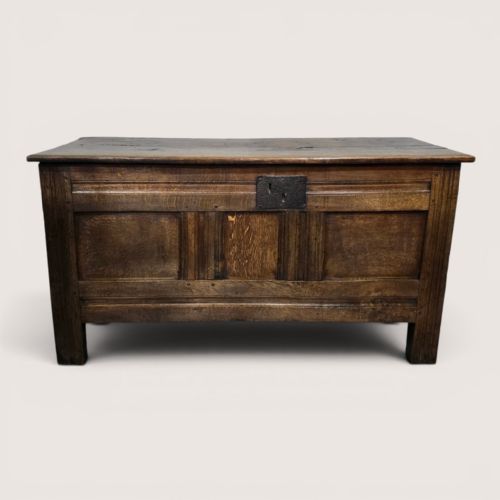
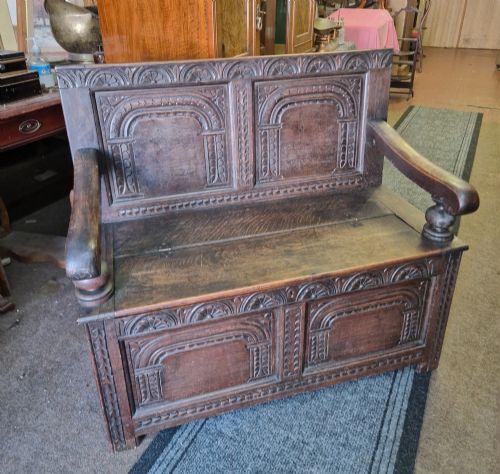
Georgian Paneled Oak Coffer
A georgian paneled oak coffer provides enduring domestic storage, bringing historic timber and traditional craftsmanship directly into a modern interior.
Georgian Paneled Oak Coffer
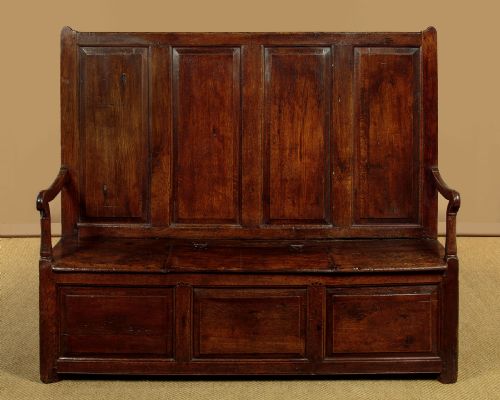
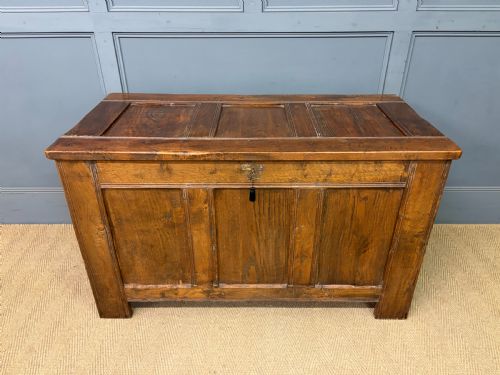
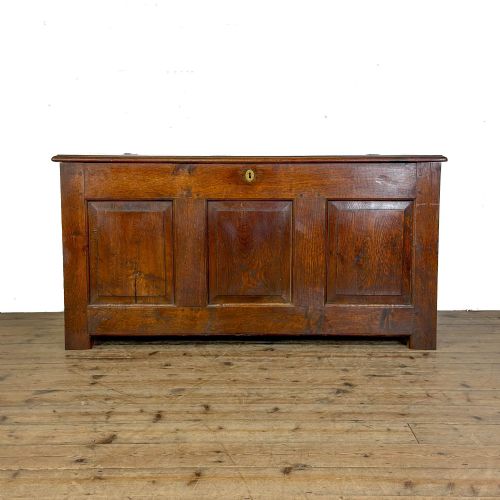
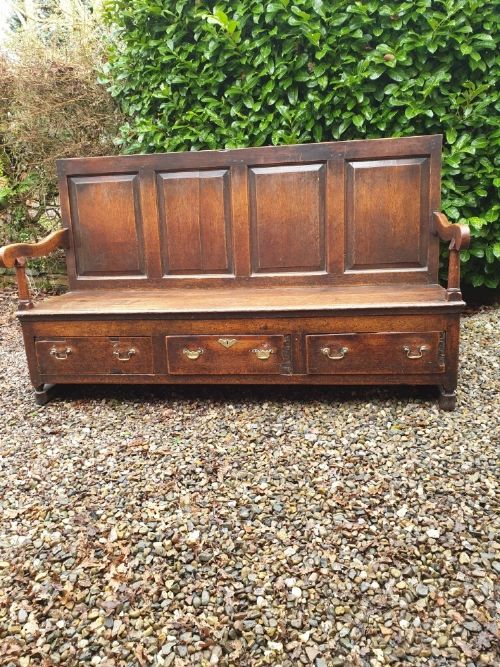
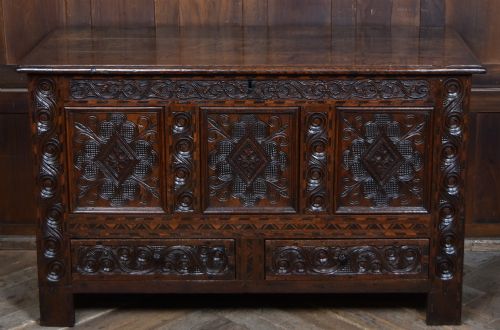
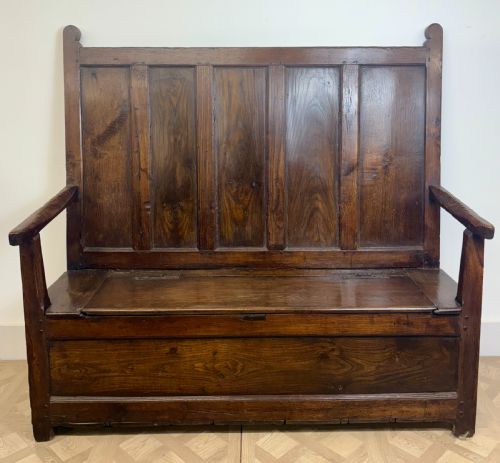
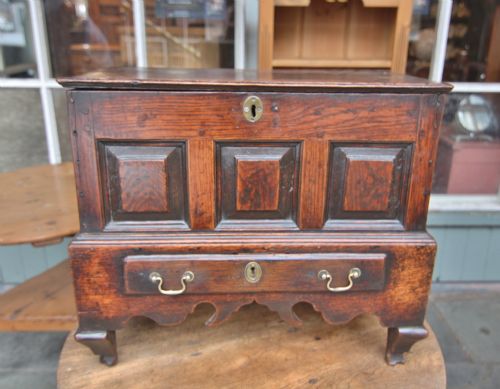
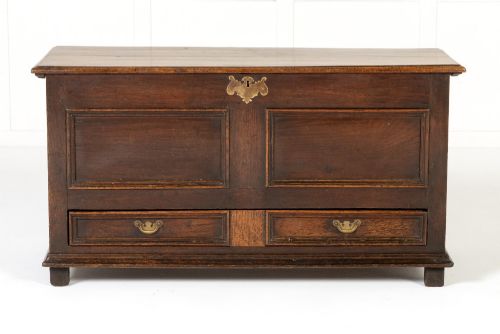
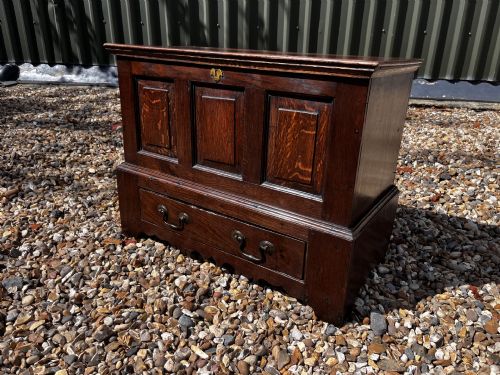
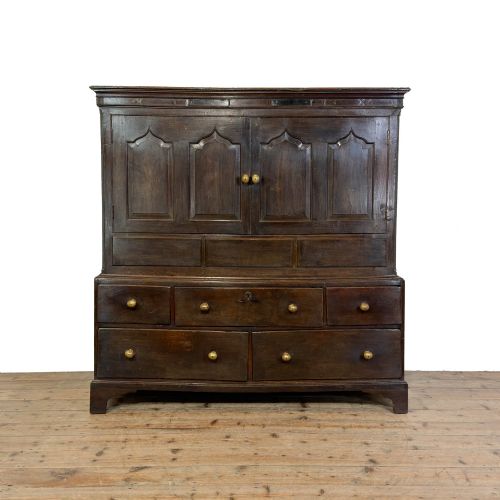
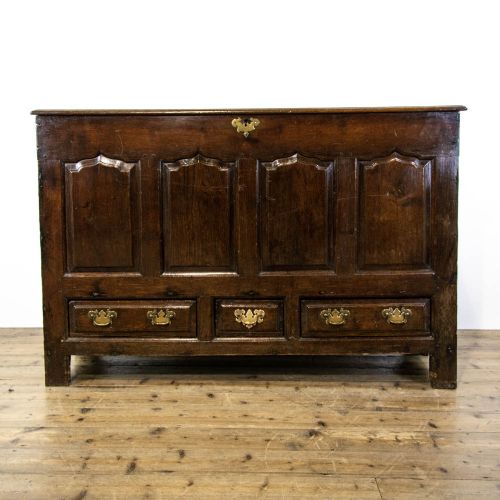
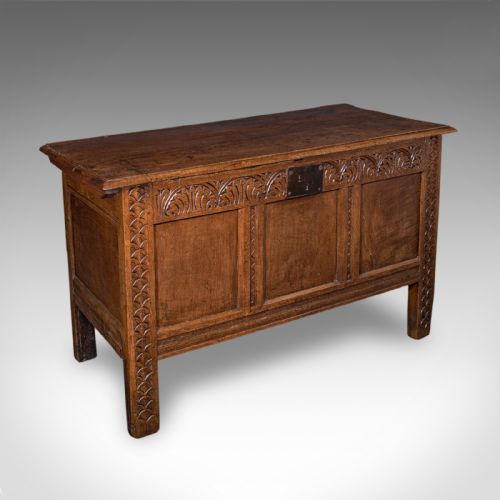
When searching for a georgian paneled oak coffer, buyers encounter robust domestic storage furniture primarily originating from the eighteenth and nineteenth centuries. These pieces encompass standard coffers, mule chests featuring lower drawers, box settles, and smaller coffer bach formats.
The material palette centres firmly on solid oak, frequently augmented by secondary timbers such as ash, burr elm, and occasional wood inlay. Construction styles span English country, Welsh vernacular, and formal Georgian aesthetics.
Most items on this page date from the eighteenth century, including specific years like seventeen-fifty and seventeen-eighty, alongside seventeenth-century survivals and nineteenth-century traditional interpretations. Regional variants from South Wales and Carmarthenshire appear alongside English country house pieces.
Materials and Construction Techniques
Joinery relies heavily on traditional frame and panel construction using solid oak planks, which allowed the timber to expand and contract naturally with seasonal humidity changes. Workshops utilised hand-split and sawn boards assembled with pegged mortise and tenon joints.
Iron and brass hardware, such as hinges, lock plates, and carrying handles, secure the heavy lids and internal compartments like candle boxes. Selected examples incorporate decorative wood inlay or contrasting burr elm panels to highlight the grain.
Carved surface decoration on panels and friezes involves chip-carving and gouge work executed by hand. Secondary woods like ash provide structural framing or internal linings within mule chests and box settles.
Many coffers hide tiny internal candle boxes, originally intended to hold tallow dips safely away from household linens.
Markers of Quality and Proportion
Superior examples distinguish themselves through the thickness and figuring of the oak boards, balanced proportions, and crispness of hand-carved detailing. Finer pieces maintain original hinges, locks, and feet rather than modern replacements.
Internal elements such as integrated candle boxes and cleanly constructed drawer linings in mule chests indicate higher workshop standards. The integrity of the frame and minimal timber replacement separate well-preserved vernacular items from heavily restored specimens.
The Georgian Paneled Oak Coffer Glossary
- Coffer
- A heavy wooden chest traditionally used for storing valuables, textiles, or documents. These pieces often feature hinged lids and sturdy paneled construction.
- Mule chest
- A storage chest equipped with one or more drawers at the base beneath the main compartment. This form bridges the gap between the traditional coffer and the modern chest of drawers.
- Box settle
- A high-backed wooden bench with a hinged seat that lifts to reveal storage space underneath. They served practical seating and storage functions in vernacular interiors.
- Vernacular
- Regional architecture and furniture built by local craftsmen using native materials to satisfy immediate domestic needs. These items reflect distinct local traditions rather than court or metropolitan fashions.
Georgian Paneled Oak Coffer: Frequently Asked Questions
What is a mule chest?
A mule chest combines a traditional top-opening coffer compartment with one or more drawers built into the base. This hybrid form gained popularity as makers sought to improve accessibility to stored linens and garments.
Examples frequently include internal candle boxes and brass hardware. They served as functional bedroom or parlour furniture across English and Welsh country homes.
How do I use a coffer today?
Coffers provide sturdy, concealed storage for blankets, bulky winter bedding, and board games in living rooms or hallways. Their flat wooden lids allow them to function as window seats, low tables, or bench seating.
Placing one at the foot of a bed or in an entryway offers practical utility while displaying historic timber grain. Ensure the interior remains dry and away from direct heat sources to protect the oak.
How are periods identified?
Periods are determined through construction methods, tool marks, timber selection, and stylistic cues unique to specific decades. Eighteenth-century pieces often display hand- split oak panels and vernacular carving styles that evolved from seventeenth-century traditions.
Examining hinge types, nail construction, and secondary woods helps narrow down the date of manufacture. Regional variations in Welsh and English workshops also provide clear chronological markers.