
Vintage Oak Trunk Box
These vintage oak trunk box pieces are robust storage chests built to last, offering enduring utility and historic character for any room.
Vintage Oak Trunk Box
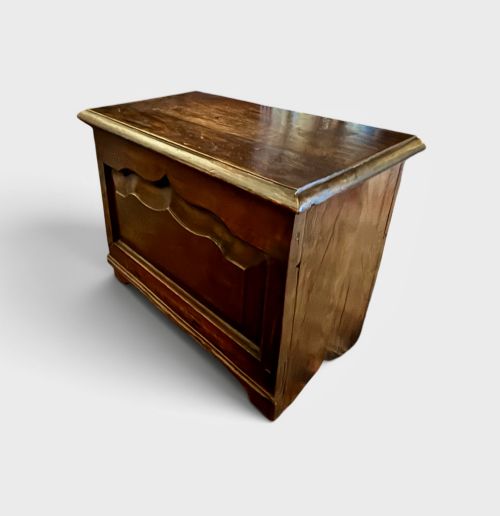
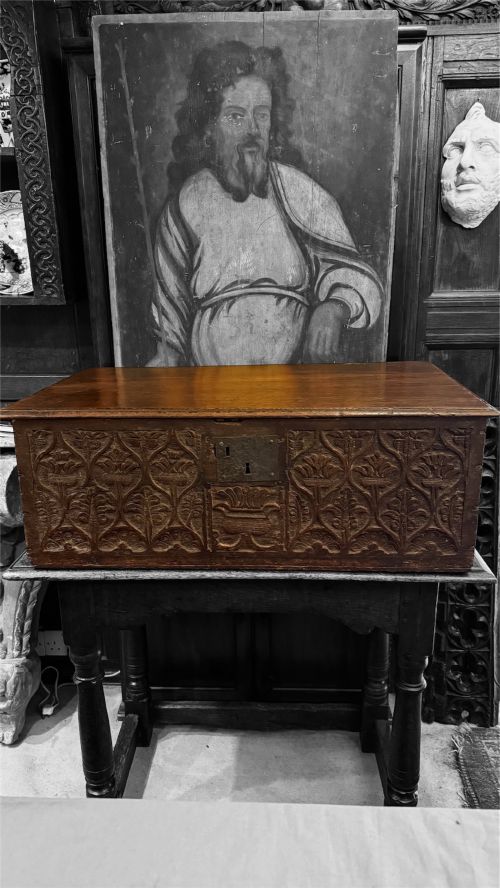
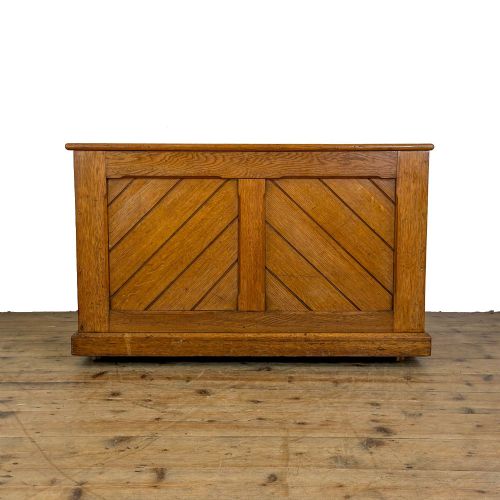
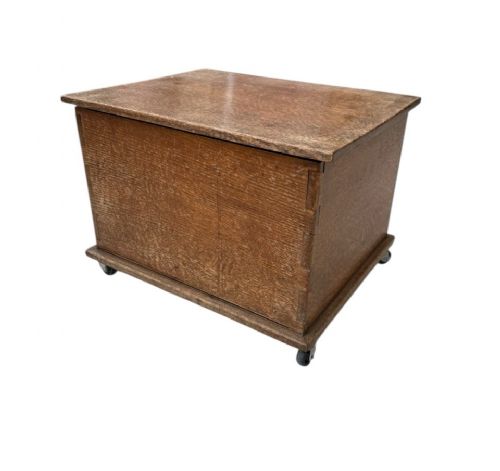
A vintage oak trunk box is a sturdy storage container built from timber, frequently encountered as a coffer, blanket chest, or mule chest originating from periods ranging from the sixteenth century through to the twentieth century. These objects served practical domestic and travel purposes, holding linen, documents, or valuables.
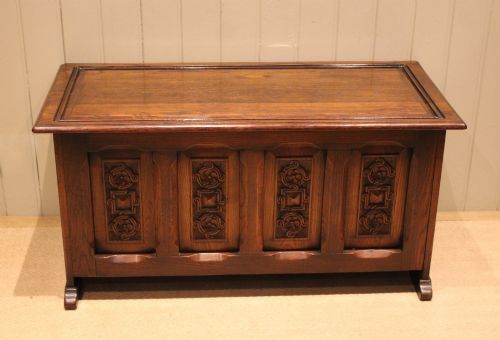
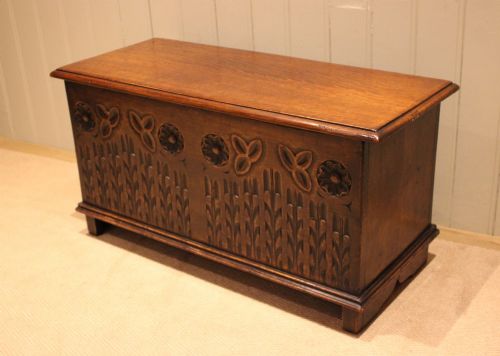
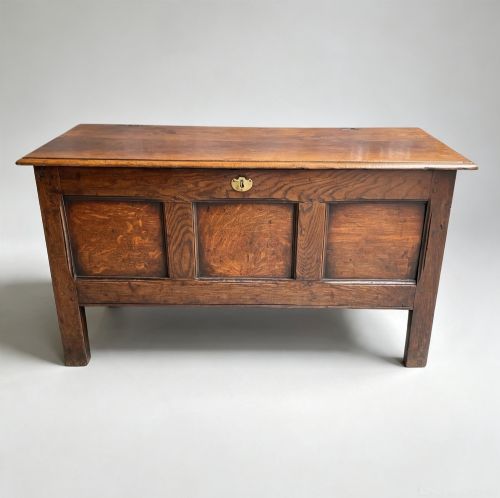
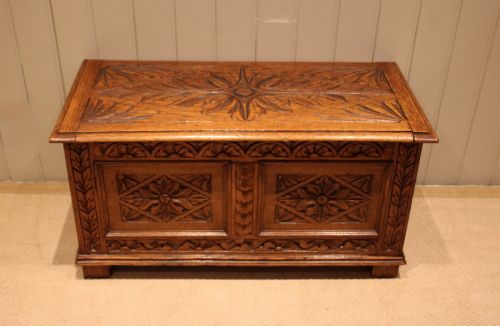
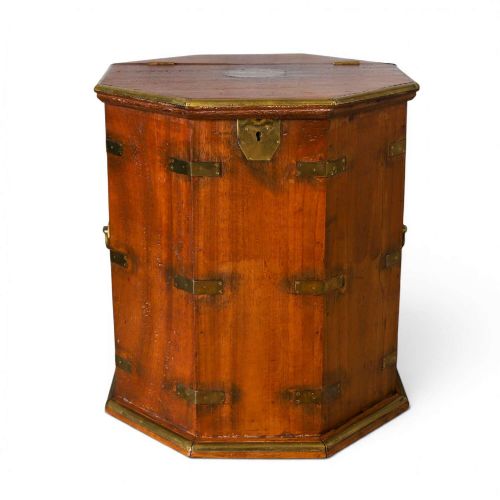
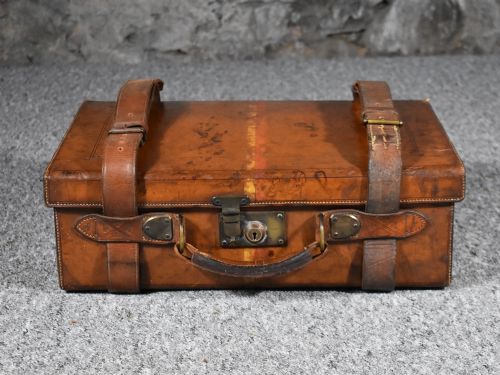
The versions most commonly met on this page include solid oak blanket chests, carved coffers from the nineteenth and twentieth centuries, and heavily constructed campaign trunks fitted with metal mounts. Regional vernacular styles and revival aesthetics heavily influence the proportions and surface decoration of these items.
Materials and construction
Makers relied primarily on solid oak, frequently augmented by structural iron hinges, corner brackets, and brass carrying handles that secured the heavy lids and body joints. Wrought iron bands frequently reinforced military and travel trunks designed to endure rough handling.
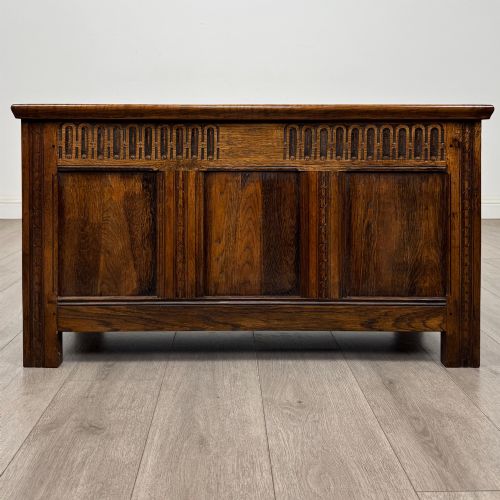
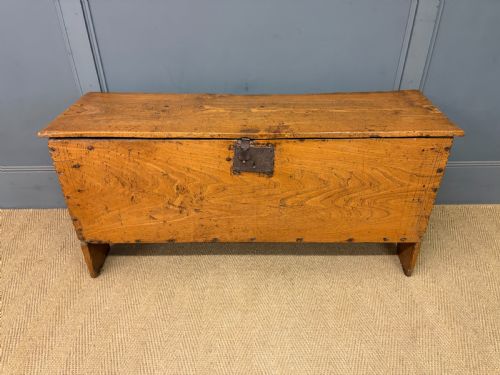
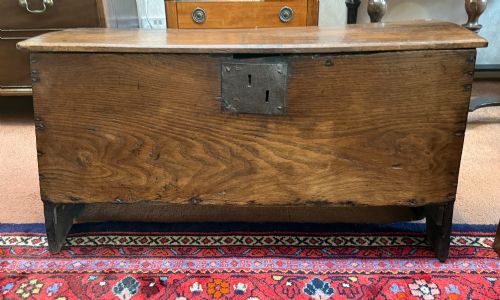
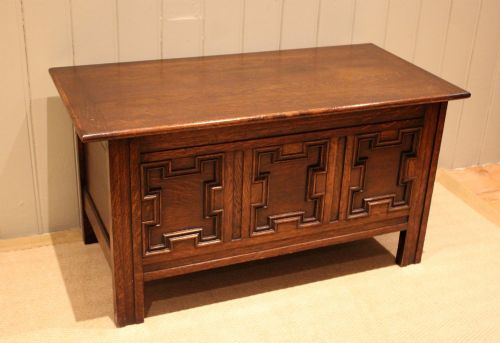
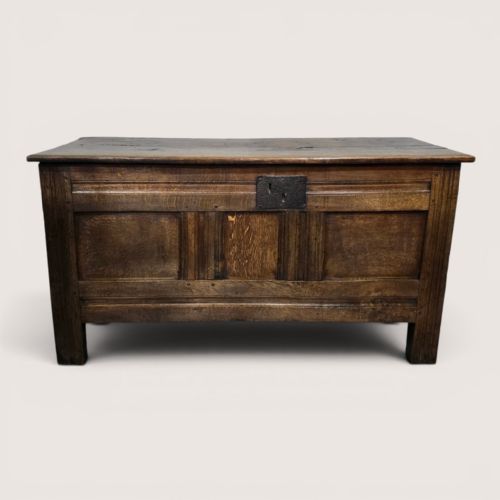
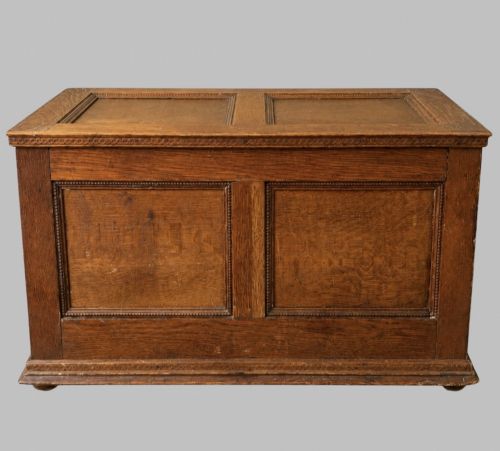
Joinery methods progressed from early boarded construction held with pegs to sophisticated panelled frames that accommodated the natural expansion and contraction of timber. Surface treatments ranged from plain waxed finishes to carved figural ornamentation, painted elements, and leather coverings.
Several trunks retain their vibrant original painted interiors, offering a hidden burst of colour when the heavy oak lid is lifted.
Evaluating craftsmanship and condition
The standard of a piece depends heavily on the integrity of its original timber, the crispness of any hand-carved decoration, and the survival of period hardware such as locks, hinges, and bracket mounts. Early boarded or panelled examples show careful hand-tooling on the joints.
Proportion and surface patination distinguish finer examples, as centuries of handling impart a deep warm lustre to the wood. Alterations to hinges, replaced floorboards, or modern repairs alter the original character of the chest.
The Vintage Oak Trunk Box Glossary
- Coffer
- A heavy wooden chest traditionally used for storing valuables or documents. These pieces often feature hinged lids and sturdy boarded or panelled construction.
- Mule chest
- A traditional storage chest featuring one or more drawers beneath the main lifting compartment. This form bridges the utility of a trunk and a small chest of drawers.
- Campaign chest
- A portable trunk or chest made in sections with recessed brass handles, designed for military officers on the move. These items often separate into modular stacking units.
- Panelled construction
- A framing method where thin wooden panels float within grooved stiles and rails to prevent cracking from humidity changes. This technique defines much of the better historic vernacular furniture.
- Boarded construction
- An early method of box-making where thick timber planks are joined directly at the edges using pegs or nails. It represents some of the oldest surviving trunk forms.
Vintage Oak Trunk Box: Frequently Asked Questions
What is the difference between a coffer and a blanket chest?
A coffer is typically a heavy, deep storage box accessed from a top lid, often associated with early domestic storage and church use. Blanket chests share a similar top-opening format but are generally lighter domestic furniture built for textiles.
Many listings use these terms interchangeably depending on the scale and decorative finish of the specific piece.
How were campaign trunks used?
Campaign trunks and military chests travelled with officers during active service across the British Empire and domestic deployments. They were built in modular sections with flush handles to withstand difficult transport conditions.
These utilitarian boxes double as practical living room furniture with accessible interior compartments.
How do I date an oak trunk?
Dating relies on observing construction joints, such as early pegged tenons versus later machine-cut screws, alongside the style of any carved motifs. Tool marks left by adzes or hand saws also indicate earlier fabrication methods.
Hardware components like iron strap hinges provide further chronological clues.
Are these trunks suitable for daily use?
These timber trunks offer deep, secure storage space that suits contemporary living rooms, bedrooms, or hallways. Their robust construction handles heavy items easily.
Placing them away from direct heat sources helps preserve the historic oak and prevents timber splitting.