

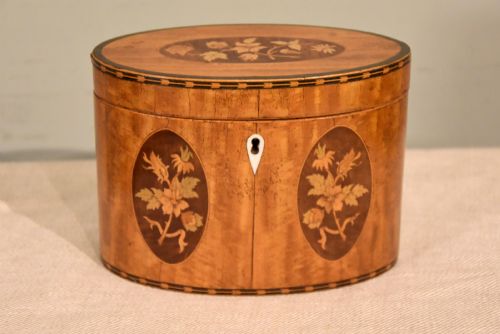


Georgian Oval Caddy
A Georgian oval caddy is a refined wooden vessel for storing leaf tea, prized for its curved profile and rich timber grain.
Georgian Oval Caddy
When you search for a georgian oval caddy, you look for small, curved containers designed to hold tea leaves safely under lock and key. These pieces date principally from the eighteenth century into the nineteenth, often taking the form of tea caddies alongside larger cellarettes and wine coolers.
The satinwood and mahogany versions dominate the selection here, usually displaying inlaid stringing in boxwood or ebony. Miniature examples appear alongside standard tea caddies and larger wine coolers.
Most items reflect the prevailing styles of the Georgian and Regency periods, stretching from the seventeen nineties into later revival eras such as the Sheraton Revival. Buyers encounter both plain timber grains and detailed marquetry work across these curved forms.
How they were made
Cabinetmakers constructed these vessels using dense hardwoods like mahogany and satinwood, frequently applying contrasting veneers of harewood, boxwood, and ebony. Metal fittings in brass appear on larger cellarettes, while glass and silver form the medium for select other containers.
Makers shaped the distinctive curved body through precision carpentry and bentwood techniques to achieve the characteristic oval outline. Inlaid banding and decorative stringing completed the exterior before polishing.
Georgian Oval Caddy Retail Price Guide 2026
Typical asking prices for georgian oval caddy among the pieces listed under this phrase on Sellingantiques today, from the lower quarter to the upper quarter. They describe what is for sale here now, not the wider market.
What varies in quality
The grade of timber figure and the crispness of the inlaid stringing dictate the visual appeal of each piece. Finely figured mahogany or satinwood with balanced grain patterns stands apart from plainer surfaces.
The precision of the joinery around the curved perimeter and the survival of original brass or silver hardware distinguish superior examples. Surface finish and the preservation of a deep patina also separate average boxes from exceptional works.
William Rudkins London
The Georgian Oval Caddy Glossary
- Satinwood
- A durable, yellowish timber prized for its lustrous sheen and smooth texture. Cabinetmakers utilised it extensively for high-status veneer work during the Georgian period.
- Cellarette
- A large freestanding or tabletop container originally built to hold bottles of wine. These pieces often share the oval form and timber construction of smaller tea vessels.
- Stringing
- Thin lines of contrasting wood inlay used to outline panels and geometric shapes. This decorative technique defines much of the surface detail on period boxes.
- Harewood
- Sycamore wood stained grey via a chemical process using iron solutions. It provides a cool, greenish-grey tone common in neoclassical marquetry.
Georgian Oval Caddy: Frequently Asked Questions
What was a georgian oval caddy used for?
These vessels held expensive black and green tea leaves when tea was a luxury commodity kept under lock and key.
Servants or masters unlocked the box to measure out leaves for each pot, protecting the contents from damp and theft.
How do I care for a satinwood caddy?
Keep wooden caddies away from direct sunlight and sudden changes in central heating to prevent timber shrinkage and veneer lifting.
Dust gently with a dry, soft cloth and avoid commercial silicone polishes that build up residue over time.
How can I tell a georgian caddy from a later copy?
Examine the interior construction, secondary timbers, and hand-cut dovetails beneath the lining or inside the compartments.
Period pieces display tool marks and construction methods consistent with eighteenth or nineteenth-century workshop practices rather than modern machinery.
Did all caddies come with a lock?
Most genuine tea caddies featured working brass or steel locks to secure the valuable leaves inside.
Keys often went missing over the centuries, so many surviving examples now possess functioning period-style replacements or empty escutcheons.