

Georgian Octagonal Wine Table
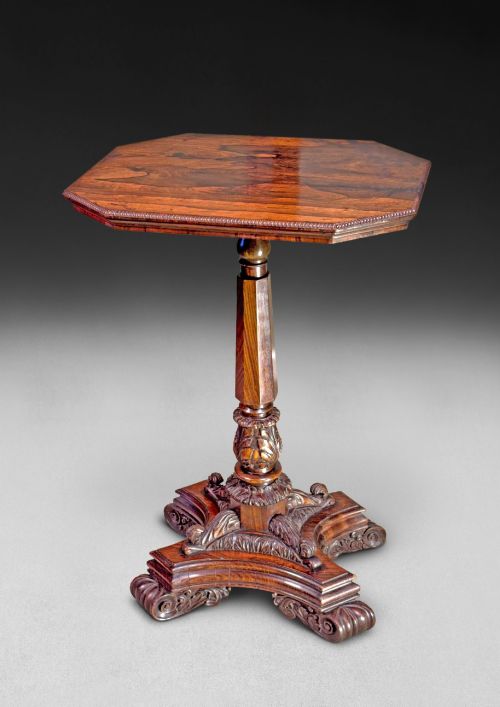
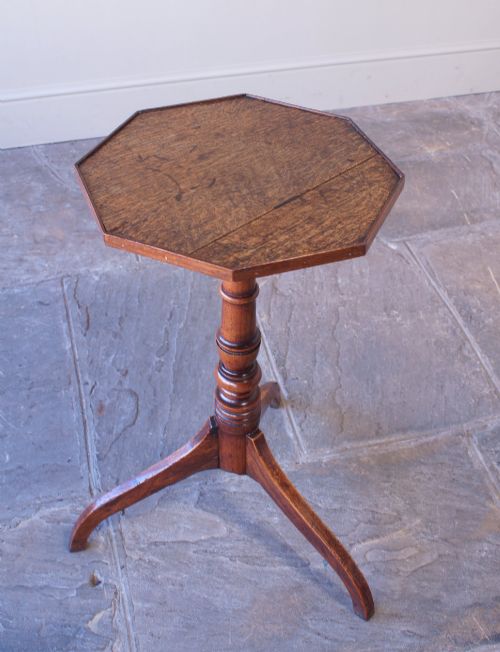
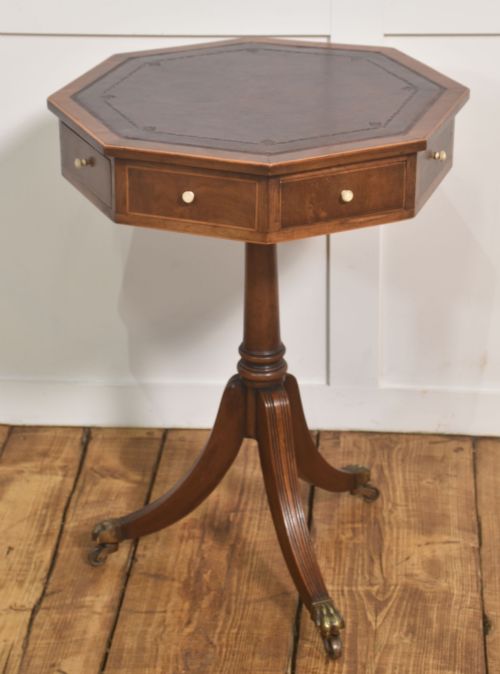
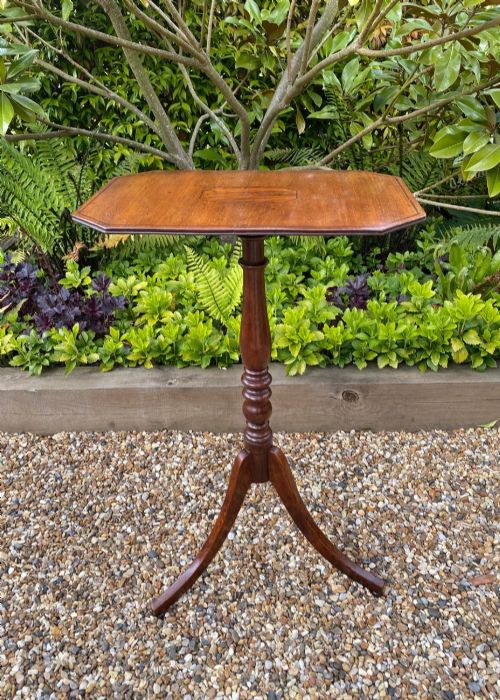
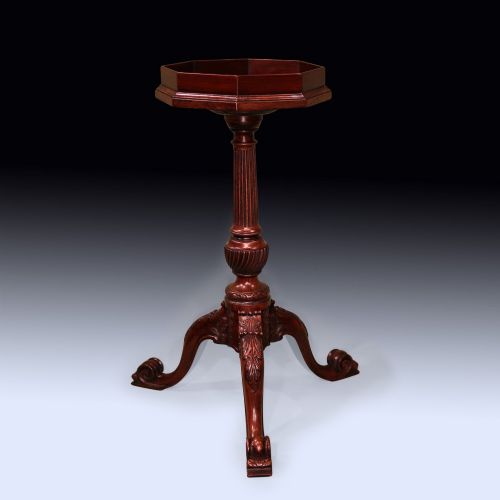
These georgian octagonal wine table pieces are compact timber furnishings designed for holding bottles, glasses or lamps beside a chair.
Georgian Octagonal Wine Table
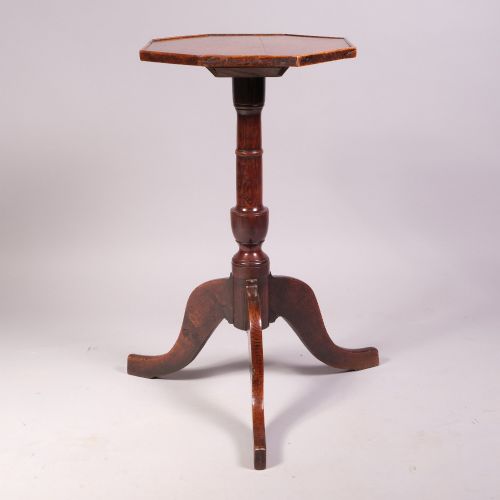
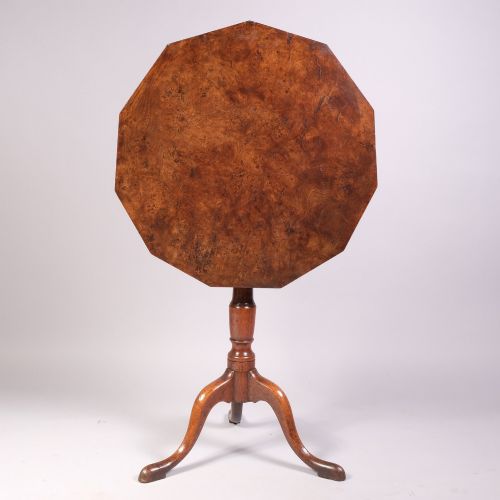
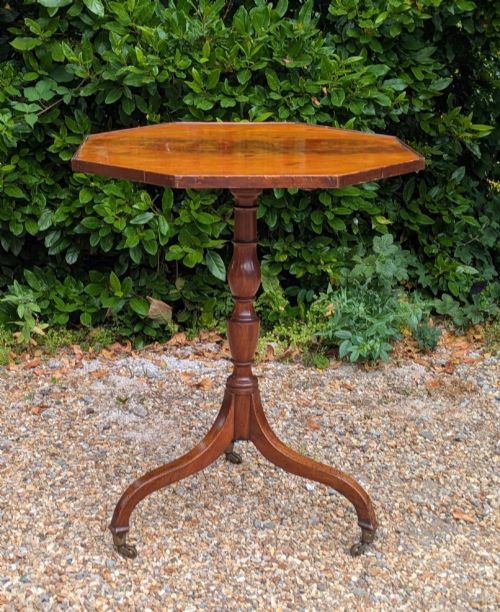
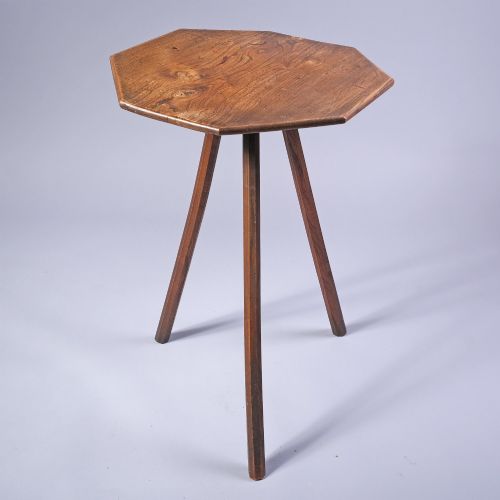
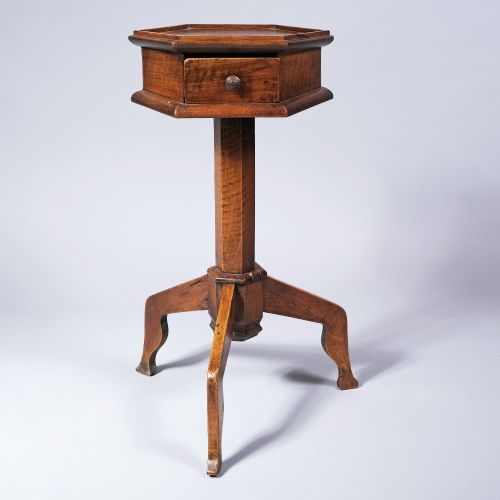
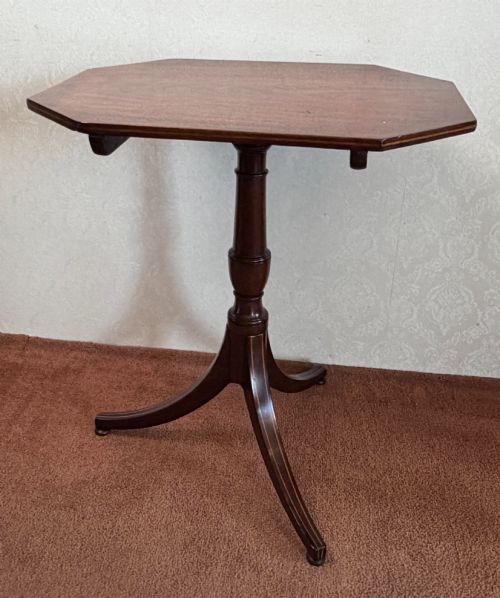
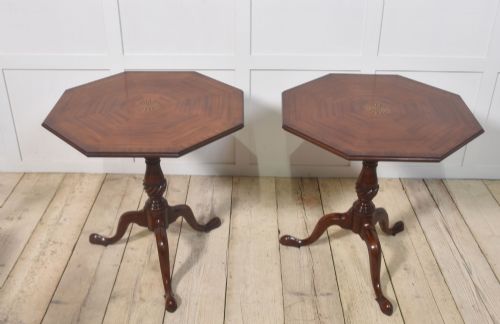
When you search for a georgian octagonal wine table, you find small occasional furniture built during the eighteenth and nineteenth centuries, often standing on a single central column with three legs. The typical form on this page pairs an eight-sided timber top with a tilt action, allowing the surface to fold flat when not in use.
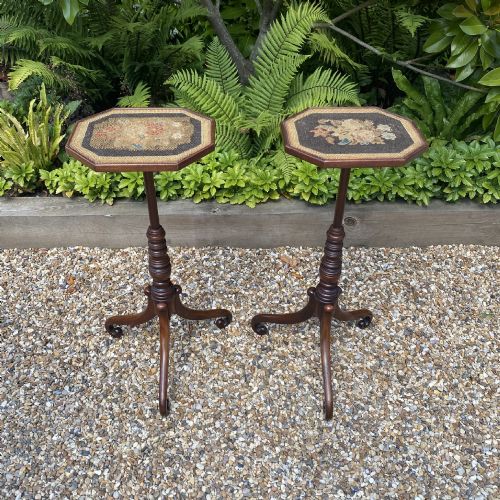
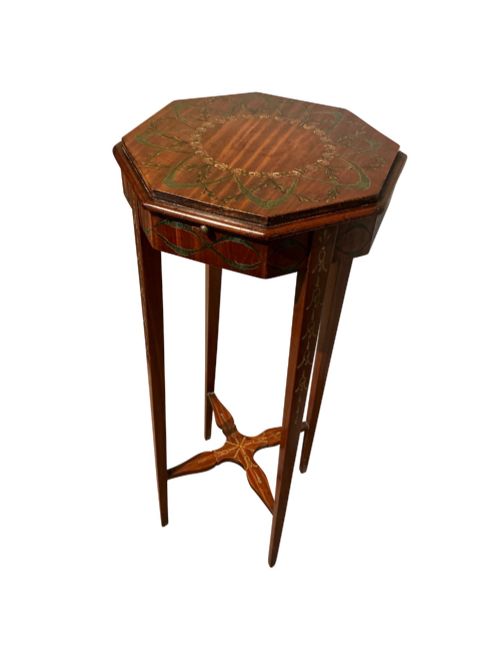
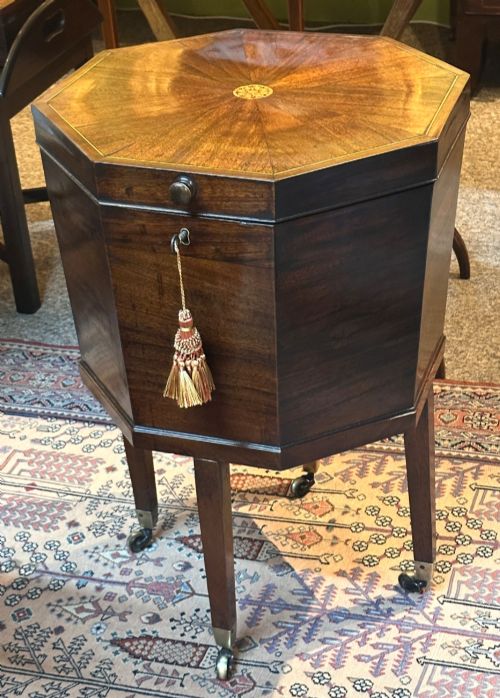
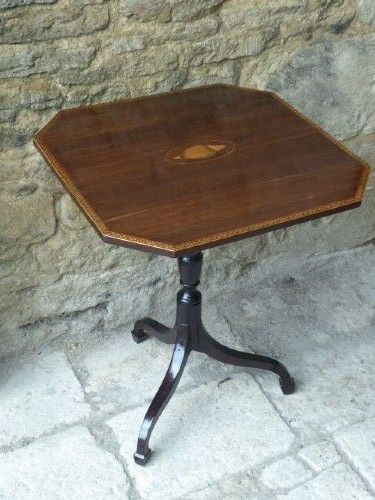
Makers of the period produced these stands in mahogany, walnut and satinwood, frequently employing octagonal tops to catch the light in a formal parlour or dining room. Many examples incorporate boxwood stringing, inlay or brass fittings, serving variously as kettle stands, urn stands or lamp tables.
Materials and construction
Cabinetmakers constructed these pieces primarily from solid and veneered mahogany, alongside supplemental timbers such as oak, ash, fruitwood and satinwood. Tops were frequently turned or sawn into eight-sided geometric shapes and mounted onto snap-top or tilt mechanisms for convenience.
The central pillars typically terminate in tripod legs, shaped with pad feet, spade feet or carved curves to ensure stability on uneven floors. Decorative detailing relied on boxwood inlay, contrasting crossbanding and fine ink work rather than heavy structural carving.
Georgian Octagonal Wine Table Retail Price Guide 2026
Typical asking prices for georgian octagonal wine table among the pieces listed under this phrase on Sellingantiques today, from the lower quarter to the upper quarter. They describe what is for sale here now, not the wider market.
The listings on this page span the eighteenth and nineteenth centuries, featuring timbers such as mahogany, satinwood, oak, ash and fruitwood.
Assessing craftsmanship and proportion
Quality rests heavily on the crispness of the octagonal edges and the figure of the timber, particularly when flame mahogany or satinwood veneer is utilised. A superior piece maintains balance between the width of the eight-sided top and the slender grace of the central pedestal.
The integrity of the tilt mechanism and the joinery where the legs meet the pillar dictate the physical durability of the table. Subtle decorative additions, such as precise boxwood stringing or an inlaid compass rose, elevate standard utilitarian stands into finer parlour pieces.
The Georgian Octagonal Wine Table Glossary
- Snap top
- A spring or catch mechanism allowing the table surface to tilt vertically against the pillar when stored. This clever design saved valuable floor space in smaller rooms.
- Tripod base
- A support structure consisting of three curved legs radiating from a central turned column. It provided steady footing on uneven historic floorboards.
- Stringing
- Narrow inlaid lines of a contrasting timber, such as boxwood, set flush into the surface to outline geometric shapes. It created linear borders on table tops.
- Crossbanding
- A border veneer laid around the edge of a table top with the grain running perpendicular to the centre panel. This framing technique highlighted the timber's grain.
- Tilt top
- A pivoting joint beneath the table surface enabling the top to rotate or fold flat. This allowed the furniture to be tucked away against a wall.
Georgian Octagonal Wine Table: Frequently Asked Questions
What is a georgian octagonal wine table used for?
These compact stands served primarily to hold decanters, wine glasses or small lamps beside seating areas in formal rooms.
Their portable size also suited them for use as kettle stands, urn tables or general occasional surfaces throughout the home.
How do you operate a tilt top table?
A wooden catch or brass snap mechanism beneath the surface releases the table top so it can pivot vertically on the central pillar.
This allowed historical owners to store the furniture flat against a wall when the room was cleared for other activities.
What woods were used for these tables?
Makers relied predominantly on mahogany, choosing figured or flame varieties for the top surfaces to create visual depth and rich colour.
Secondary timbers like oak, ash, fruitwood and satinwood appear in the bases, stringing, inlay work and structural framing.
How can you tell a Regency piece from an earlier Georgian one?
Eighteenth-century examples often display restrained proportions with plain or subtle tripod bases influenced by Chippendale designs.
By the Regency period and the early nineteenth century, details shifted towards brass stringing, painted satinwood, specimen marble tops and bolder pedestal turnings.