


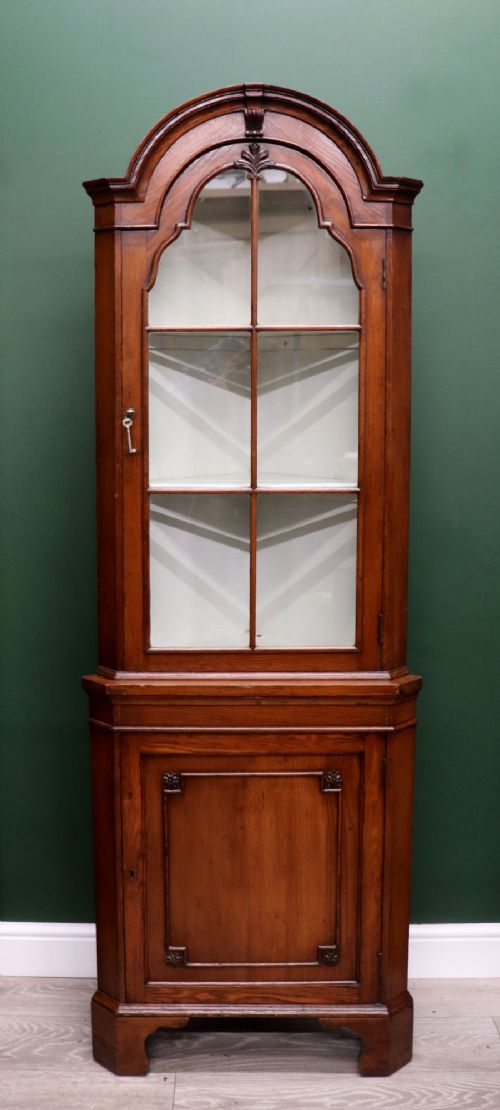
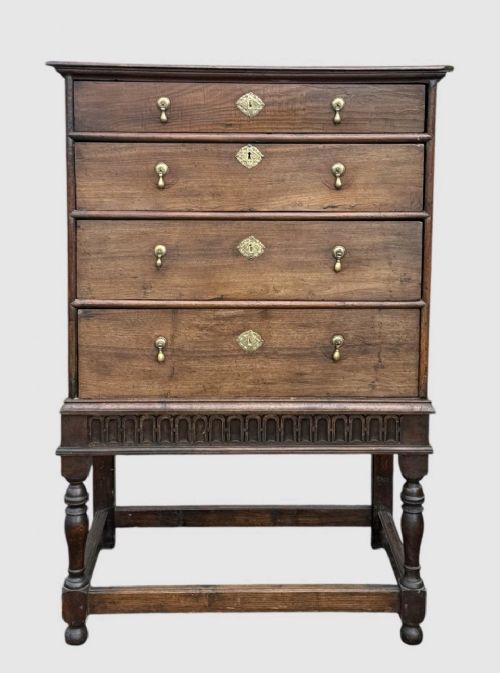


Georgian Oak Standing Cupboard
A georgian oak standing cupboard brings honest timber and grounded proportions directly into a room.
Georgian Oak Standing Cupboard
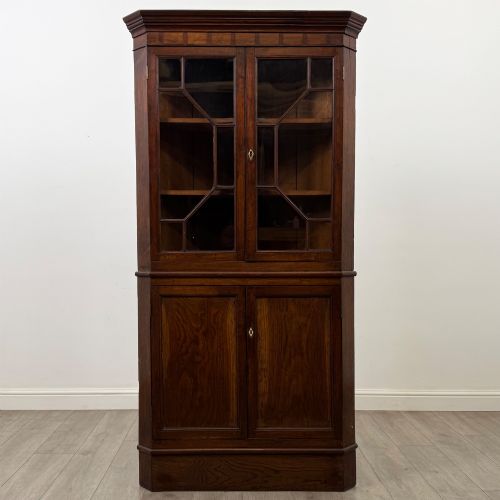
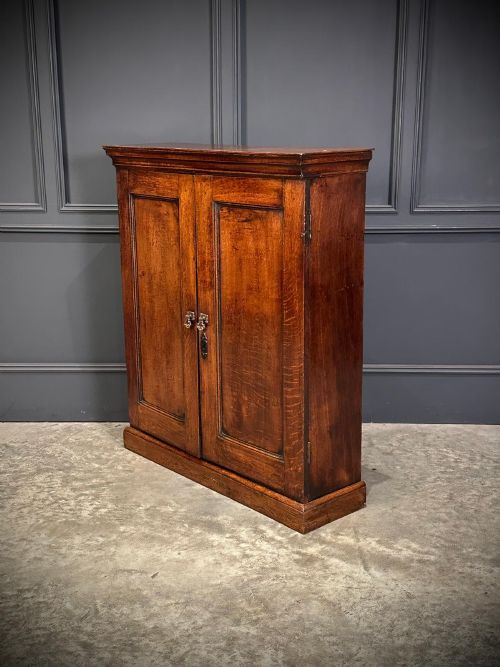
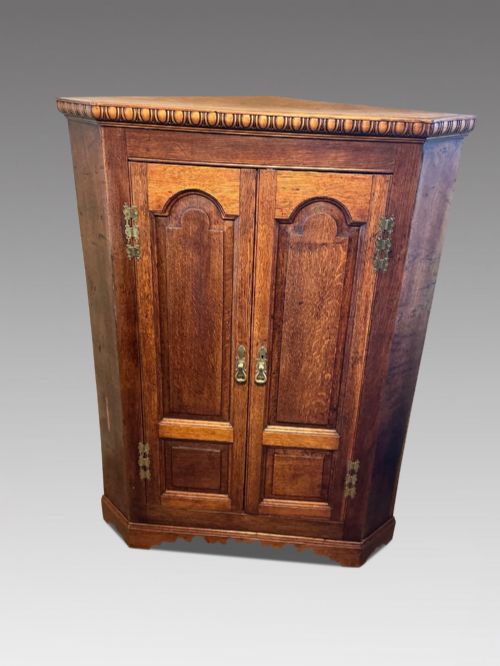
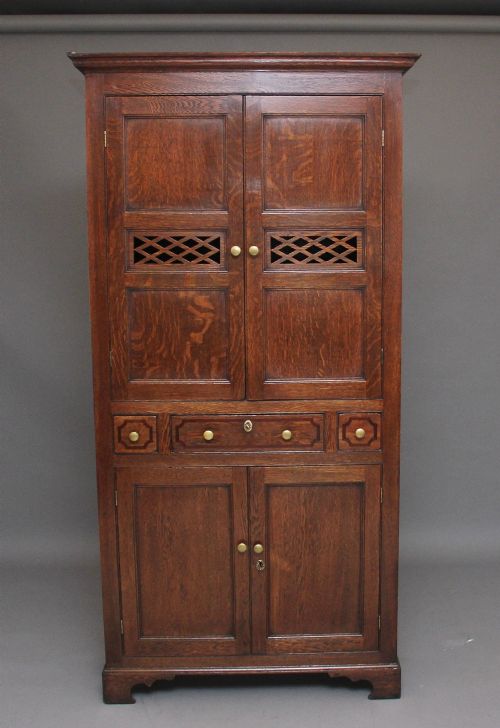
A georgian oak standing cupboard spans corner cabinets, tall livery cupboards, and chest on stand formats originating primarily across the eighteenth century and into the nineteenth century. Buyers searching this phrase meet floor standing furniture designed to utilise domestic angles or anchor principal walls with substantial storage.
Character and construction standards
Distinction across these standing cupboards lies in the depth of timber figure, the crispness of panel moulding, and the survival of original hardware. Untouched surfaces and early patination carry greater visual weight than later interventions.
Proportion and structural integrity separate simpler provincial pieces from sophisticated urban or regional workshops. The retention of original glazing bars, brass escutcheons, and blacksmith hinges elevates a piece above standard domestic utility.
The documented pieces span the Georgian period, the nineteenth century, and early twentieth century revivals, utilising oak alongside brass, glass, and iron.
The Georgian Oak Standing Cupboard Glossary
- Corner cupboard
- A cabinet specifically constructed to fit flush into the internal angle of a room. These units make efficient use of otherwise neglected domestic space.
- Livery cupboard
- A traditional tall storage piece historically used for provisions or clothing. These cupboards feature panelled doors and sturdy standing frames.
- Chest on stand
- A cabinet section elevated upon a separate open leg base or low drawer unit. This form lifts heavier timber storage visually from the floor.
- Astragal glazed
- A glass door divided into smaller panes by thin wooden mouldings called astragals. This technique lightens the visual mass of upper bookcase sections.
- Burr yew
- A highly figured knotty wood timber used selectively for decorative contrast. Cabinetmakers inlaid this material to highlight key panels.
Georgian Oak Standing Cupboard: Frequently Asked Questions
Where should I place a standing corner cupboard?
These cabinets suit empty room corners where standard rectangular furniture leaves awkward gaps. They anchor dining rooms or living spaces while offering generous shelved storage.
Ensure the floor is level so the tall two part frame sits flush against both intersecting walls without strain on the joints.
How do I clean antique oak furniture?
Dust timber regularly with a soft, dry cloth to prevent particle build-up within the grain and panel recesses. Avoid modern silicone sprays that alter the finish.
Feed the dry oak occasionally with a traditional beeswax polish applied sparingly and buffed gently to maintain the natural lustre.
What is the difference between single and two part cupboards?
Single units are built as one continuous carcass from top to bottom, making them heavier to transport in one piece. Two part standing cupboards divide horizontally into an upper and lower cabinet.
This division facilitated movement through narrow stairwells and country doorways during the eighteenth and nineteenth centuries.
Are these cupboards suitable for modern homes?
The deep proportions and adjustable internal shelving accommodate contemporary glassware, books, and tableware easily. Their robust construction handles daily domestic use without issue.
Neutral timber tones blend naturally with both traditional interiors and minimalist contemporary settings.