

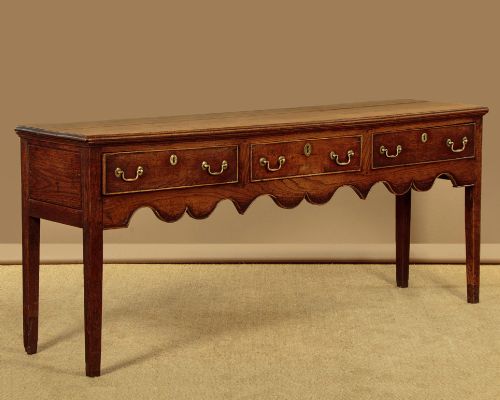
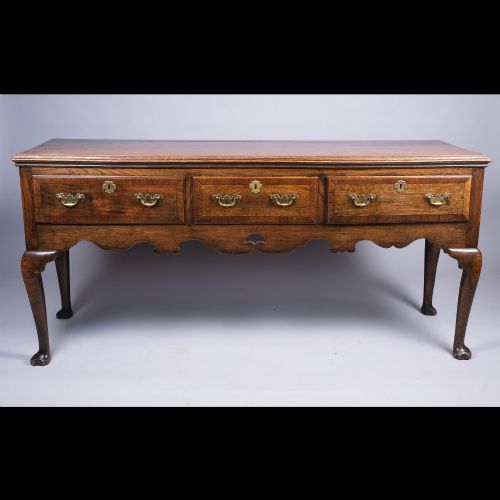
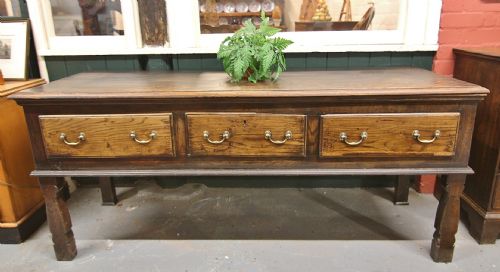
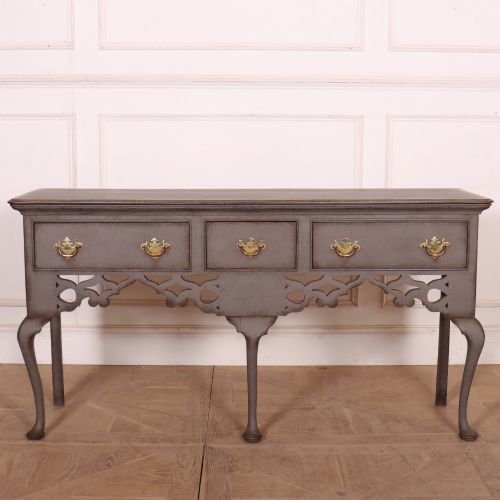


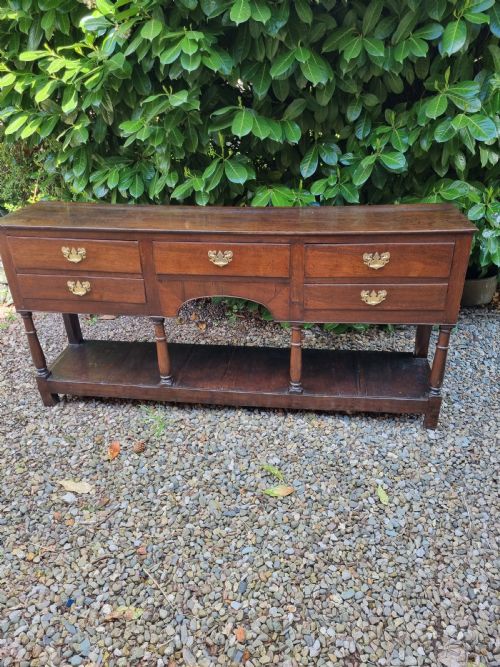
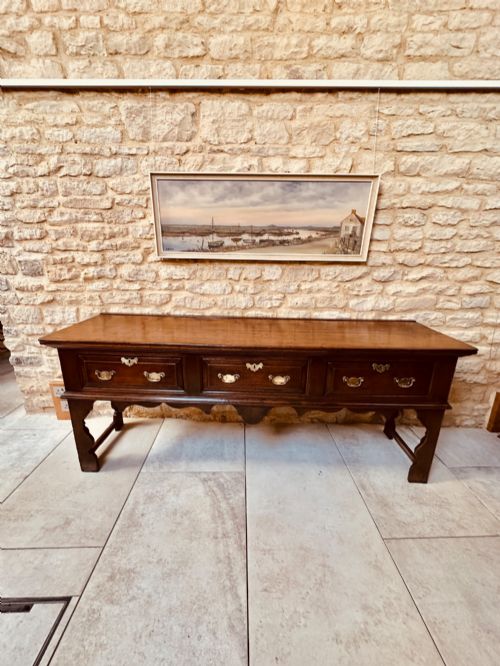
Georgian Oak Hallway Table
A georgian oak hallway table provides a practical surface for an entrance hall, combining honest joinery with hard-wearing timber that ages gracefully.
Georgian Oak Hallway Table
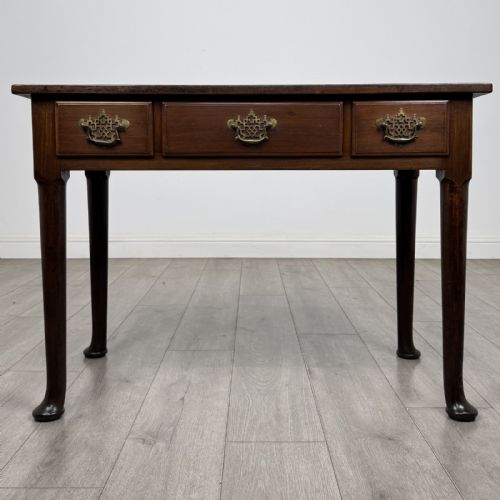
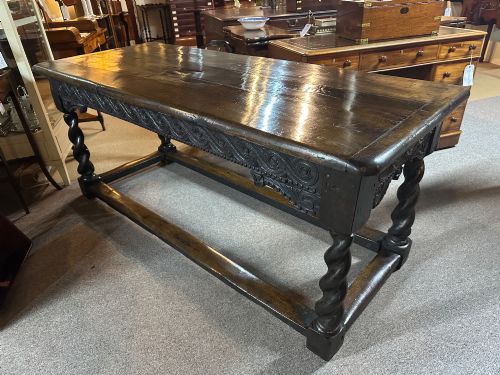
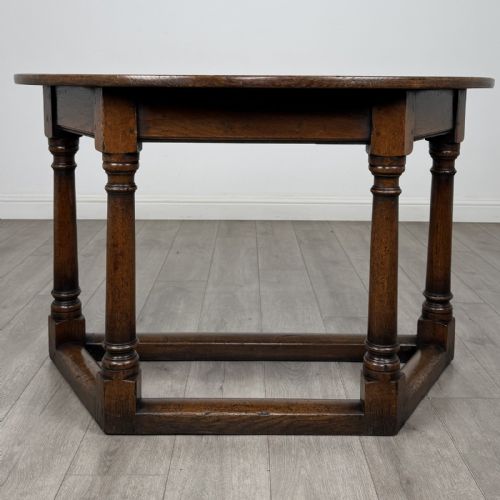
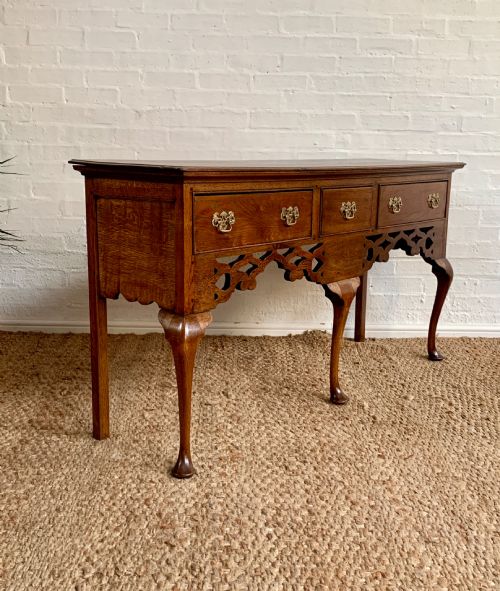
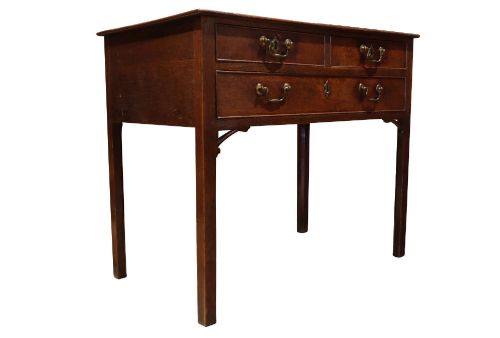
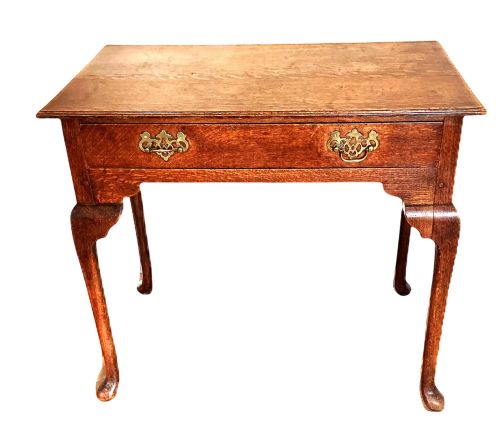
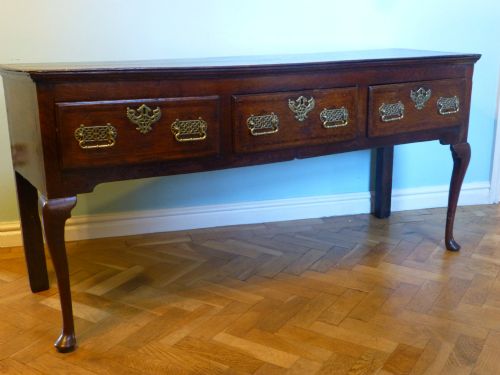
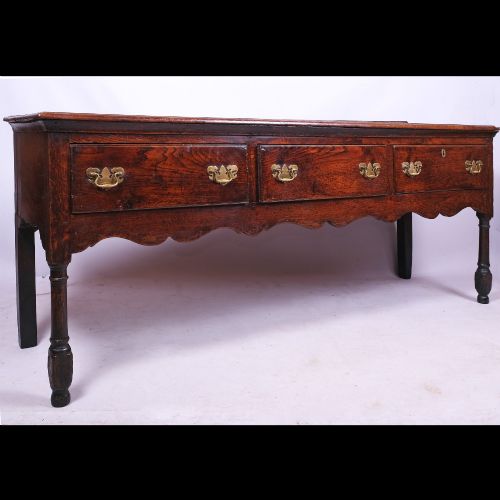
When you search for a georgian oak hallway table, you encounter practical furniture designed for domestic use in centuries past. These tables appear in forms such as lowboys, serving tables, console tables, and dresser bases.
The selections on this page span the eighteenth and nineteenth centuries, alongside Edwardian and later revival interpretations. Most examples utilise sturdy oak timbers shaped into functional side tables and serving surfaces.
Regional variations emerge from places like Wales and the Netherlands, bringing distinct proportions and leg forms to the selection. You find pieces featuring cabriole legs, turned supports, and drawer configurations ranging from three to five.
How they were made
Cabinet makers constructed these pieces primarily using solid oak, supplemented occasionally by mahogany and fitted with brass handles or escutcheons. Joinery relied on traditional methods like mortise and tenon joints to ensure structural durability.
Surfaces were finished by hand, developing a warm patina over generations of use and polishing. Leg structures were either turned on a lathe or carved into cabriole and blind silhouette shapes depending on the regional style.
Georgian Oak Hallway Table Retail Price Guide 2026
Typical asking prices for georgian oak hallway table among the pieces listed under this phrase on Sellingantiques today, from the lower quarter to the upper quarter. They describe what is for sale here now, not the wider market.
Blind silhouette legs hide their true profile from certain angles, playing gentle tricks on the eye.
What varies in quality
Quality in these tables rests on the integrity of the timber selection and the retention of original structural elements. Finer examples display harmonious proportions, crisp carving on legs, and minimal timber replacement over time.
The skill of the original maker shows in the smoothness of drawer operation and the tightness of the joinery. Later revival pieces differ from eighteenth-century originals in the crispness of wear and the depth of the natural patina accumulated on the wood.
The Georgian Oak Hallway Table Glossary
- Lowboy
- A small side table or dressing table featuring one or more rows of drawers beneath the work surface. These compact pieces suit narrow spaces like hallways.
- Dresser base
- The lower section of a kitchen or dining dresser, functioning independently as a sideboard or serving table. They often incorporate multiple drawers above an open or closed lower structure.
- Cabriole leg
- A furniture leg that curves outward and then tapers inward, finishing in a foot. This decorative form is typical of eighteenth-century design.
- Patina
- The deep, lustrous surface sheen developed on wood over decades of handling, polishing, and exposure to light. It serves as an indicator of age and consistent maintenance.
Georgian Oak Hallway Table: Frequently Asked Questions
Are these tables deep enough for narrow hallways?
Many lowboys and side tables offer shallow profiles suited to confined entrance spaces.
Drawer configurations and overhangs determine the exact clearance required against a wall.
How do I distinguish an eighteenth century table from a revival piece?
Original pieces display authentic tool marks, timber shrinkage, and a deep accumulated patina.
Revival furniture from later periods often shows more uniform machine finishing and different internal construction methods.
Can these tables handle daily use in a modern entrance?
Oak is a robust hardwood capable of withstanding the demands of everyday household traffic.
Regular waxing protects the surface from moisture and daily wear.
What is the difference between a lowboy and a side table?
A lowboy specifically incorporates one or more rows of drawers beneath a table top.
General side tables may feature flat aprons without drawer storage.