

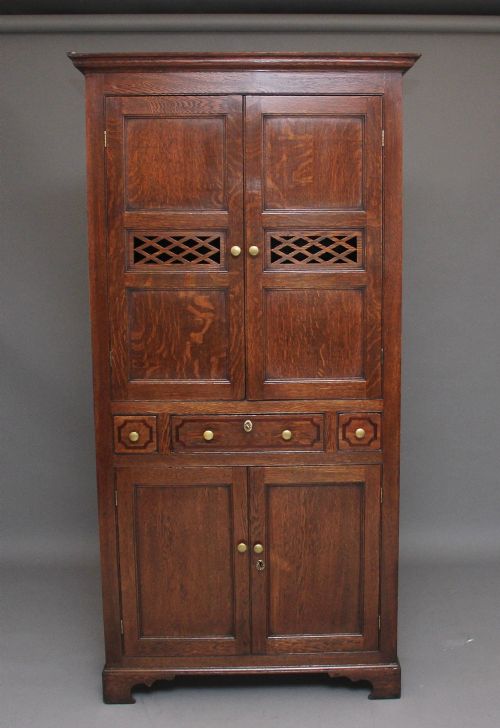


Georgian Oak Food Cabinet
A georgian oak food cabinet is a sturdy country piece built to store provisions, bringing honest regional timber and centuries of utilitarian history straight into a modern kitchen.
Georgian Oak Food Cabinet
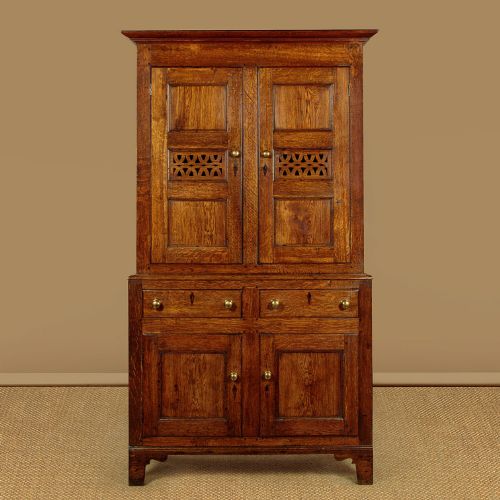
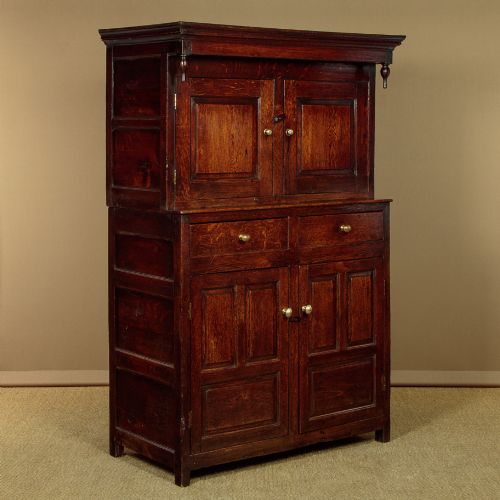
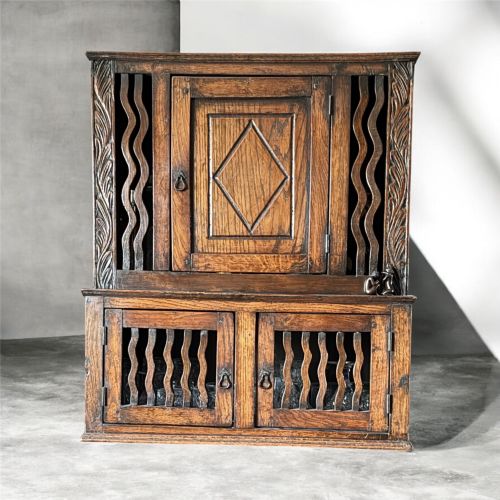
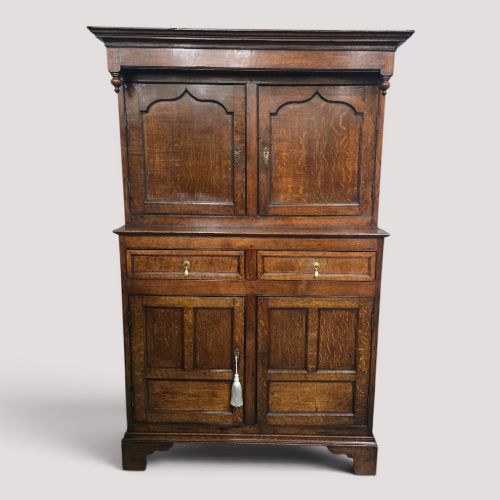
A georgian oak food cabinet encompasses various regional storage forms, from hanging wall safes to substantial floor-standing presses made for keeping provisions. Buyers browsing this page will frequently encounter Welsh vernacular examples such as court cupboards and bread and cheese cupboards.
The selection ranges across the eighteenth and nineteenth centuries, taking in vernacular styles like English country and French provincial pieces. These items served practical rural households before finding favour as characterful storage furniture today.
Floor-standing forms like the deuddarn and housekeeper's cupboard sit alongside wall cupboards and panetieres designed for ventilation. Each format reflects the domestic requirements of its original rural setting.
How they were made
Construction relies heavily on solid oak, frequently paired with chestnut, forged iron hardware, and brass fixtures. Makers utilised traditional joinery methods suited to dense native hardwoods.
Surface details often include carved elements, panelled doors, and pierced or louvered ventilation panels designed to keep stored provisions fresh. These construction choices ensured the furniture withstood generations of heavy domestic use.
Georgian Oak Food Cabinet Retail Price Guide 2026
Typical asking prices for georgian oak food cabinet among the pieces listed under this phrase on Sellingantiques today, from the lower quarter to the upper quarter. They describe what is for sale here now, not the wider market.
Bread and cheese cupboards were thoughtfully ventilated so the local dairy harvest could breathe without inviting the cat to dinner.
What varies in quality
Quality rests on the depth of the timber's grain, the integrity of the original regional construction, and the survival of period hardware like brass and iron hinges. Untouched surface patination distinguishes superior examples from heavily restored pieces.
Proportion and regional vernacular detailing dictate desirability, with Welsh vernacular and country pieces showing distinct carving or architectural nuances. The balance between utilitarian function and decorative regional style defines the standing of each cabinet.
The Georgian Oak Food Cabinet Glossary
- Deuddarn
- A traditional Welsh two-tiered cupboard featuring enclosed upper and lower sections. This regional form provides substantial storage capacity while displaying characteristic vernacular framing.
- Court cupboard
- An antique cabinet type comprising a recessed upper stage supported by pillars above a broader base. These impressive pieces often display carved ornamentation typical of country workshops.
- Panetiere
- A French provincial food safe traditionally used for storing loaves of bread out of reach of pests. They frequently incorporate spindle or slat construction to allow free air circulation.
- Press cupboard
- A large storage furniture item equipped with deep cupboards or internal shelving for household textiles and provisions. They represent the more substantial end of domestic country cabinetry.
- Vernacular
- Furniture built by local tradesmen using regional traditions rather than mengikuti metropolitan fashion. These items prioritise local materials like oak and chestnut alongside straightforward practical utility.
Georgian Oak Food Cabinet: Frequently Asked Questions
What is a georgian oak food cabinet used for today?
These cabinets serve as characterful kitchen storage for dry goods, tableware, or linens. Their deep shelves and historical presence suit modern homes seeking practical utility with authentic period charm.
Positioning one in a dining room or hallway introduces rich timber tones and regional craftsmanship. They adapt easily to contemporary living while retaining their original domestic purpose.
How do I tell an 18th century piece from a 19th century one?
Eighteenth century pieces often display simpler, hand-hewn joinery and deeper patination acquired through prolonged daily use. Iron and brass hardware on these cabinets tends to be hand-forged and specific to the period.
Nineteenth century examples can show slightly more standardised construction methods while retaining regional country styles. Examining the timber shrinkage and backboards helps clarify the age of the piece.
Are these cabinets suitable for everyday kitchen use?
Solid oak and sturdy chestnut construction makes these cupboards robust enough for daily storage demands. The original interior layouts provide ample room for modern kitchen items and provisions.
Ensuring the room humidity remains stable protects the historical timber and traditional joinery. Regular gentle cleaning maintains the aged surface patination without stripping the character.
What distinguishes Welsh vernacular styles from other types?
Welsh vernacular furniture frequently incorporates specific regional forms like the deuddarn and distinct carved panels. Local cabinetmakers utilised native oak to create robust pieces tailored to rural Welsh households.
These items stand out through their unpretentious proportions and practical approach to domestic storage. They capture a distinct regional aesthetic distinct from standard metropolitan Georgian furniture.