
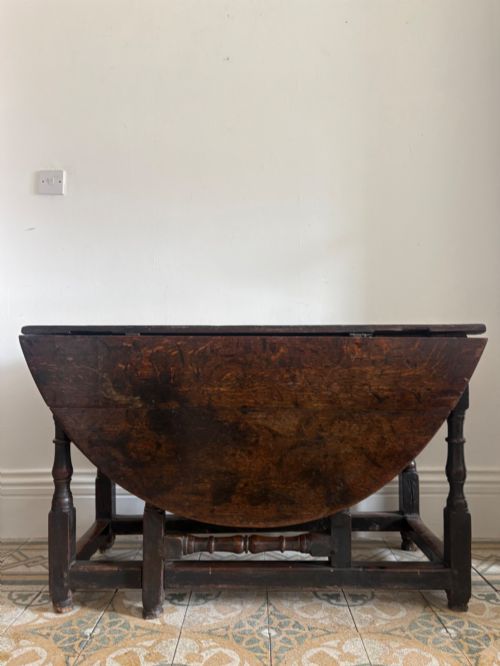


Georgian Oak Folding Table
A georgian oak folding table is a sturdy, practical timber surface built to save space when not in use.
Georgian Oak Folding Table
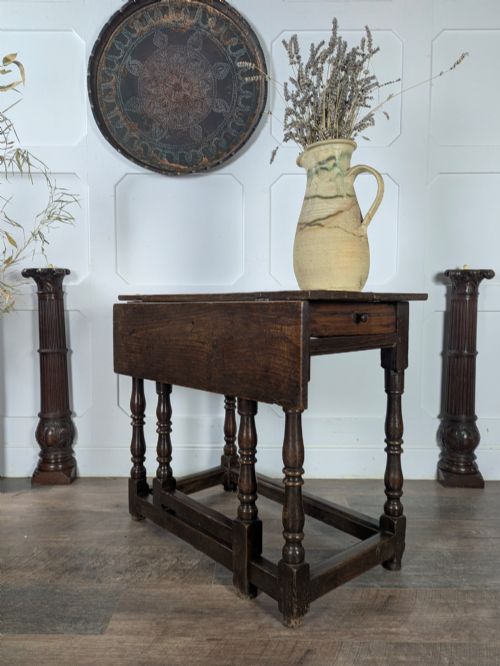
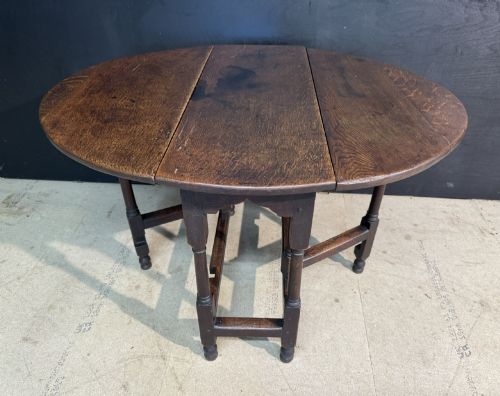
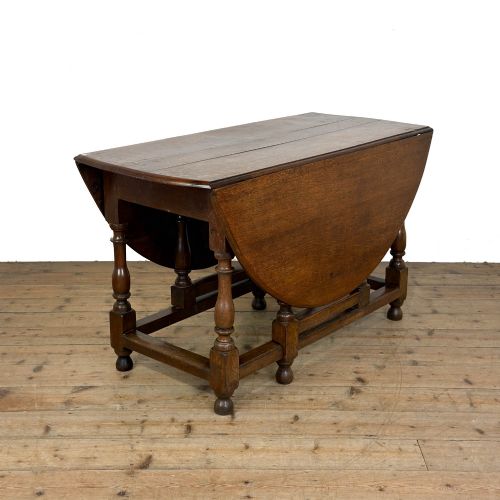
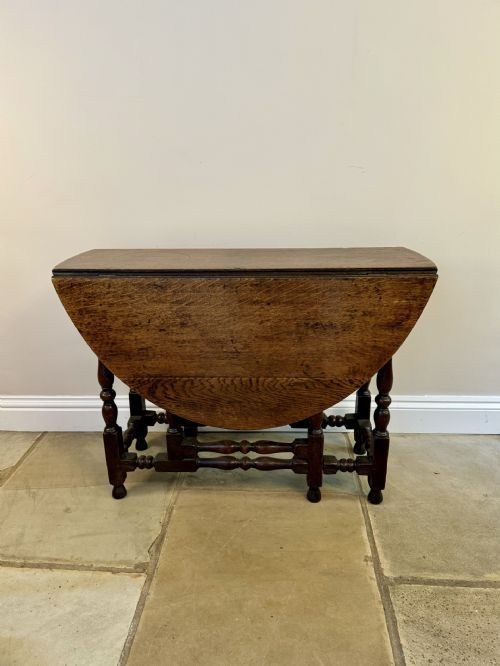
When you search for a georgian oak folding table, you are looking at substantial timber furniture designed to expand for dining or fold away against a wall. The versions you are most likely to meet on this page are gateleg and drop-leaf dining tables, alongside occasional and coaching tables.
Most examples date from the eighteenth century, spanning periods from seventeen-hundred through the Georgian era to the early nineteenth century. These pieces served hardworking domestic roles in English country houses and town homes alike, offering flexible surfaces long before modern modular furniture existed.
How they were made
Makers built these tables primarily from solid oak, sometimes combining it with walnut, mahogany, burr oak, or fruitwood for specific panels or tops. Plank tops rested on sturdy frames supported by turned baluster legs that swung outward to hold the folding leaves.
Iron and brass fixings, including hinges and occasional single drawer pulls, provided the necessary mechanical support for the drop leaves and folding actions. Joinery relied on traditional pegged and tenoned joints designed to withstand the daily movement of the timber.
Some seventeenth-century oak tables survived because their heavy timber tops were too cumbersome to throw out when fashions changed.
What varies in quality
The standard of a georgian oak folding table rests on the depth of the timber's original patina and the crispness of its turned baluster legs. Tables boasting dense, heavy solid oak and well-preserved surface colour sit firmly at the upper end of the range.
Proportion and scale also dictate worth, as larger dining versions designed to seat six or eight people require superior framing integrity to support extended leaves securely. Simpler country iterations show more rustic tool marks, whereas formal Chippendale or Regency variants display finer cabinetmaking details.
William Trotter
The Georgian Oak Folding Table Glossary
- Gateleg table
- A table with hinged leaves supported by legs that swing out like a gate. This design provides maximum surface area when open and minimal footprint when folded.
- Drop-leaf table
- A table featuring a fixed centre section and hinged flaps on either side. These flaps drop down vertically when not in use.
- Baluster leg
- A turned vertical wooden support shaped like a classical pillar or vase. They are typical of seventeenth and eighteenth-century joinery.
- Patina
- The deep sheen and surface character developed on timber over centuries of handling and polishing. Good patina indicates age and careful maintenance.
- Coaching table
- A portable folding table originally designed for travel or easy storage in smaller domestic quarters. They feature hinged X-frames or folding bases.
Georgian Oak Folding Table: Frequently Asked Questions
How do I seat guests comfortably around a gateleg table?
The swing-out legs of a gateleg table provide structural support for the leaves, but they also dictate where chairs can be placed. Position your seating to avoid knocking against the wooden pivot legs.
Larger eighteenth-century dining versions accommodate six to eight people when fully extended. Simply lift both drop leaves and swing the side gates firmly into place before laying linens.
Where should I place a folding table in a modern home?
These tables adapt well to living spaces that require flexible layouts, functioning as dining surfaces, sideboards, or hall tables. Fold down one or both leaves to tuck the piece neatly against a wall when floor space is needed.
Keep oak tables away from direct heat sources and strong sunlight to protect the aged timber and its original finish. A breathable room environment prevents the solid wood from warping at the hinges.
How can I tell an eighteenth-century table from a later copy?
Examine the underside of the top planks and the swing gates for hand-tool marks, pegged joints, and timber shrinkage consistent with age. Eighteenth-century oak displays dense grain patterns and dark patination accumulated over generations.
Hardware such as hand-forged iron hinges or early brass screws offer further clues to the period. Machine-cut screws and modern adhesives point firmly toward later nineteenth-century or modern reproductions.
What is the difference between a gateleg and a drop-leaf table?
All gatelegs are technically drop-leaf tables, but not all drop-leaf tables use swinging gate legs for support. A standard drop-leaf might use pull-out wooden brackets or fly-brackets instead of moving legs.
Gateleg frames feature pivoting legs integrated into the base structure to hold up wide flaps. This creates a sturdy underframe when the leaves are raised for dining.