

Georgian Oak Dressers
Georgian oak dressers bring robust rural utility and rich timber warmth straight into a modern dining room or kitchen.
Georgian Oak Dressers
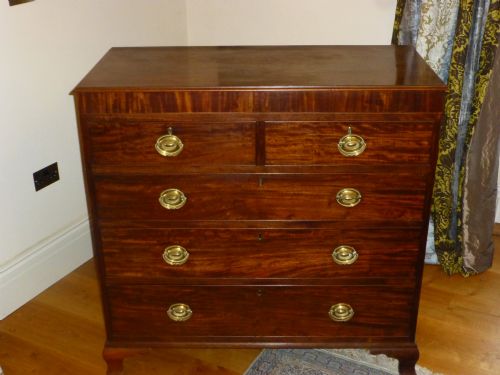
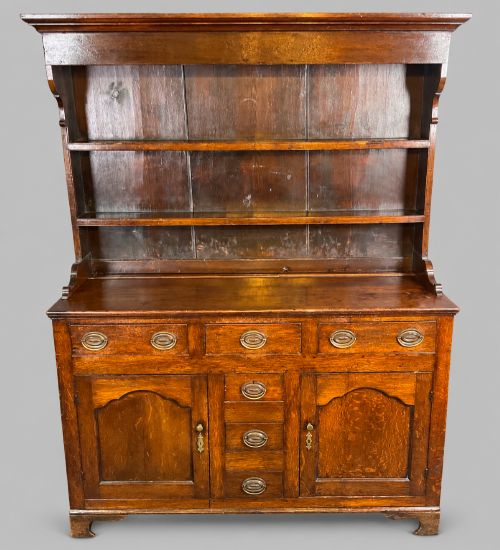
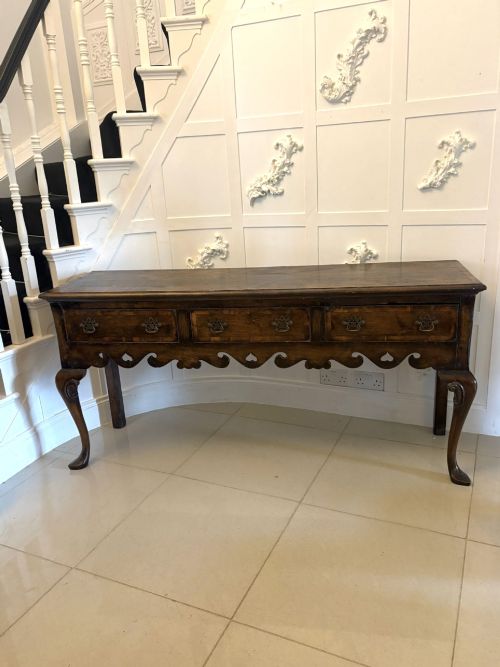
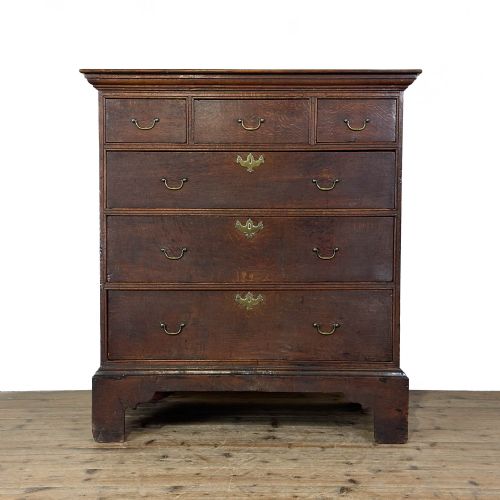
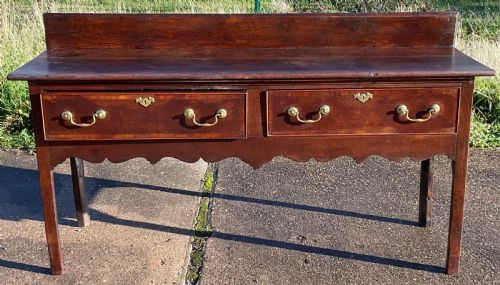
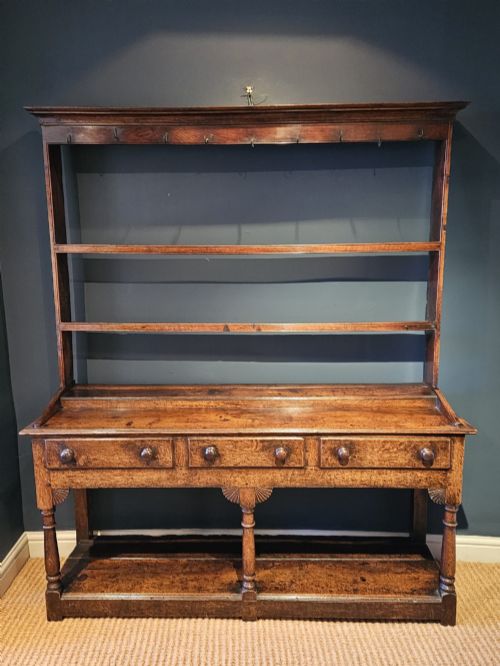
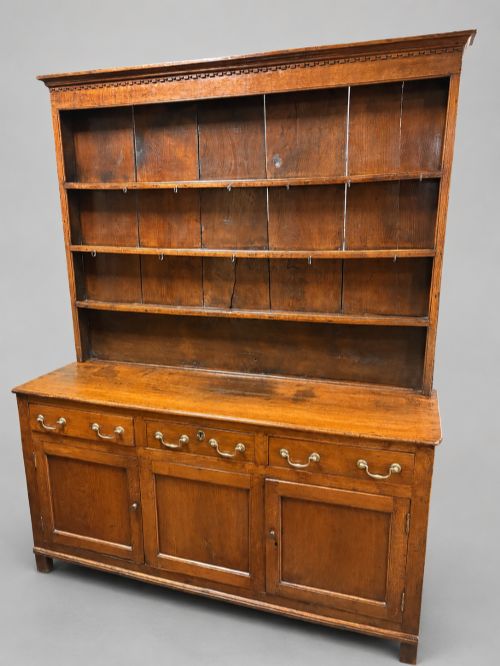
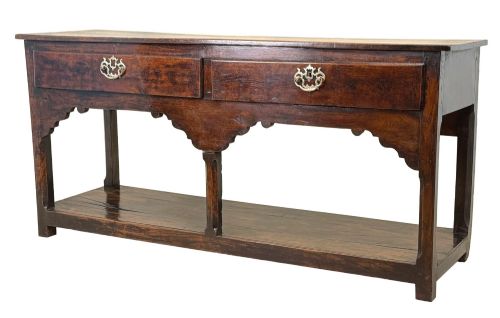
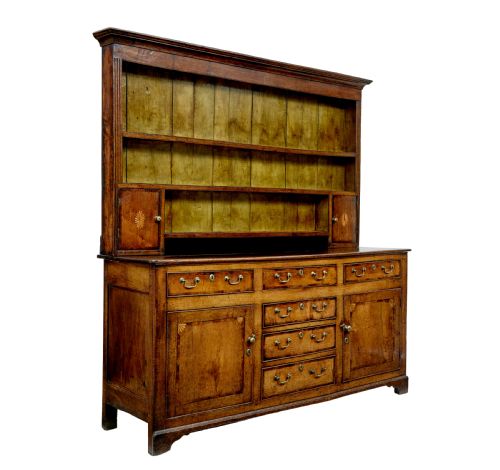
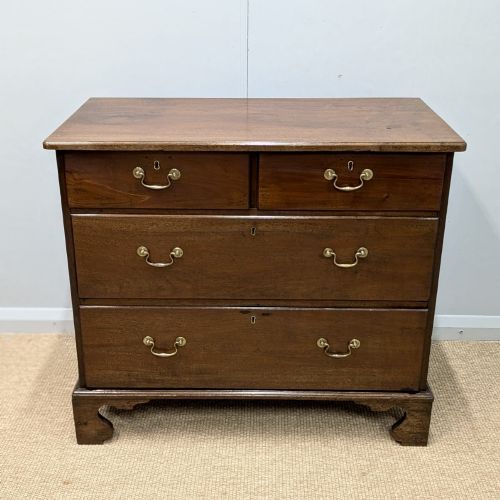
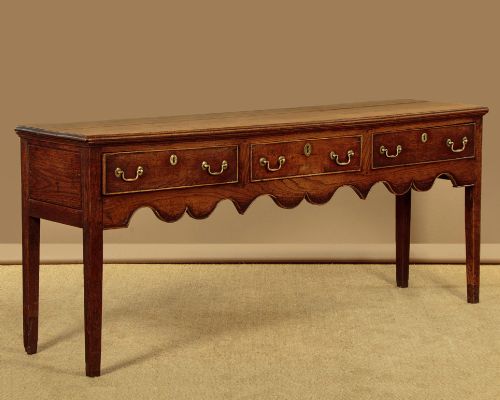
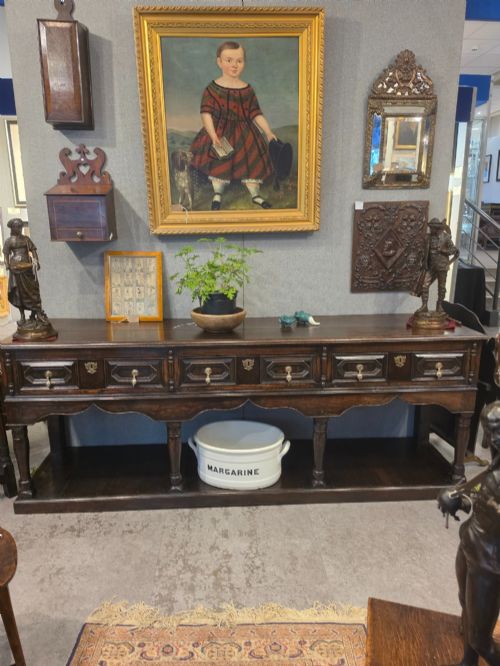
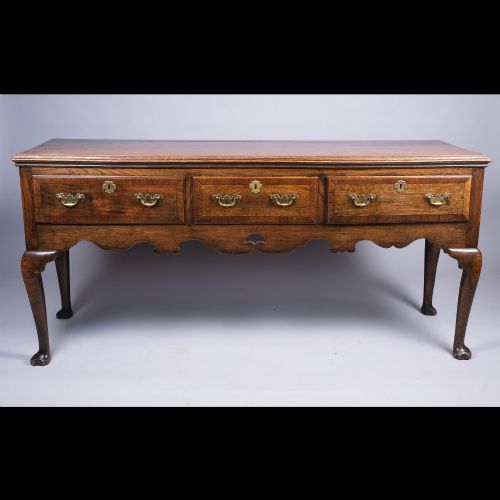
Georgian oak dressers combine a lower base of drawers and cupboards with an upper plate rack for displaying crockery, originating across English and Welsh country districts during the eighteenth century. Buyers seeking georgian oak dressers will encounter sturdy vernacular designs ranging from open potboard bases to grand Welsh cupboards fitted with arched racks and side compartments.
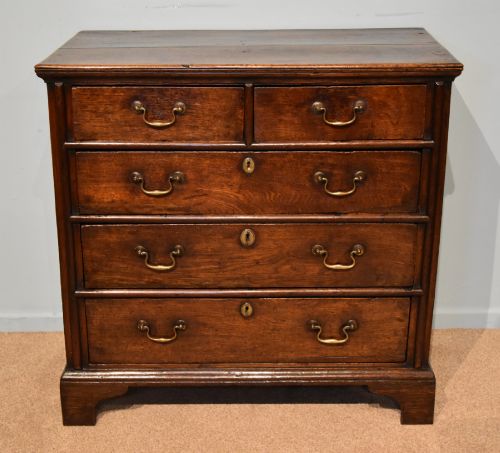
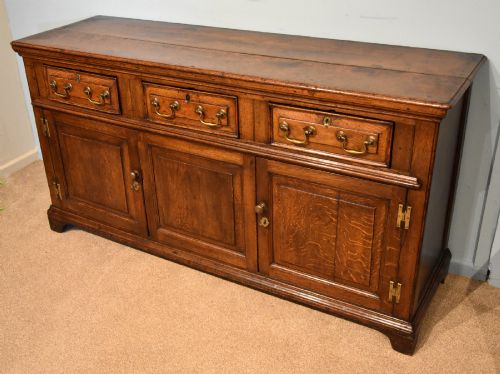
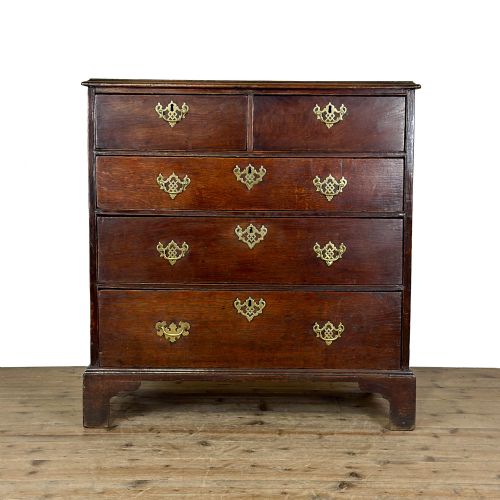
Makers often built these pieces in local workshops using regional timbers, leading to variations like eleven-drawer Lancashire formats or North Wales styles dated to the mid eighteenth century. Alongside full dressers, the selection frequently includes standalone dresser bases, sideboards, and separate wall-mounted plate racks dating from the Georgian era into the nineteenth century.
Proportion and Timber Character
Quality in georgian oak dressers rests upon the depth of the timber patination, the integrity of the original plate rack to the base, and the restraint of past restoration work. Finer examples retain their original brasses, uncompromised potboards, and crisp moulding details around the drawers.
Proportion and regional character dictate desirability, with well-balanced bases and untouched vernacular surfaces standing apart from heavily altered or mismatched combinations of racks and lower sections.
Georgian Oak Dressers Retail Price Guide 2026
Typical asking prices for georgian oak dressers among the pieces listed under this phrase on Sellingantiques today, from the lower quarter to the upper quarter. They describe what is for sale here now, not the wider market.
Some eleven-drawer bases provide enough tiny compartments to misplace a household ledger three times over.
The Georgian Oak Dressers Glossary
- Potboard
- A lower open shelf built into the base of a dresser, originally designed for storing heavy pots and pans. This platform sits just above the floor on short legs or stile feet.
- Plate rack
- The shelving unit mounted to the wall or resting on the back of a dresser base, featuring grooved plate rails and occasionally small cupboards. These racks allow ceramic tableware to stand upright for display.
- Cwpwrdd tridarn
- A traditional Welsh three-tier cupboard featuring an enclosed upper section, central pantry press, and lower base with drawers. These substantial case pieces represent the height of vernacular rural joinery.
- Vernacular
- Furniture built by local country joiners using regional traditions rather than following urban metropolitan pattern books. These pieces prioritise practical utility and available local timber over fashionable academic styles.
Georgian Oak Dressers: Frequently Asked Questions
How do I spot a marriage between a base and a rack?
Examine the timber colour, grain patterns, and fixing marks where the upper plate rack meets the lower dresser base. Mismatched patination or awkward overhangs often suggest the two parts originated from different cabinets.
Check for plugged screw holes on the top board of the base that do not align with the current rack's feet. Original combinations share identical wear patterns and consistent wood selection throughout.
Where were these dressers typically used in a house?
Georgian oak dressers served as the primary storage and display units in the domestic kitchens and pantries of farmhouses and country homes. The open plate racks kept everyday ceramics within arm's reach while keeping the work surfaces clear.
Over time, many migrated into dining rooms as households shifted their best china from private storage into public view. Their generous drawers and cupboards held linens, cutlery, and dry goods.
How should I care for the oak surface?
Maintain the timber by applying a microcrystalline wax sparingly and buffing it gently with a soft, clean cloth to protect the dry grain. Avoid placing antique oak furniture near direct heat sources or in fluctuating humidity.
Keep moisture off the timber surface by using coasters and mats beneath any objects placed on the dresser top. Regular dusting prevents particulate buildup in the carved details and panel crevices.