

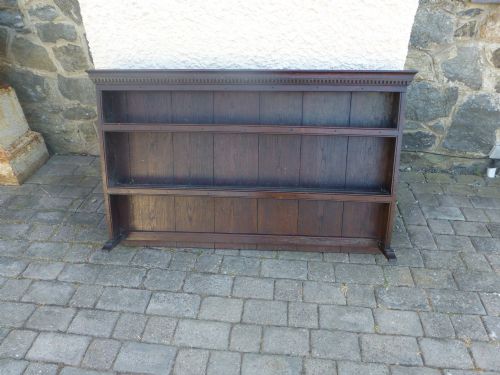
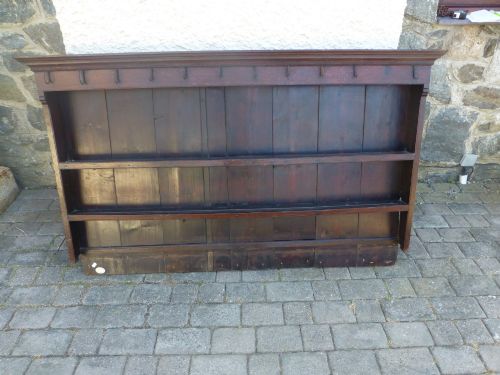
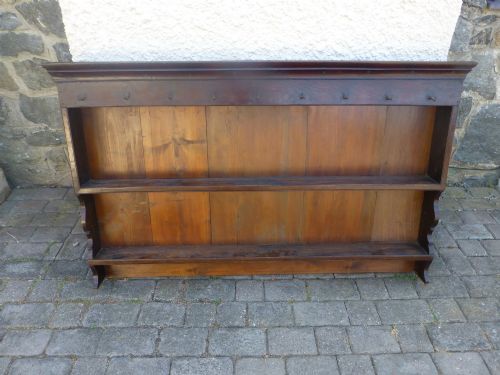
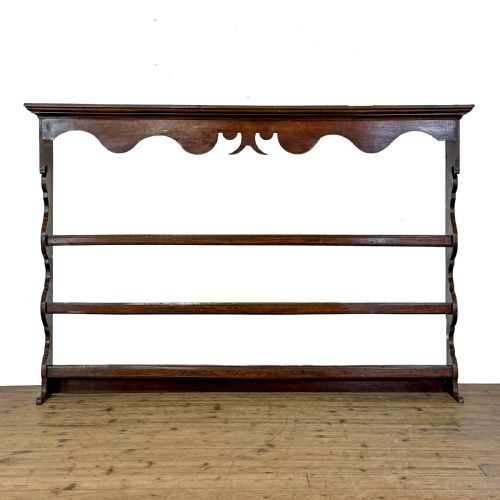


Georgian Oak Delft Shelf
A georgian oak delft shelf offers honest country utility, displaying earthenware plates against sturdy timber built to last centuries.
Georgian Oak Delft Shelf
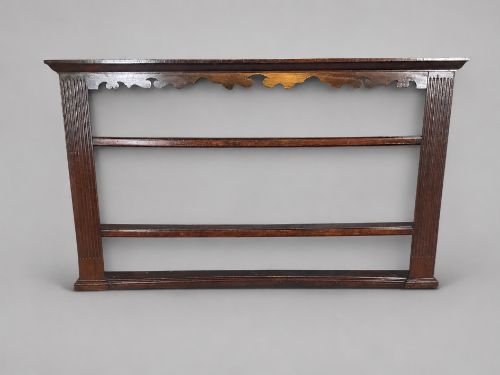
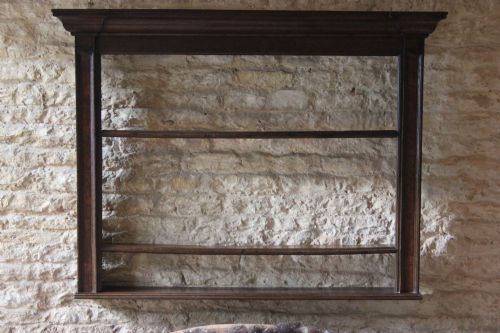
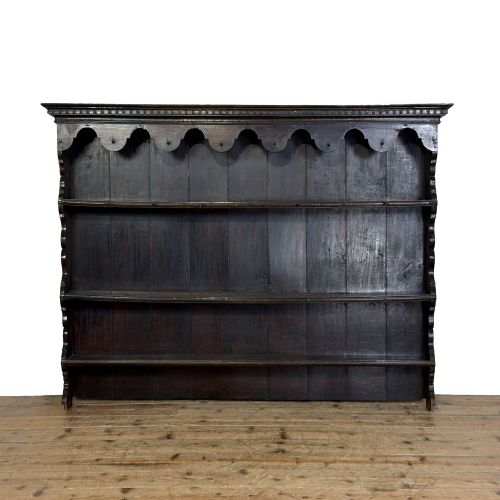
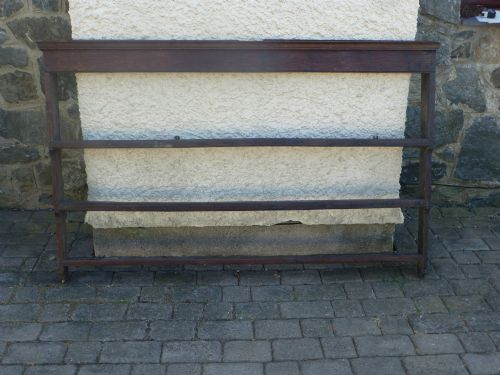
A georgian oak delft shelf combines practical wall storage with the warm, rich tone characteristic of eighteenth century country furniture. These pieces were originally designed to hold plates, platters and bowls safely within reach in the farmhouse kitchen.
The versions most commonly met on this page belong to the Georgian period, often described as dresser racks or hanging plate racks. They present straightforward timber construction intended for daily domestic life rather than formal display.
Some examples arrive integrated with architectural details such as Corinthian columns, while others retain simpler peg or groove fixings for wall mounting. They survive as functional survivors of rural English domestic interiors.
How they were made
Joiners built these wall racks primarily from solid oak, sometimes pairing the main structure with pine or incorporating small elements of iron and brass for hanging or support. Timber selection prioritised local strength and durability over exotic grain patterns.
Boards were planed by hand and joined with traditional pegged or dovetailed methods suited to weight-bearing plate storage. Surface finishes developed through decades of domestic scrubbing and exposure to smoke rather than applied varnishes.
Georgian Oak Delft Shelf Retail Price Guide 2026
Typical asking prices for georgian oak delft shelf among the pieces listed under this phrase on Sellingantiques today, from the lower quarter to the upper quarter. They describe what is for sale here now, not the wider market.
Some country joiners added miniature columns to humble kitchen shelves, proving that even rural plate racks harboured grand architectural ambitions.
What varies in quality
Quality rests in the proportion of the timber and the crispness of surviving mouldings or carved columns, separating standard utility pieces from more ambitious country joinery. Superior examples maintain uncompromised depth in their shelves and retain their original backboards.
The integrity of the construction and the depth of the natural patina dictate the visual weight of the piece on a wall. Altered proportions or heavily replaced timber alter the historical balance of the rack.
The Georgian Oak Delft Shelf Glossary
- Delft rack
- A wall-mounted or dresser-top shelving unit specifically slotted to display earthenware plates upright. These fixtures kept ceramics visible and dry in the working kitchen.
- Country oak
- Solid oak timber worked in regional workshops rather than metropolitan cabinet shops. It exhibits honest construction and utilitarian design.
- Corinthian columns
- Classical architectural uprights featuring ornate, acanthus-leaf capitals occasionally adapted by provincial joiners to frame country furniture. Their presence elevates a standard utilitarian rack into a more decorative statement.
Georgian Oak Delft Shelf: Frequently Asked Questions
How were these shelves originally used?
These racks held household ceramics upright so wet plates could drain and dry safely after washing. They kept everyday delftware accessible while saving valuable table space in busy domestic kitchens.
Over time, families also used them to display prized ceramic pieces alongside everyday kitchenware. They formed the central working hub of the eighteenth century dining room or kitchen.
How do I clean an oak delft shelf?
Dust the timber gently with a dry, soft cloth to remove everyday particles without disturbing the historic surface. Avoid modern polishes or wet cleaners that can penetrate unsealed grain and darken the wood.
Occasional application of pure beeswax helps nourish dry eighteenth century oak. Maintaining a stable indoor humidity prevents the timber from warping or splitting.
How can I tell an eighteenth century rack from later copies?
Early pieces display hand-planed tool marks, pegged joinery, and natural timber shrinkage consistent with age. The iron or brass fixings often show irregular hand-forged characteristics.
Later nineteenth or twentieth century copies often use mechanical saw marks and overly uniform timber boards. The patina on older oak feels dry and warm rather than chemically finished.