




Georgian Oak Chest on Legs
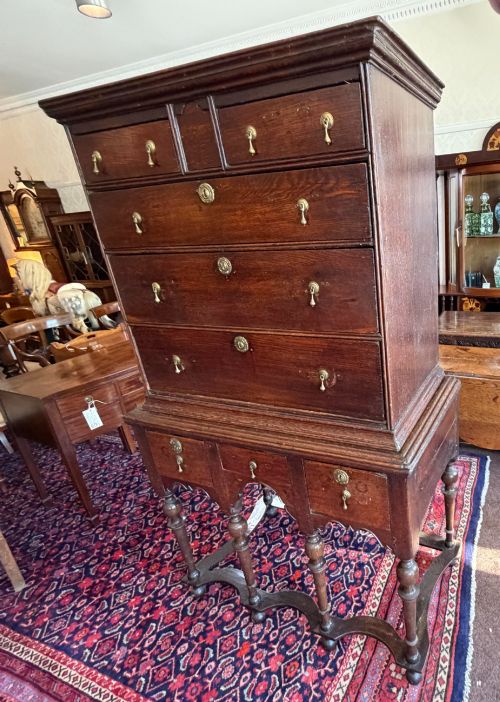
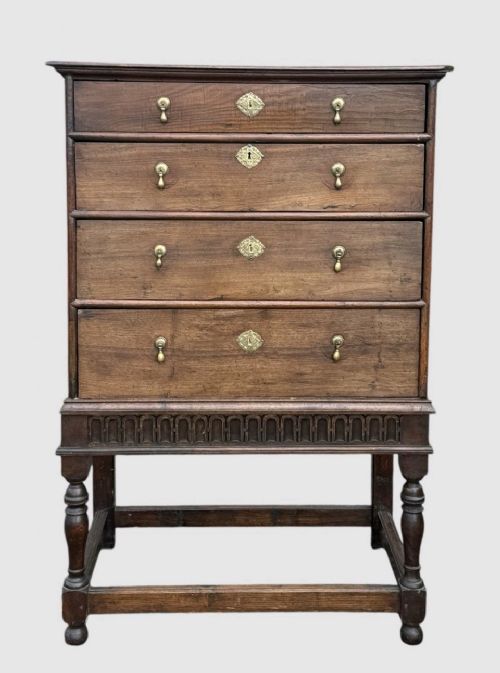
These georgian oak chest on legs pieces are sturdy storage furniture raised from the floor, offering both deep drawer capacity and elegant proportions for the home.
Georgian Oak Chest on Legs
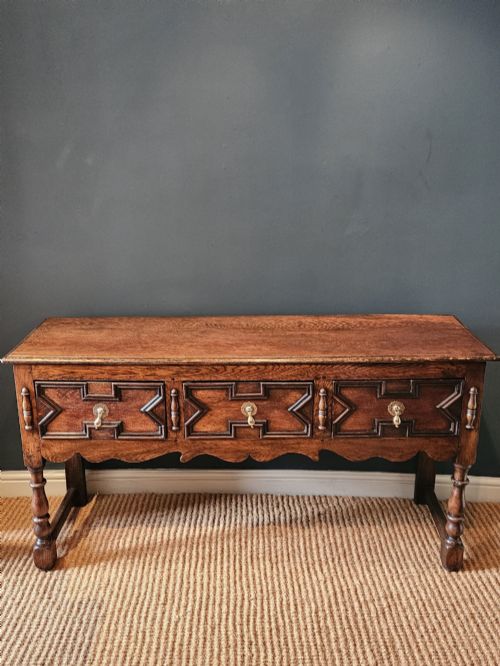
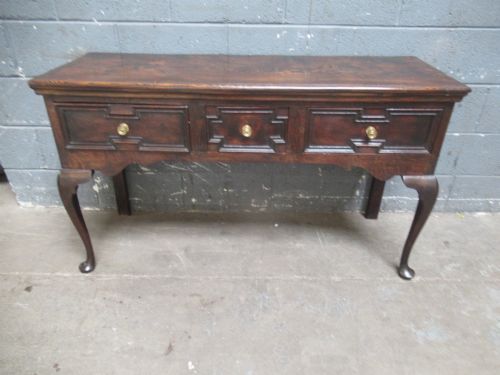
A georgian oak chest on legs combines upper drawer storage with a raised stand, typically appearing in eighteenth-century and earlier forms. The listings on this page most commonly present chest on stand examples alongside related lowboys and dressers.
Makers designed these timber pieces to hold linens and personal goods while keeping dampness away from the floor. Buyers frequently encounter regional variations such as Welsh oak pieces featuring banded details or geometric mouldings.
The form bridges the gap between low storage drawers and taller tallboy cabinets, utilising stands to lighten the visual weight of dense hardwood. Proportions range from small early seventeenth-century formats to mid-eighteenth-century Georgian editions.
Materials and construction
Cabinet makers relied primarily on solid oak, occasionally incorporating secondary timbers like cherrywood, fruitwood, and walnut for banding or smaller elements. These hardwoods provided the structural strength needed for heavy drawer storage.
Fittings typically involved brass for drop handles and key escutcheons, securing the drawers and accentuating the dark grain of the timber. Traditional joinery techniques anchored the frames without modern adhesives.
Georgian Oak Chest on Legs Retail Price Guide 2026
Typical asking prices for georgian oak chest on legs among the pieces listed under this phrase on Sellingantiques today, from the lower quarter to the upper quarter. They describe what is for sale here now, not the wider market.
Some early stands were built high enough to ensure laundry sorting did not require bending your back on a cold morning.
Assessing quality and finish
The sophistication of the timber grain and the crispness of geometric mouldings dictate the grade of each piece. Superior examples display carefully selected oak boards with rich patination built up over centuries of use.
Proportion and the integrity of the original stand separate finer items from later revivals or heavily altered furniture. Structural harmony between the upper chest drawers and the supporting legs determines the overall success of the design.
The Georgian Oak Chest on Legs Glossary
- Chest on stand
- A two-part form consisting of a drawer chest sitting upon a distinct open leg base. This elevated design improves access to the lower drawers.
- Lowboy
- A small table with drawers, often used as a dressing table or side table during the eighteenth century. It shares similar leg supports and timber construction with contemporary chest on stand pieces.
- Geometric moulding
- Raised wooden profiling applied to drawer fronts in symmetrical patterns, typical of seventeenth and early eighteenth-century joinery. This technique creates texture and shadow across the flat timber surfaces.
- Banded
- Featuring thin strips of contrasting wood veneer inlaid around the drawer edges or borders. This decorative touch frames the primary oak grain.
- Patina
- The surface sheen and deep colour developed by timber over long periods of handling and exposure to light. A natural patina indicates age and regular maintenance.
Georgian Oak Chest on Legs: Frequently Asked Questions
What is a chest on stand?
A chest on stand is a piece of furniture featuring a set of drawers mounted on an elevated wooden frame with legs. This form lifts the main storage compartment off the floor for practical and decorative effect.
Craftsmen built these items primarily in oak during the seventeenth and eighteenth centuries. They serve today as focal storage units in bedrooms or hallways.
How do I date an oak chest?
Dating relies on examining the construction methods, timber selection, and hardware styles used in the piece. Early pieces exhibit hand-cut joinery and specific moulding profiles.
Stylistic markers like geometric drawer fronts or bracket feet point to particular decades within the Georgian and earlier periods. Comparing the secondary woods also helps confirm the era of manufacture.
Are these pieces made of solid oak?
Most of the primary surfaces and structural frames consist of solid oak, supplemented occasionally by fruitwood or walnut for details. Drawer linings might use softer timbers in keeping with regional workshop traditions.
Solid construction ensures durability and allows the wood to develop a rich surface appearance over time. Buyers should inspect the grain and boards to understand the material makeup.
Where were these chests made?
English and Welsh workshops produced the majority of these chests during the Georgian era and earlier centuries. Regional characteristics often emerge in the choice of inlay and leg shaping.
Local timber availability dictated whether makers used pure oak or incorporated cherrywood and walnut accents. Provincial cabinet makers frequently added distinct geometric mouldings to distinguish their work.