

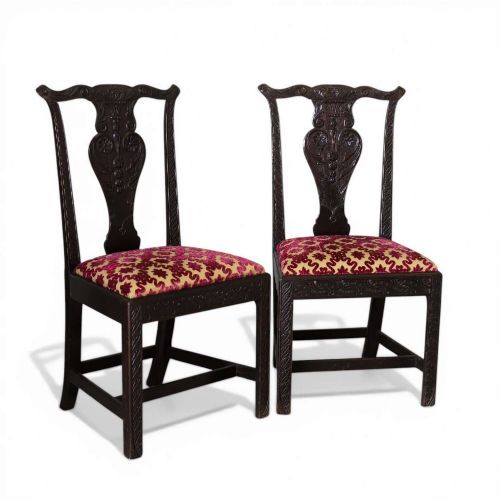
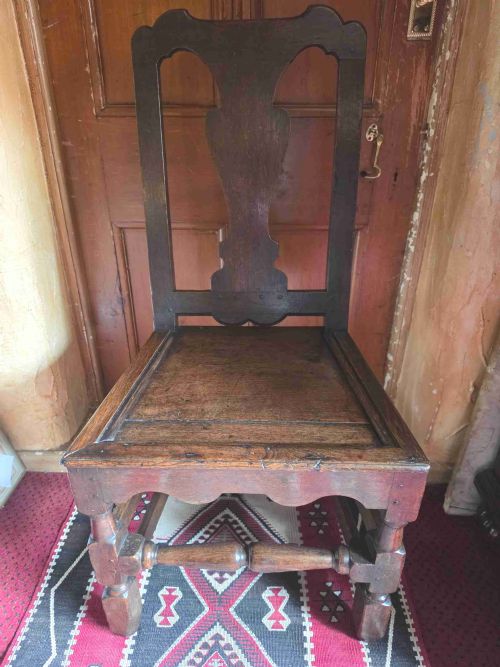


Georgian Oak Accent Chairs
Georgian oak accent chairs bring honest timber and solid domestic craft into a room, offering sturdy seats rooted in eighteenth-century workshops.
Georgian Oak Accent Chairs
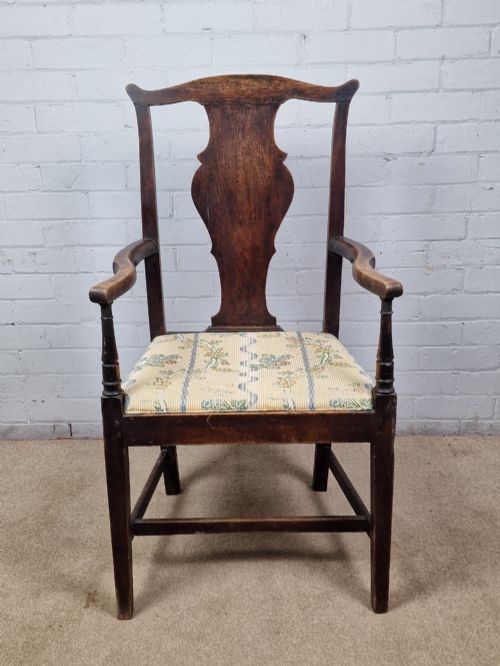
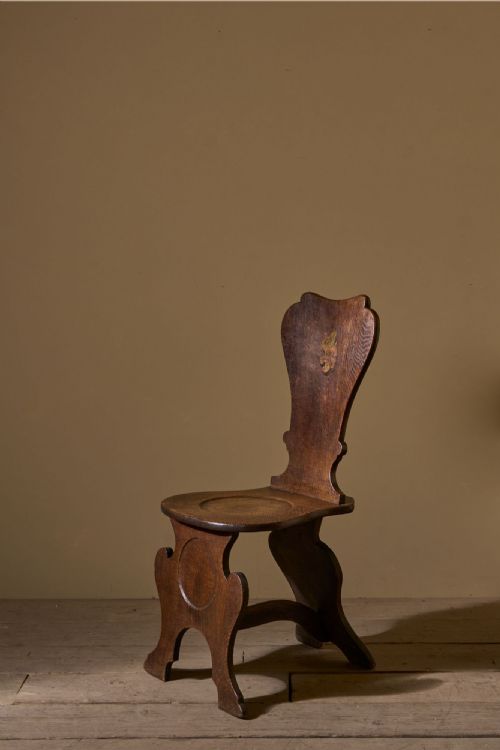
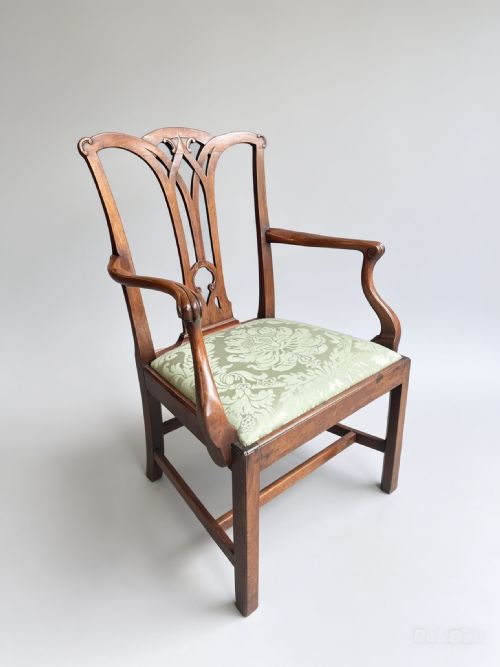
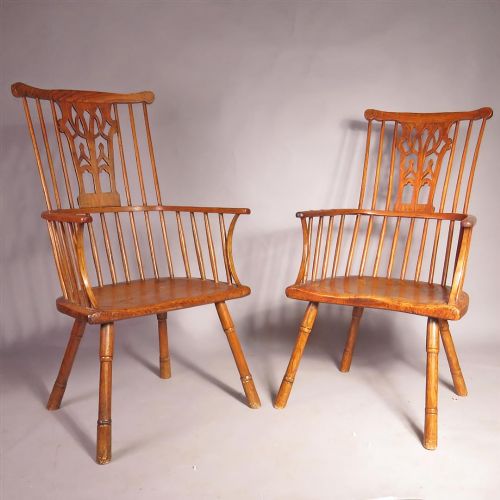
The versions most commonly met on this page include country dining and hall chairs alongside open armchairs and comb back windsors. Regional pieces originating from Wales and Lancashire appear frequently, displaying local preferences for turned details and sturdy timber construction.
Periods represented stretch from the seventeenth century through to the regency era, though the core of the selection centres firmly on the seventeen-hundreds. Makers utilised native hardwoods to build seating intended for daily household service rather than formal display.
Materials and construction methods
Carpenters relied on solid oak as the primary structural timber, frequently combining it with elm, ash, beech, and yew for seats, spindles, and secondary framing. This mixed-timber approach provided the necessary flexibility and strength for vernacular seating.
Joining techniques involved traditional mortise and tenon joints, pegging, and bobbin turning to shape uprights and stretchers. Seats were often shaped from single planks of elm or oak, while upholstered examples incorporated fabric, velvet, textile, and crewel work.
Listings feature oak alongside elm, ash, beech, and yew, reflecting traditional British timber selection.
Assessing quality in timber seating
Quality rests in the integrity of the timber selection and the retention of original structural components rather than applied surface decoration. Chairs retaining their initial pegged joints and uncompromised timber thickness command greater interest.
The sophistication of the carving and the balance of regional proportions distinguish finer examples from standard utility seating. Hand-carved details, well-turned spindles, and harmonious lines elevate pieces beyond basic domestic furniture.
The Georgian Oak Accent Chairs Glossary
- Wainscot armchair
- A heavy, solid wooden armchair constructed with panelled backs and substantial armrests, typical of early domestic interiors.
- Windsor chair
- A wooden chair featuring a solid saddle-shaped seat into which the legs and back spindles are directly inserted.
- Shield back
- A chair back shaped in the outline of a heraldic shield, popularised during the latter half of the eighteenth century.
- Bobbin turned
- Timber turned on a lathe to create a series of rounded, bead-like shapes resembling bobbins along the length of a leg or stretcher.
- Backstool
- An early term for a chair without arms, serving as a precursor to the standard side chair.
Georgian Oak Accent Chairs: Frequently Asked Questions
How do I identify a genuine period chair?
Examine the construction methods beneath the seat and around the joints for hand-cut pegged tenons and natural timber ageing. Hand tools left distinct surface textures that modern reproductions cannot replicate.
Compare the timber shrinkage patterns and wear around the footings with known examples from the same century. Consistency in the wood species used for primary and secondary parts often indicates authentic period manufacture.
Were these chairs used for dining?
Many side chairs and armchairs served functional roles around dining tables in country houses and farmhouses. Their robust construction suited heavy daily domestic use.
Other forms, such as hall chairs and heavy wainscot seats, stood in entryways or parlours for occasional seating. Their primary placement depended entirely on the room and the social status of the household.
How should I care for antique oak furniture?
Maintain stable indoor humidity levels to prevent the solid oak and secondary timbers from splitting or warping over time. Avoid placing chairs directly near heat sources or in intense direct sunlight.
Apply traditional beeswax occasionally to nourish the dry timber surface and preserve the natural sheen. Avoid modern silicone polishes that penetrate the wood pores and attract dust.