


Georgian Naval Oil Painting
A georgian naval oil painting captures the smoke of battle and the salt air of the age of sail through pigment laid thickly on canvas.
Georgian Naval Oil Painting
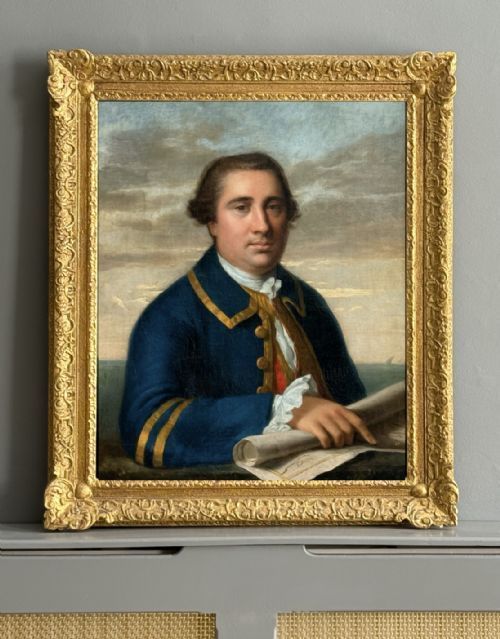
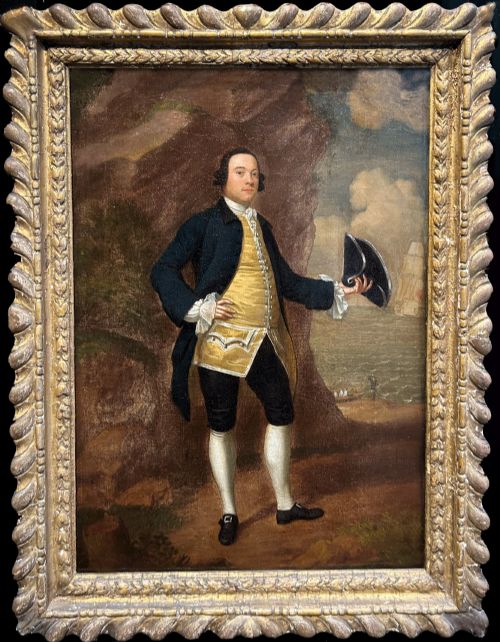
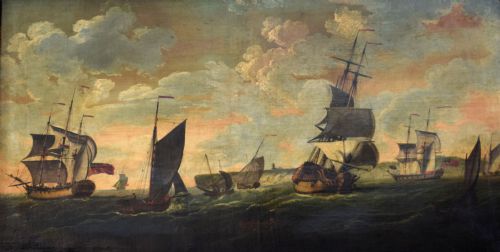
A georgian naval oil painting encompasses both historical portraits of commanders and dramatic maritime scenes depicting warships in action or navigating coastal waters. You will encounter likenesses of captains and admirals alongside depictions of frigates, galleons, and sea battles.
The pieces appearing on this page span the eighteenth and nineteenth centuries, reflecting the maritime dominance and military engagements of the period. Artists recorded specific vessels such as HMS Swift and HMS Queen Charlotte, alongside broader harbour views and post-battle scenes.
Portraits dominate the selection, often presenting naval officers in uniform, sometimes holding swords or wearing decorations. Alongside these formal likenesses, seascapes capture warships with raised sails and cannon, rendered by artists working within Georgian, Regency, and Victorian styles.
Materials and execution
Painters of this period utilised oil paint applied to canvas stretched over wooden supports, capturing the fine details of naval uniforms, rigging, and rolling waves. The physical substance of the oil medium allowed artists to build rich textures for billowing sails and turbulent seas.
Frames frequently employ giltwood and gold leaf, matching the formal presentation expected for military portraits and significant maritime scenes. These decorative surrounds complement the dark, dramatic palettes typical of eighteenth and nineteenth-century marine works.
Listings feature works executed in oil on canvas across the eighteenth and nineteenth centuries, framed in wood and giltwood.
Assessing quality in maritime art
Quality rests upon the artist's ability to render anatomical accuracy in portraiture and precise rigging in ship depictions. Works by documented painters demonstrate superior command of light on canvas, creating depth in sea battles and distinct character in officer portraits.
The preservation of the oil paint and canvas surface directly influences the visual impact of the piece. Stronger examples retain their original handling of pigment, whereas lesser works may show heavy restoration or loss of detail in the maritime background.
Lemuel Francis Abbott·Francis Hayman·John Simmons·Sir Thomas Lawrence·George Frederick Clarke·Samuel Lane·Francis Holman·Robert Ker Porter·Ambrosini Jerome
The Georgian Naval Oil Painting Glossary
- Privateer
- A privately owned ship commissioned by government license to attack enemy shipping during wartime. These vessels operated under letters of marque.
- Giltwood
- Wood carved and covered with a thin layer of gold leaf or gilt powder. This finish appears frequently on the frames housing formal portraits.
- Frigate
- A warship built for speed and maneuverability, carrying fewer guns than a ship of the line. Painters frequently featured them patrolling coastal waters.
- Galleon
- A large sailing ship used for war and commerce from the sixteenth through the eighteenth centuries. They are recognizable by their raised structures at the bow and stern.
Georgian Naval Oil Painting: Frequently Asked Questions
What subjects do these paintings show?
The artworks display portraits of naval captains, admirals, and officers alongside action scenes involving warships, frigates, and galleons. Artists recorded specific historical engagements and vessels of the period.
You will also find coastal shipping views, harbour scenes, and compositions depicting the aftermath of naval battles.
How do I identify the period?
Dating relies on costume details within portraits, such as naval jackets and orders, combined with the documented life spans of the artists. Stylistic markers from Georgian, Regency, and Victorian eras also guide attribution.
Paintings from the eighteenth century often feature softer handling, while nineteenth-century works display greater dramatic contrast in marine engagements.
Were these works framed originally?
Many portraits and marine scenes retain period frames constructed from wood and embellished with gold leaf or giltwood. These surrounds were chosen to complement the formal nature of military art.
Original frames enhance the historical context of the canvas, though replacement frames are common across older artworks.
How should I care for an oil painting?
Canvas works require stable indoor environments away from direct sunlight and excessive humidity to prevent paint cracking or warping of the wooden stretcher. Dusting should be undertaken gently with a soft, dry brush.
Professional cleaning and conservation should be left to specialists to avoid damaging the historical oil paint layers.