



Georgian Naval Art
Georgian naval art records officers, warships and maritime engagements through oil paintings, watercolours and portrait miniatures.
Georgian Naval Art
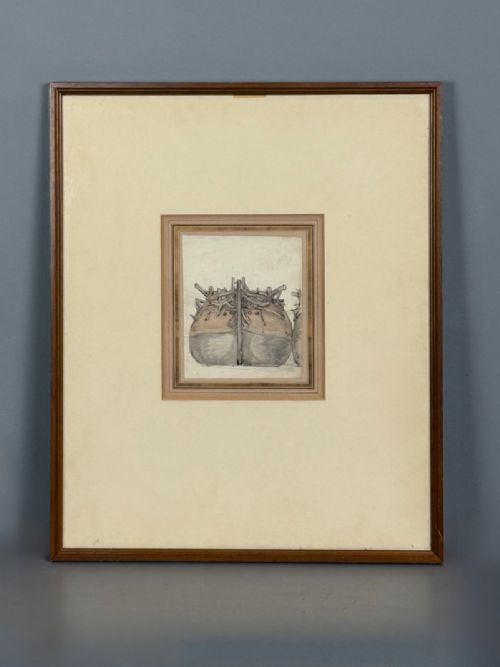
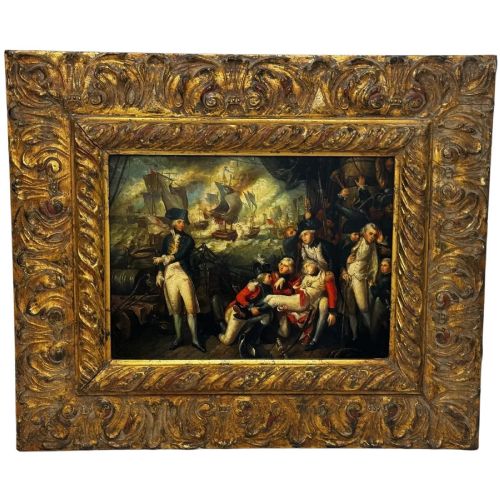
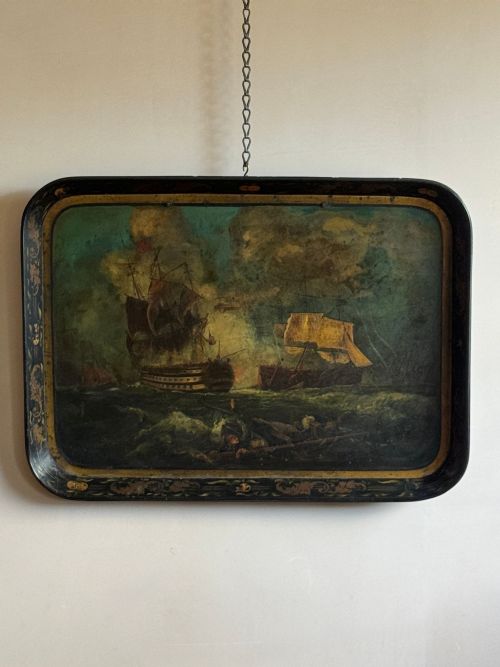
Georgian naval art brings together oil paintings, watercolours, portrait miniatures, decorative trays and storage trunks spanning the eighteenth and nineteenth centuries. These works document maritime history through depictions of sea battles, harbour scenes, merchant vessels and warships under sail.
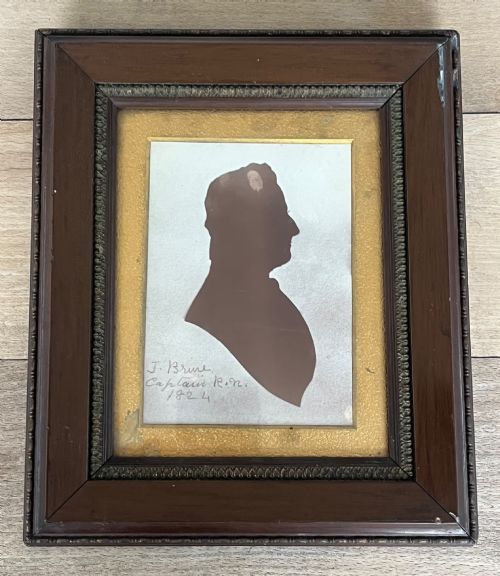
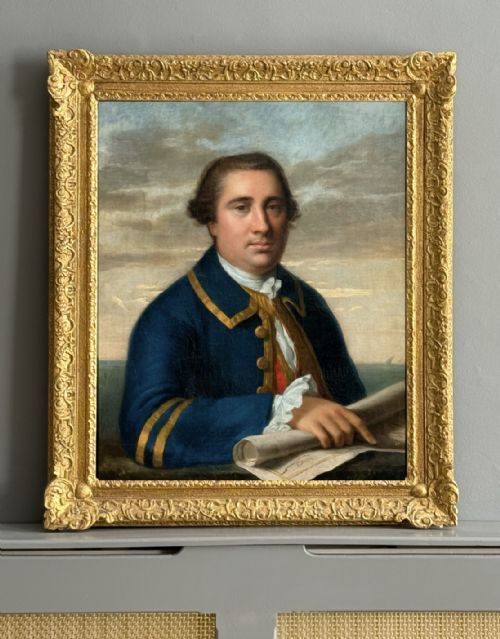
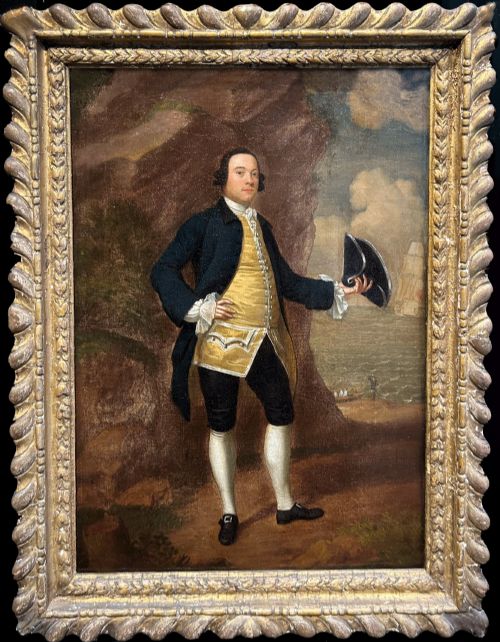
Portraits of naval officers and captains form a significant part of the selection, capturing commanders in uniform alongside specific historical vessels such as the HMS Swift and HMS Queen Charlotte. Pieces range from grand canvas portrayals to intimate miniature paintings set in gold frames.
Materials and construction
Painters used oil on canvas or watercolour on paper to record maritime scenes and portraits, often employing fine brushwork to render rigging, cannon and uniforms. Portrait miniatures utilised enamel, agate panels and gold leaf frames to achieve lasting detail.
Utility pieces such as seaman's chests and decorative trays involved painted pine, japanned papier-mâché, wood and giltwood, combining practical storage with maritime decoration.
Georgian Naval Art Retail Price Guide 2026
Typical asking prices for georgian naval art among the pieces listed under this phrase on Sellingantiques today, from the lower quarter to the upper quarter. They describe what is for sale here now, not the wider market.
Materials across these listings include canvas, oil paint, watercolour, paper, wood, giltwood, gold leaf, enamel and agate.
Distinctions in quality
Quality rests in the precision of the draughtsmanship, particularly in the accurate depiction of maritime architecture, ship rigging and human anatomy within portraits. Finer works display controlled handling of light across water and fabric.
The sophistication of the medium influences the character of the piece, distinguishing finely executed enamel miniatures and detailed canvas oils from broader decorative watercolours and folk art.
LEMUEL FRANCIS ABBOTT·Francis Hayman·Henry Bone ARA·John Simmons·Sir Thomas Lawrence PRA·George Frederick Clarke·Sir William Charles Ross·Francis Holman·Robert Ker Porter·Ambrosini Jerome
The Georgian Naval Art Glossary
- Portrait Miniature
- A small, highly detailed painting executed on materials such as vellum, ivory, enamel or agate. These intimate works were often framed in gold and worn or carried.
- Man-of-War
- A powerful armed sailing warship of the Royal Navy during the age of sail. These vessels carried numerous cannon and formed the backbone of naval fleets.
- Japanned Papier-mâché
- A sturdy material formed from paper pulp mixed with resin and dried, then finished with hard, glossy lacquer layers in imitation of Asian lacquerware.
- Watercolour
- A painting method where fine pigment is suspended in a water-based solution on paper. This medium allowed artists to capture rapid atmospheric effects at sea.
Georgian Naval Art: Frequently Asked Questions
What subjects appear in these works?
Paintings show sea battles, single ship engagements, coastal shipping, and harbour scenes with warships.
Portraits depict named admirals, captains, and officers in uniform alongside merchant navy figures.
How do I date a portrait miniature?
Dating relies on costume details, uniform styles, and the hair fashions of the sitter.
Materials and frame construction also provide clues to the period of production.
Where were seaman's chests used?
Sailors and officers used these painted pine storage trunks aboard ship for personal belongings.
They often featured inscriptions, patriotic emblems, and durable hardware suitable for sea voyages.
What is the difference between oils and watercolours here?
Oils on canvas allowed for large-scale depictions of naval battles and formal full-sized portraits.
Watercolours on paper provided a portable medium for capturing coastal views and immediate marine observations.