





Georgian Nautical Instrument
A georgian nautical instrument brings the mechanical precision of eighteenth and nineteenth century maritime exploration directly to your study.
Georgian Nautical Instrument
When you search for a georgian nautical instrument, you are looking at practical tools built to navigate oceans, read weather patterns, and measure celestial angles during the height of sail. These pieces span the eighteenth century, the regency era, and into the nineteenth century, reflecting a period of rapid scientific advancement in maritime trade and naval warfare.
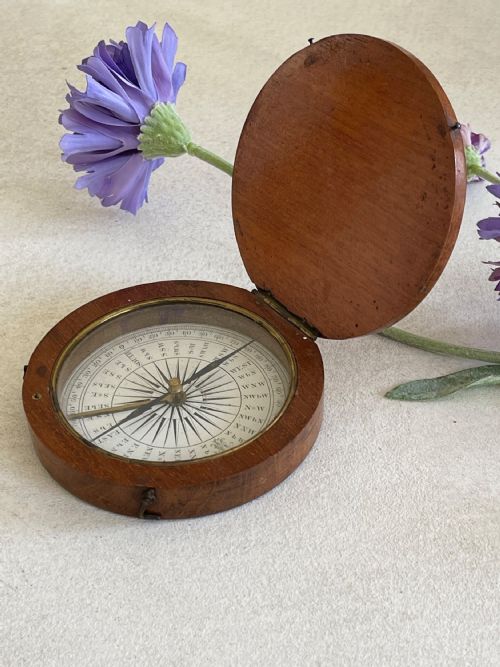
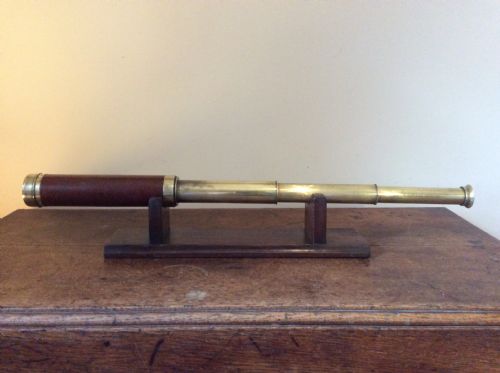
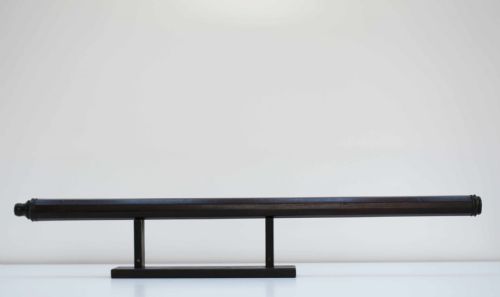
You are most likely to meet portable brass and mahogany telescopes, marine stick barometers, and cased pocket compasses on this page. Form follows function strictly in these objects, designed to withstand damp shipboard conditions while remaining accurate enough for officers and navigators.
Materials and construction
Makers built these instruments using heavy brass for optical tubes, dials, and gimbal rings, paired with seasoned mahogany for protective outer cases and telescope bodies. Wood was selected for stability against warping at sea, while glass lenses gathered light for long-distance sighting.
Makers also integrated paper, cardboard, leather, and sand into specific items like pocket compasses and marine hourglasses. Metal components received careful hand-finishing, engraving, and lacquering to protect against salt air corrosion.
Georgian Nautical Instrument Retail Price Guide 2026
Typical asking prices for georgian nautical instrument among the pieces listed under this phrase on Sellingantiques today, from the lower quarter to the upper quarter. They describe what is for sale here now, not the wider market.
Listings feature instruments spanning the Georgian, Regency, and Victorian periods, constructed from brass, mahogany, glass, leather, and sand.
Distinctions in quality
The top of the range is defined by the clarity of original optics, crispness of engraved maker signatures, and the survival of matching fitted wooden cases. Instruments signed by notable makers command attention because their mechanical tolerances and glass grinding remained superior.
Lower quality or heavily worn examples often show replacement lenses, polished-away engraved details, or split mahogany housings that compromise the structural integrity of the instrument. The presence of original packaging, such as leather outer sleeves or card boxes, separates working pieces from incomplete survivors.
Nairne & Blunt of London·Cary London·Bate of London·Alexander Adie of Edinburgh·John Gilbert
The Georgian Nautical Instrument Glossary
- Altazimuth theodolite
- An instrument for measuring both horizontal and vertical angles in surveying and navigation. These feature precise graduated circles and leveling bases.
- Marine stick barometer
- A wall-hanging weather glass mounted on gimbal brackets to stay vertical aboard a rolling ship. It uses a mercury column in a glass tube to indicate atmospheric pressure.
- Non achromatic
- An early optical configuration that produces colour fringing around bright objects because single lenses bend different light wavelengths at different angles.
- Decagonal
- Having ten sides, a geometric shape sometimes used for the tapered wooden or brass barrel of an early optical telescope.
- Gimbal
- A pivoted support ring that allows a compass or barometer to remain level regardless of the motion of a vessel.
Georgian Nautical Instrument: Frequently Asked Questions
How do you use a marine barometer?
A marine barometer hangs on gimbals to measure atmospheric pressure changes at sea. Rising mercury indicates improving weather, while falling levels warn of approaching storms.
Keep the instrument away from direct heat sources to ensure accurate readings. Tap the barometer gently before reading to settle the mercury column.
Are these old telescopes still functional?
Many surviving telescopes retain their original lenses and focus correctly. They provide magnification suitable for viewing distant terrestrial objects.
Handle the draw tubes with care when extending brass sections. Clean glass surfaces only with specialised optical cloths to protect delicate coatings.
What is an altazimuth theodolite used for?
An altazimuth theodolite measures horizontal and vertical angles for mapping and surveying. Navigators and surveyors used them to calculate exact positions on land or shore.
These complex instruments require sturdy wooden tripods for stable mounting. The brass vernier scales allow fractional readings of arc degrees.
How should I care for mahogany cases?
Mahogany housing benefits from stable indoor humidity and occasional application of wax. Avoid placing wooden cases in direct sunlight to prevent timber splitting.
Inspect brass hinges and leather carrying straps periodically for wear. Keep interior velvet or paper linings clean using a dry, soft brush.