

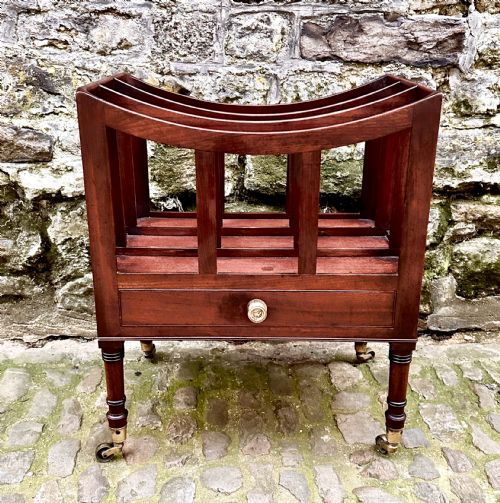
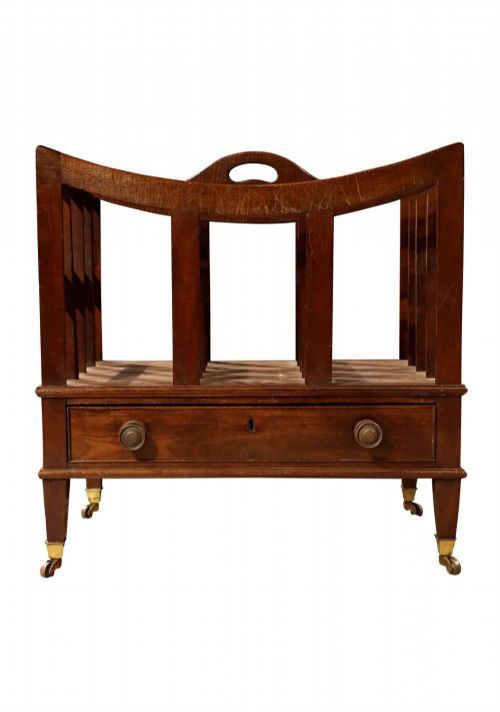
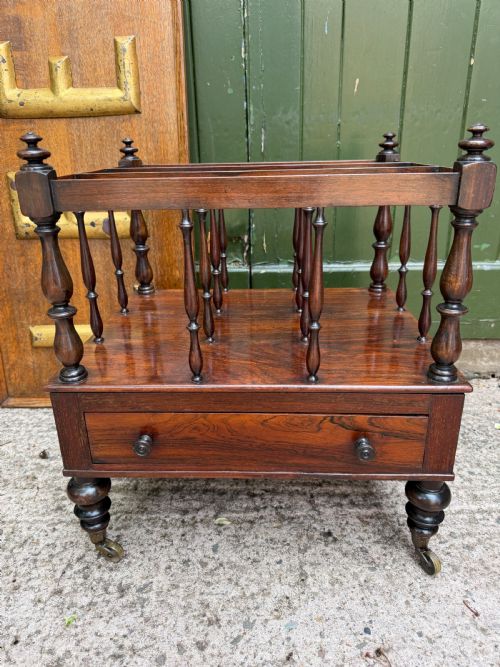


Georgian Music Canterbury Drawer
A georgian music canterbury drawer organises folios and scores within sturdy timber frames, bringing refined order to any sitting room.
Georgian Music Canterbury Drawer
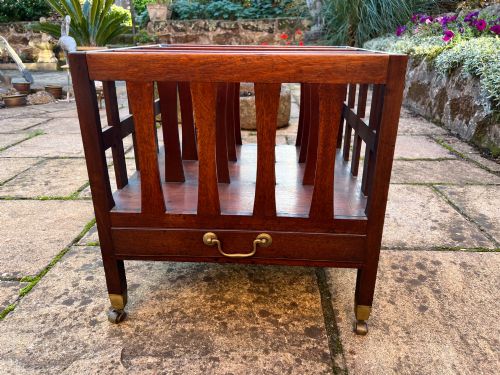
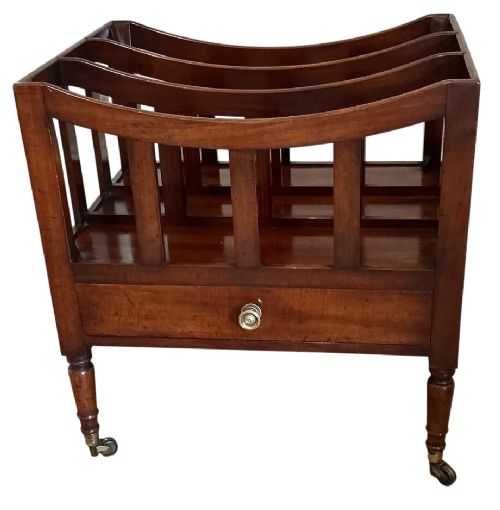
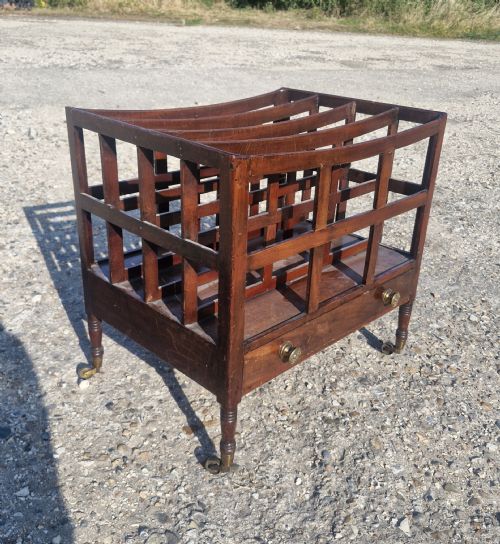
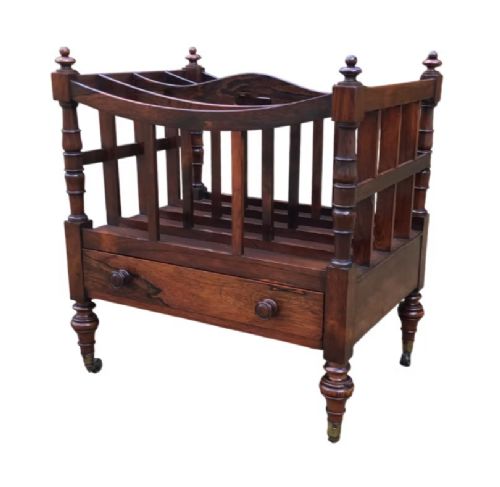
A georgian music canterbury drawer combines divided vertical racks for holding sheet music with a functional low drawer positioned beneath.
Most examples found here date from the Georgian, Regency, and early nineteenth-century periods, constructed primarily as freestanding pieces.
These items were originally designed to hold folios, newspapers, and scores near a piano or music stand.
Materials and construction methods
Cabinet makers utilised dense timber stocks such as mahogany and rosewood, often pairing them with contrasting boxwood inlay.
Structural elements include turned upright supports, pierced scroll divisions, and delicate brass castors for mobility.
Detailing ranges from carved Prince of Wales feathers to wreath motifs and boat-shaped frames.
Georgian Music Canterbury Drawer Retail Price Guide 2026
Typical asking prices for georgian music canterbury drawer among the pieces listed under this phrase on Sellingantiques today, from the lower quarter to the upper quarter. They describe what is for sale here now, not the wider market.
Some models hide tiny compartments just deep enough for a stray conductor's baton or a lost monocle.
Distinctions in quality and execution
Superior examples display finely figured timber grain and intricate carved details rather than plain flat surfaces.
The refinement of the division slats and the smooth operation of the under-tier drawer indicate the maker's original standard of work.
The Georgian Music Canterbury Drawer Glossary
- Canterbury
- A low stand fitted with upright divisions for holding sheet music, newspapers, or periodicals. The form typically incorporates a small drawer at the base.
- Boat-shaped
- A curved hull-like profile seen on the frame sides of certain Regency pieces. This contour gives the rack a softer silhouette.
- Division
- One of the vertical partitions that separates the upper rack into distinct compartments for paper storage. These are frequently pierced or fret-cut.
- Castor
- A small swivelling wheel attached to the base of the legs to allow easy movement across floor surfaces. Brass is the common metal used for these fittings.
Georgian Music Canterbury Drawer: Frequently Asked Questions
What fits inside a music canterbury?
Sheet music folios, scores, newspapers, and weekly magazines sit neatly upright within the slotted upper divisions of the stand.
Smaller accessories or writing papers find a secure home in the enclosed drawer situated directly beneath the rack.
Where should I place a canterbury?
These compact stands suit positioning beside a piano, music stand, or armchair in a main reception room.
Because they are finished on all sides for freestanding use, they sit comfortably away from walls in open spaces.
How do I spot a Regency piece?
Regency pieces often display rich rosewood grain, boat-shaped frames, and turned legs fitted with brass castors.
Carved details such as wreath motifs or Prince of Wales feathers point directly to this early nineteenth-century aesthetic.
Are these stands sturdy enough for daily use?
Solid mahogany and rosewood construction provides robust strength suitable for holding heavy stacks of paper.
Careful handling of the timber and gentle movement on castors preserves the joints during everyday practical use.