


Georgian Mule Chest Drawers
A georgian mule chest drawers combines a traditional blanket coffer with deep base storage, offering a practical piece for modern homes.
Georgian Mule Chest Drawers
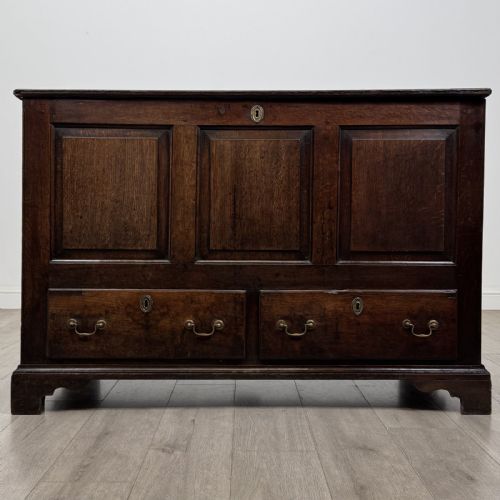
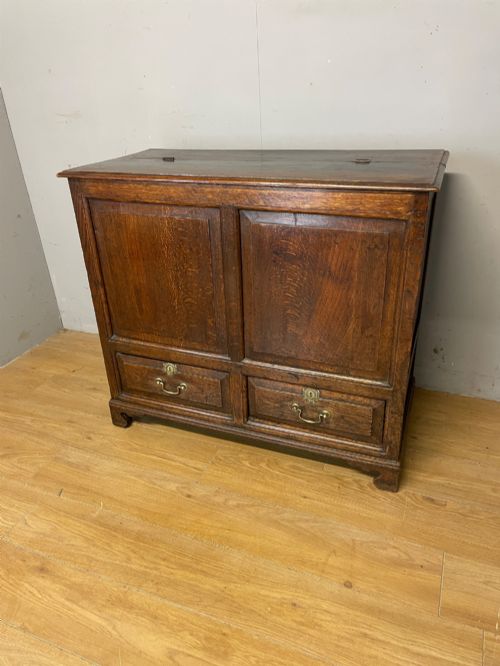
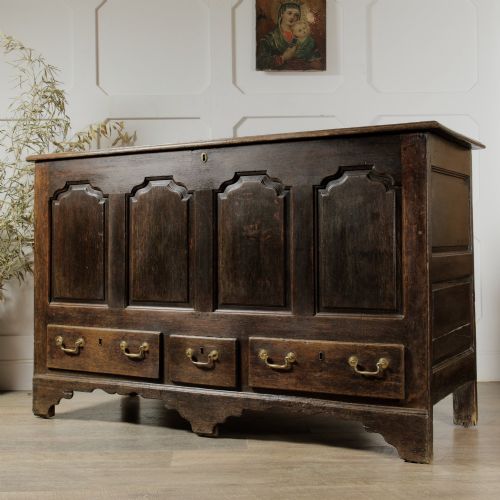
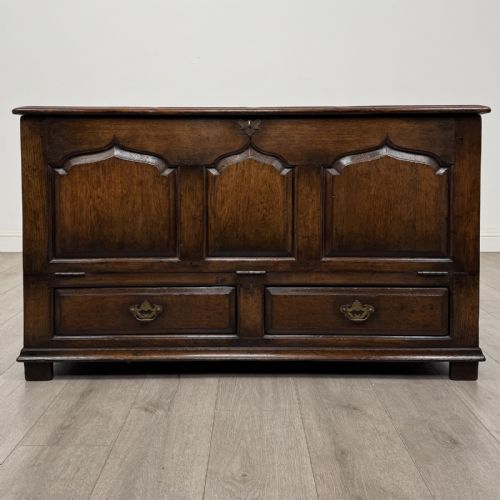
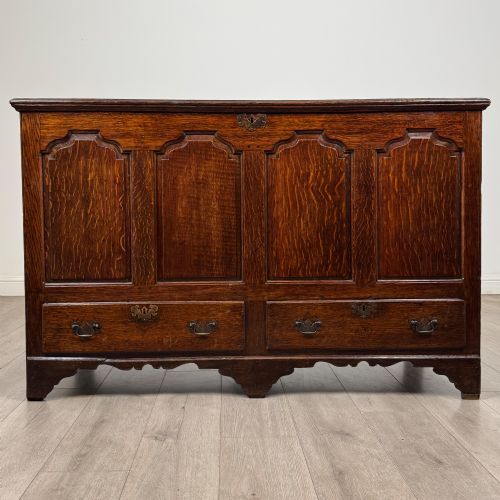
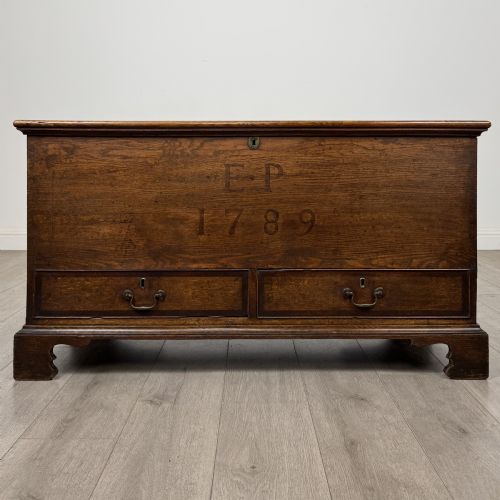
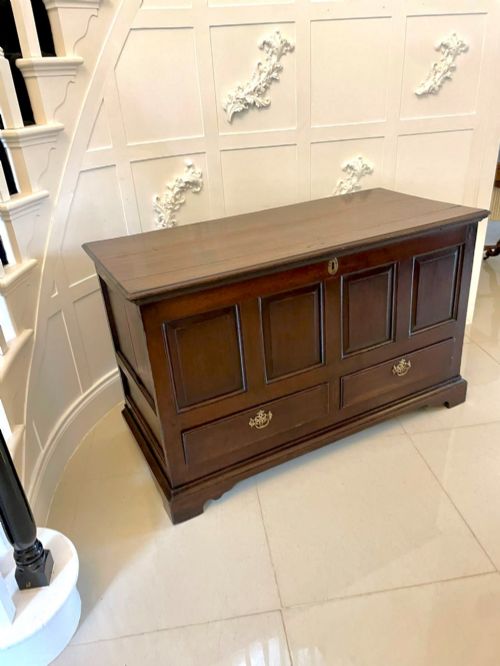
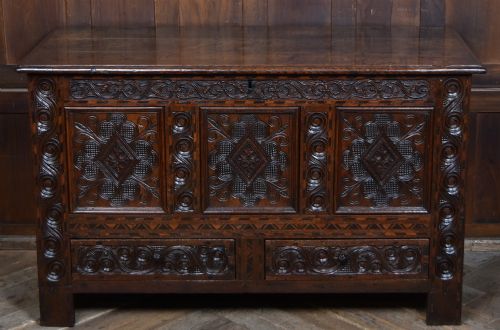
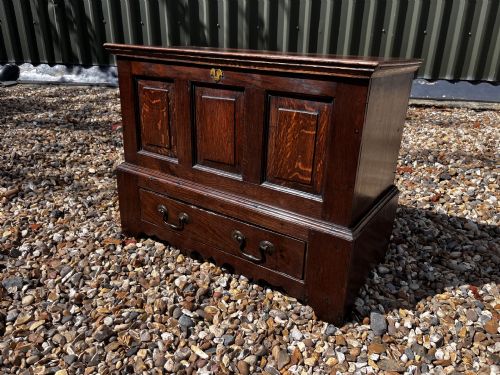
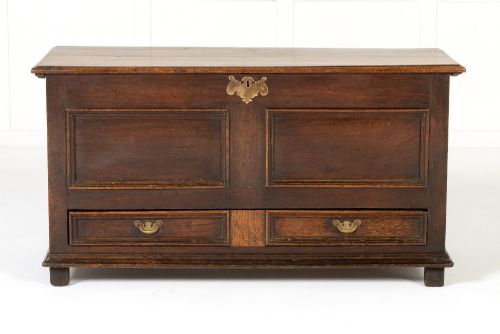
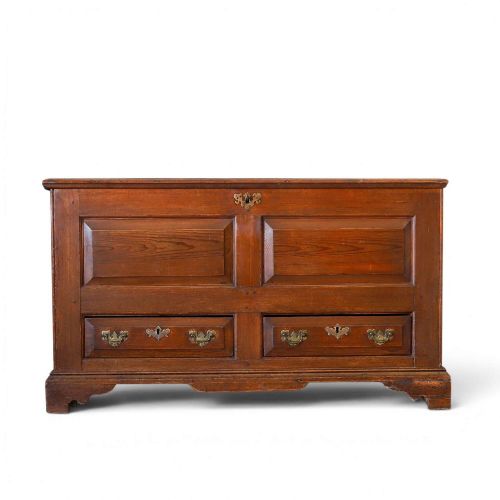
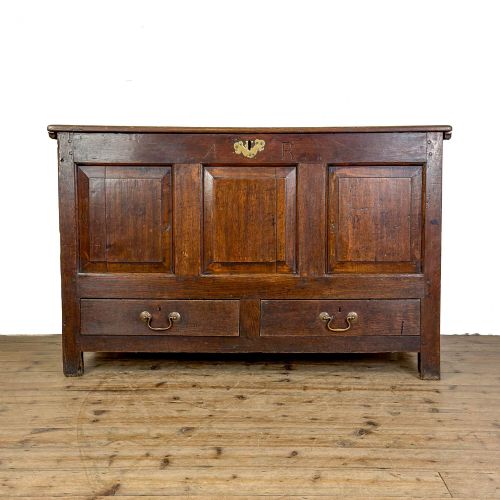
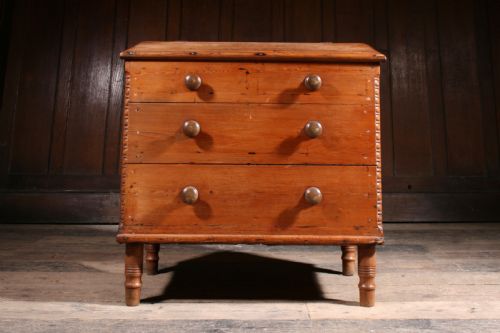
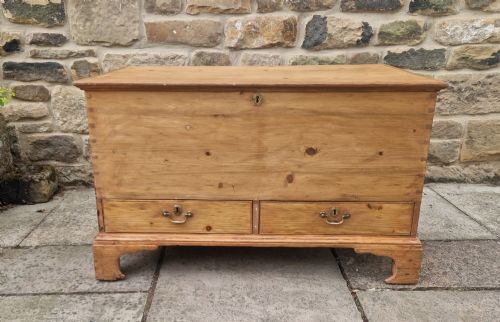
A georgian mule chest drawers bridges the traditional lidded storage trunk and the fitted chest of drawers, evolving through the eighteenth and nineteenth centuries into a staple of domestic utility. These hybrid pieces merge a hinged top compartment for bulky textiles with one or more functional drawers set into the base.
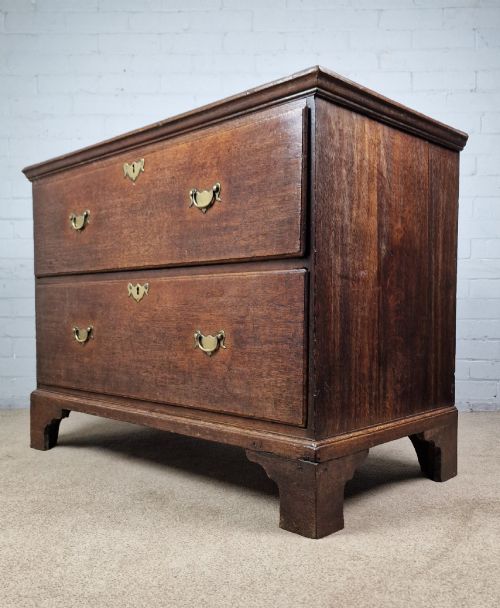
Examples on this page span the Georgian, George III, and Victorian periods, alongside vernacular and regional pieces from Wales and Lancashire. Oak remains the predominant timber, though pine, mahogany, and walnut appear frequently in both waxed and painted finishes.
Buyers encounter substantial three and four-panel constructions alongside smaller regional variants like the coffer bach and apprentice pieces. The combination of top-opening lids and lower drawer access defines the practical utility that distinguishes these chests from standard blanket boxes.
Materials and Construction
Cabinetmakers built these pieces primarily using solid English oak, constructed with pegged mortise and tenon joints to withstand heavy domestic use. Secondary timbers such as pine and deal frequently form internal components, drawer linings, and backboards.
Surface treatment relies heavily on traditional hand-waxing to nourish the timber grain, while mahogany crossbanding and burr elm panels provide decorative contrast on high-status examples. Painted finishes in pine variations indicate provincial or regional workshops adapting simpler materials for everyday households.
Georgian Mule Chest Drawers Retail Price Guide 2026
Typical asking prices for georgian mule chest drawers among the pieces listed under this phrase on Sellingantiques today, from the lower quarter to the upper quarter. They describe what is for sale here now, not the wider market.
Apprentice pieces offer miniature perfection, proving that small furniture requires just as much patience as a full-size wardrobe.
Evaluating Construction and Material
Quality rests in the integrity of the timber selection and the precision of the joinery, particularly where the base drawers meet the main coffer body. Hand-cut dovetails on internal drawer construction indicate skilled provincial craftsmanship compared to mechanical fastening.
The degree of original hardware, including brasses, hinges, and ironwork, influences the character of each piece. Retained original floorboards, uncompromised panel shrinkage, and minimal timber replacement separate well-preserved examples from heavily restored furniture.
The Georgian Mule Chest Drawers Glossary
- Coffer bach
- A small Welsh chest or box, typically featuring a single drawer beneath a lidded compartment. These miniature pieces served as presentation items or dowry chests.
- Crossbanding
- A decorative border technique where thin strips of veneer are laid across the grain of the primary wood. This method frames drawer fronts and panel perimeters on refined George III examples.
- Panelled oak
- A method of construction using framed wooden panels that float within grooves to accommodate natural timber expansion and contraction. This technique prevents splitting across wide surfaces.
- Apprentice piece
- A small-scale item created by a trainee craftsman to demonstrate mastery of joinery techniques to a guild. These items replicate full-scale furniture in miniature.
- Mule chest
- A storage trunk featuring one or more drawers built into the base beneath the primary lidded compartment. The form bridges the evolution from simple coffers to tall chests of drawers.
Georgian Mule Chest Drawers: Frequently Asked Questions
What is a mule chest?
A mule chest is a hybrid storage item that combines a traditional hinged-lid blanket box with one or more drawers built into the base.
This design emerged when cabinetmakers added drawers beneath existing coffer formats to improve accessibility for clothing and linens without opening the main top compartment.
How were mule chests used?
Households utilised these chests for storing heavy blankets, linen, and personal apparel in bedrooms and halls before fitted wardrobes became common.
The top compartment held bulky items, while the lower drawers provided organised access to smaller garments and valuables.
How do I date an oak mule chest?
Dating relies on examining construction methods, timber selection, hardware, and stylistic details such as panel configurations and moulding profiles.
Early eighteenth-century pieces often display hand-split oak panels and pegged framing, whereas later nineteenth-century examples incorporate machine-sawn timber and different secondary woods like pine.
Where were mule chests made?
These chests were produced across England and Wales, ranging from rural vernacular workshops to urban cabinet-making centres.
Regional variations include Welsh coffer bach formats and Lancashire multi-drawer configurations that reflect local woodworking traditions.