



Georgian Mortar
A georgian mortar is a heavy vessel of bronze, brass, iron, stone, or wood used for crushing, which brings weight and substance to any room.
Georgian Mortar
A georgian mortar is a solid vessel designed for grinding spices, medicines, or pigments, appearing in forms ranging from small spice grinders to massive dye makers' equipment. When you search for this phrase, you encounter pieces spanning the seventeenth, eighteenth, and nineteenth centuries, alongside traditional treen and Victorian apothecary examples.
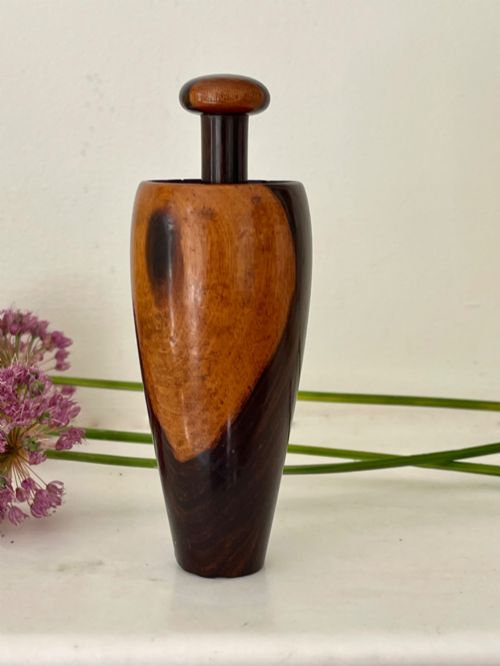
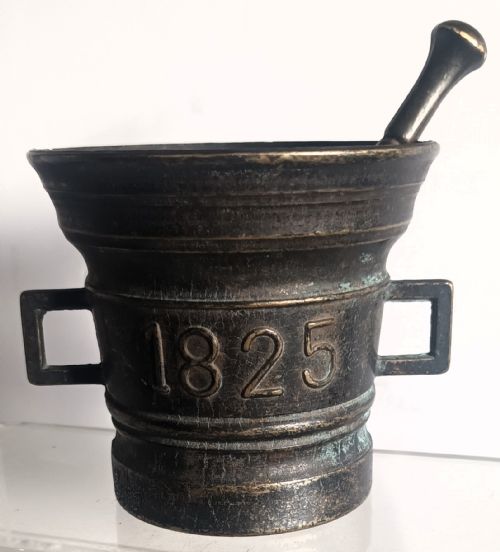
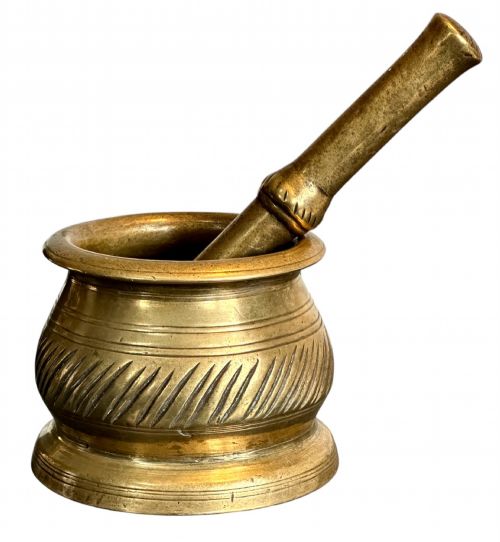
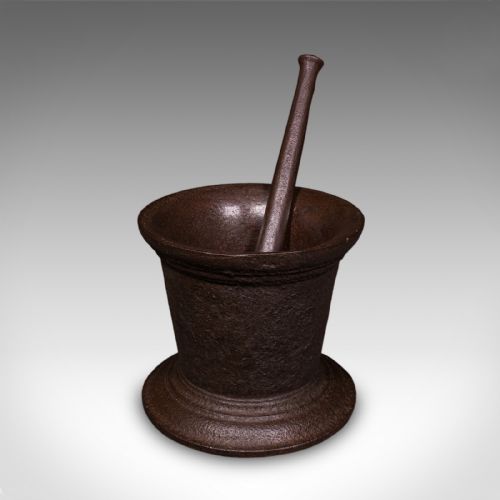
The most common versions on this page are bronze apothecary grinders and heavy brass or metalware vessels, often accompanied by their original pestles. You also find walnut and hardwood treen spice mortars, plus rarer stone examples dating back to the eighteenth century.
These items originate primarily from English domestic and medical contexts, moving from utilitarian kitchenalia and chemist tools into decorative vessels for the modern home.
How they were made
Metal vessels like bronze, bell metal, brass, and cast iron were produced through traditional foundry casting, resulting in thick walls and heavy bases designed to withstand immense downward force. Makers shaped these alloys into flared rims and ribbed bodies, sometimes incorporating handles or decorative bands.
Wooden examples, including walnut and other hardwoods, were turned on a lathe to create smooth interior bowls for spice grinding and snuff preparation. Stone mortars were chiseled from solid blocks to yield non-porous surfaces for heavy crushing tasks.
Georgian Mortar Retail Price Guide 2026
Typical asking prices for georgian mortar among the pieces listed under this phrase on Sellingantiques today, from the lower quarter to the upper quarter. They describe what is for sale here now, not the wider market.
Materials span bronze, brass, cast iron, iron, walnut, wood, hard wood, and bell metal across the eighteenth and nineteenth centuries.
What varies in quality
The distinction between ordinary utility pieces and superior examples lies in the proportion and crispness of the cast or turned details. Well-defined moulded rims, balanced proportions, and substantial weight elevate a bronze or brass mortar, whereas simpler kitchen pieces show more utilitarian casting marks.
For wooden treen, quality depends on the choice of dense timber, such as walnut, and the precision of the turning that keeps the walls even and the base stable. The presence of a matching, period pestle completes the piece and influences its desirability.
The Georgian Mortar Glossary
- Mortar and Pestle
- A heavy bowl and a heavy club used together for crushing and grinding substances. The bowl receives the material while the pestle applies the force.
- Treen
- Small handmade wooden household objects and utilitarian items. These pieces are turned from hardwoods like walnut.
- Bell Metal
- A hard alloy used for casting bells and high-quality mortars. It contains copper and tin for a resonant quality and durable strength.
- Apothecary
- A historical practitioner who prepared and sold medicines. Apothecary mortars were essential tools in these early dispensaries.
- Kitchenalia
- Utilitarian objects formerly used in domestic food preparation. These items combine practical function with traditional craftsmanship.
Georgian Mortar: Frequently Asked Questions
What were georgian mortars used for?
These vessels served to crush and grind dry spices, medicinal herbs, chemical ingredients for apothecaries, and pigments for dye makers.
Their heavy walls and sturdy pestles allowed users to reduce hard materials down to fine powders before the advent of mechanical mills.
How do I clean a metal mortar?
Most bronze and brass pieces only require gentle dusting and occasional cleaning with a dry cloth to preserve their natural age and patina.
Avoid harsh modern polishes that strip away the historical oxidation accumulated over centuries.
Are wooden mortars durable?
Hardwood and walnut pieces withstand dry spices and snuff grinding reliably when kept away from excessive moisture and extreme humidity.
Wood responds well to natural oils if the material begins to look dry over the years.
How can I tell the period?
Dating relies on the manufacturing method, the alloy composition, and the specific turning or casting style typical of eighteenth and nineteenth-century workshops.
Heavier cast bronze items often display the characteristic surface textures of earlier foundry work compared to later Victorian pieces.