

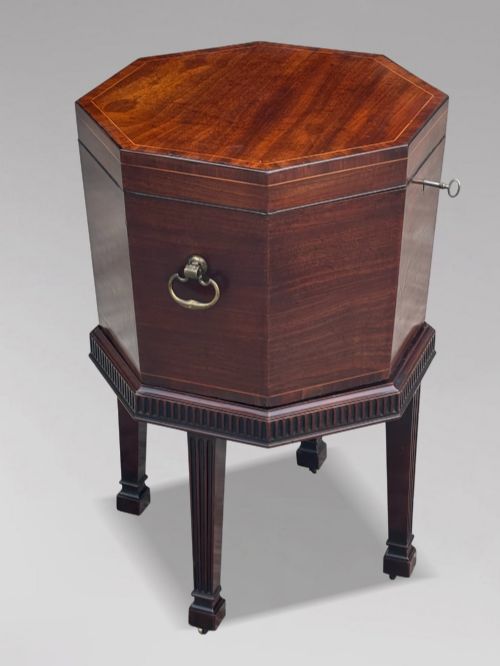
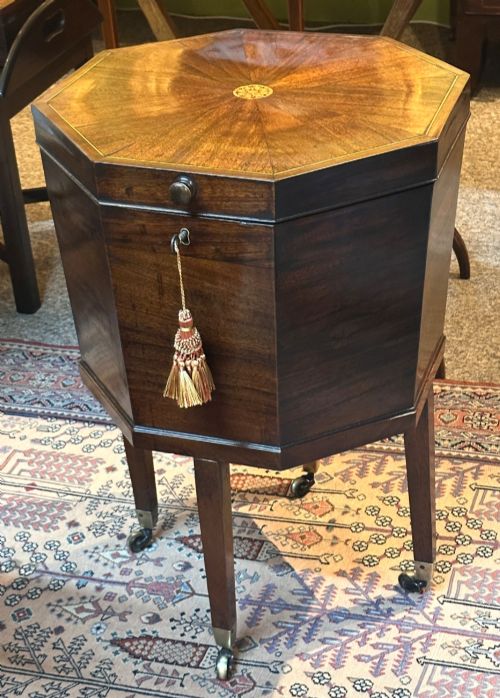
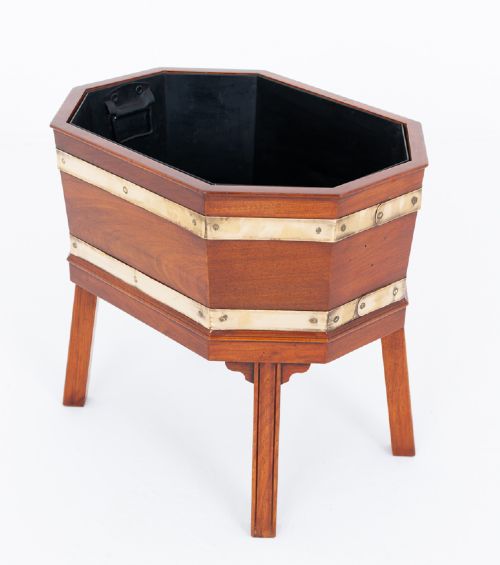
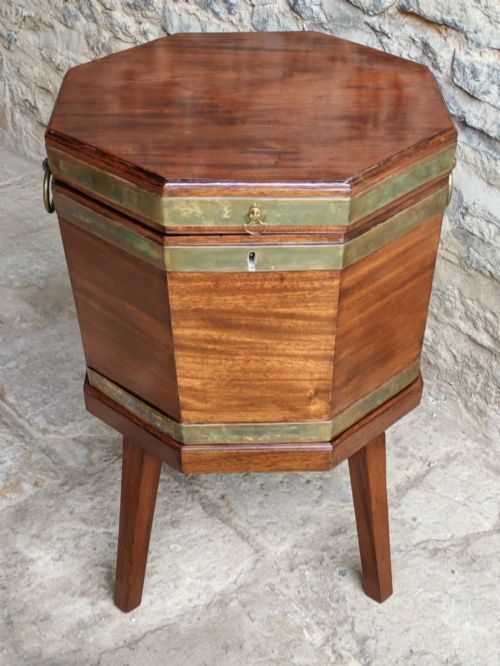


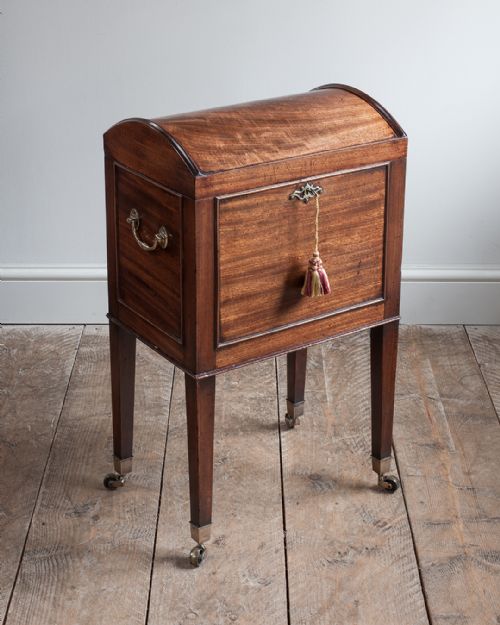

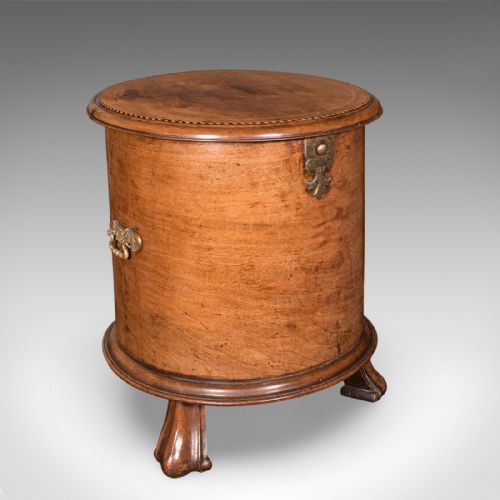


Georgian Mahogany Wine Caddy
A georgian mahogany wine caddy is a robust container built to store and chill fine bottles at the dining table.
Georgian Mahogany Wine Caddy
When you search for a georgian mahogany wine caddy, you encounter sturdy timber boxes and cellarettes designed to hold wine bottles in formal dining rooms. The pieces range from octagonal cooler boxes to sarcophagus-shaped storage cases dating from the eighteenth century into the regency period.
Octagonal and sarcophagus forms dominate the available examples, often fitted with internal divisions to keep bottles separated. Makers also produced smaller box caddies and bottle carriers intended for tabletop use during meals.
Originating predominantly from English workshops, these pieces utilise dense timbers and occasionally incorporate brass banding for reinforcement. The selection includes both original eighteenth-century items and later revival interpretations from the early twentieth century.
Materials and construction
Cabinetmakers built these containers primarily from solid mahogany and mahogany veneers, sometimes selecting walnut, satinwood, or padouk for specific commissions. Timber selection prioritised rich grain patterns that could take a deep, polished finish.
Metal components played a structural and decorative role, with brass bands, handles, and paw feet securing the heavy timber assemblies. Interior compartments frequently accommodated metal linings or section dividers to hold glass bottles safely.
Georgian Mahogany Wine Caddy Retail Price Guide 2026
Typical asking prices for georgian mahogany wine caddy among the pieces listed under this phrase on Sellingantiques today, from the lower quarter to the upper quarter. They describe what is for sale here now, not the wider market.
Some bottles had to behave themselves while locked inside a heavy mahogany sarcophagus.
Judging execution and finish
Quality rests in the crispness of the timber mouldings, the selection of figured mahogany veneers, and the integrity of the original brass mounts. Superior examples display careful attention to internal sectioning and joinery.
Pieces featuring secondary woods like satinwood inlay or distinctive forms such as the sarcophagus shape command attention through advanced cabinetmaking techniques. The preservation of surface patina indicates how well the timber has aged over the centuries.
Gillows
The Georgian Mahogany Wine Caddy Glossary
- Cellarette
- A lockable cabinet or box designed to hold wine bottles near the dining table. They frequently featured lead linings or internal wooden dividers.
- Sarcophagus
- A distinct burial-chest form adopted by cabinetmakers for large wine coolers during the regency period. These vessels typically sat upon bracket or paw feet.
- Padouk
- A heavy tropical hardwood with a reddish hue utilised in colonial and eighteenth-century furniture. It provided exceptional durability for items subjected to moisture.
- Satinwood
- A pale, lustrous timber employed for decorative veneers and inlay work on fine furniture. It created sharp visual contrast against dark mahogany surfaces.
- Jardiniere
- An ornamental receptacle used to hold plants or flowers inside the home. Certain examples share forms with wine coolers and bottle stands.
Georgian Mahogany Wine Caddy: Frequently Asked Questions
What is a georgian mahogany wine caddy used for?
These containers served to hold and transport wine bottles from the cellar to the dining table. Inside, they kept bottles secure and occasionally chilled.
Dining rooms relied on them to maintain hospitality without requiring constant trips to the cellar. Today, they function as decorative storage boxes or distinctive plant stands.
How do I date a wine cooler?
Dating relies on examining the timber species, construction methods, and overall stylistic period. Eighteenth-century pieces often feature octagonal shapes and simpler brass work.
Later regency examples tend toward sarcophagus forms with heavier feet and elaborate mouldings. Twentieth-century revival pieces show different tool marks and fresher timber ageing.
Are these pieces lined with metal?
Many original coolers included internal metal or lead linings to hold ice and water for chilling wine. These linings helped protect the timber from moisture damage.
Over the centuries, some linings were removed or replaced during maintenance. Surviving internal divisions help confirm the original purpose of the box.
Where were these pieces manufactured?
English workshops produced the majority of these containers during the georgian and regency eras. Cabinetmakers in London and regional centres built them for elite dining spaces.
Colonial variations, such as Anglo-Indian pieces, also appear using exotic timbers like padouk. Scottish workshops contributed distinct regional interpretations of the form.