


Georgian Mahogany Wall Table
A georgian mahogany wall table brings architectural balance to a hallway or drawing room through rich timber and clean proportions.
Georgian Mahogany Wall Table
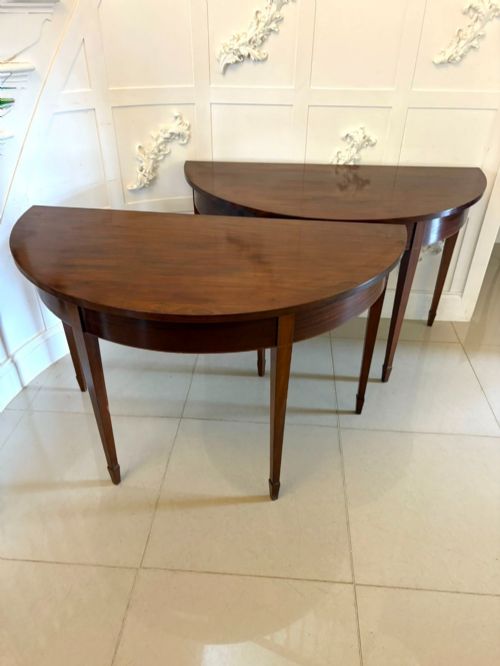
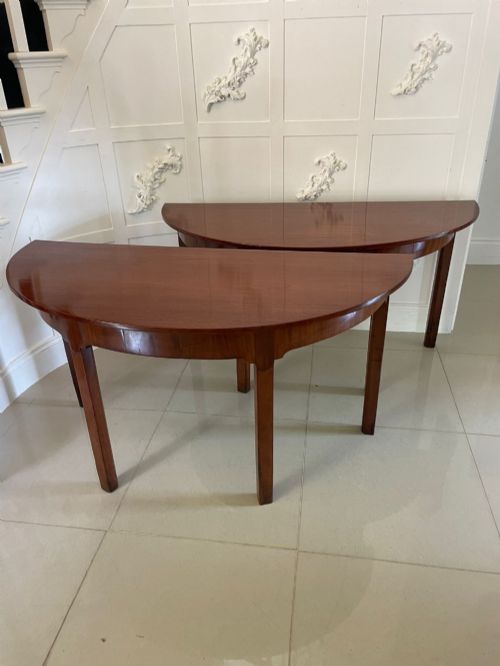
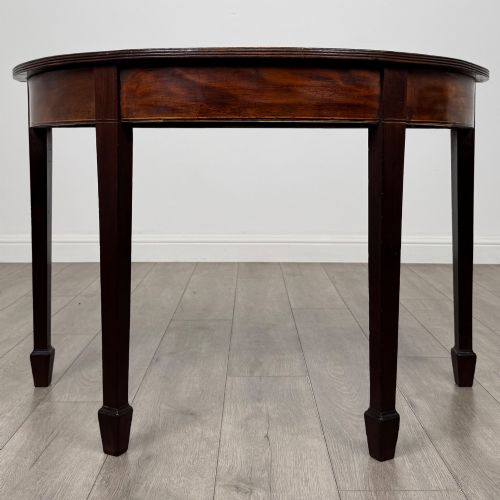
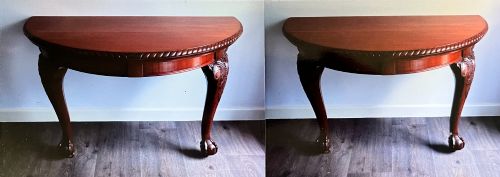
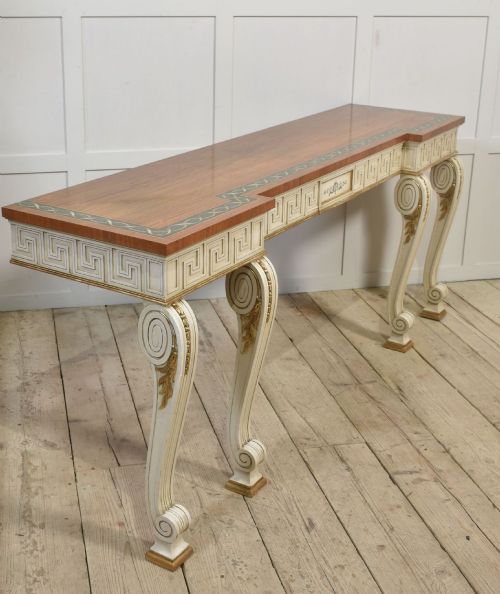
A georgian mahogany wall table encompasses console tables, side tables, serving tables and tea tables designed to stand flat against a wall or fit neatly into a corner. Demi-lune and serpentine shapes appear frequently, alongside rectangular frames intended for formal reception rooms.
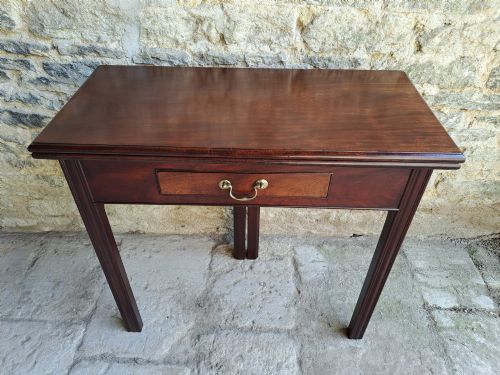
The selection ranges from eighteenth-century originals made during the Georgian and Regency periods to later revivals from the nineteenth and twentieth centuries. These pieces function variously as display surfaces, serving boards or folding card tables with hinged tops.
Materials and construction
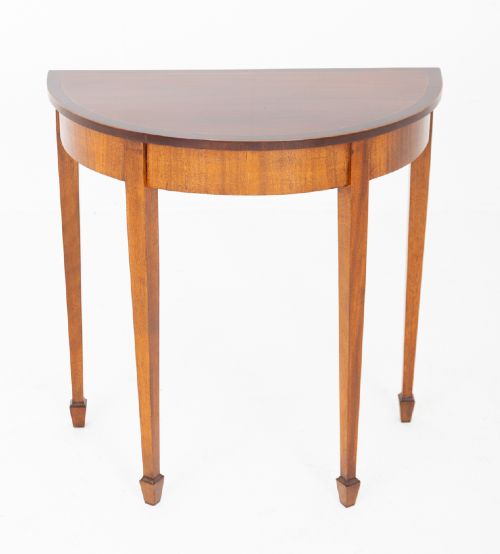
Makers utilised solid mahogany and flame mahogany veneer, often enhanced by contrasting stringing or crossbanding in satinwood and boxwood. Secondary woods support structural frames, while brass fittings and painted highlights occasionally accent the primary timber.
Joinery techniques include pegged mortise and tenon joints for structural stability, alongside finely turned legs and hand-carved bracket details. Fold-over mechanisms on tea and card tables rely on accurate knuckle joints and pivoting wooden supports.
Listings feature pieces spanning the Georgian, Regency, Victorian and Edwardian eras, executed in solid mahogany, flame mahogany veneer, and satinwood.
Assessing quality
The selection of timber dictates much of the visual character, with heavily figured Cuban mahogany and matched veneer panels sitting at the upper end of the scale. Crispness in carved mouldings and precision in inlaid stringing separate fine cabinet work from simpler vernacular pieces.
Proportion and integrity of the original surface finish govern desirability. Examples retaining deep natural patination and minimal structural alteration demonstrate superior craftsmanship compared to heavily restored or later revival equivalents.
Cording of London
The Georgian Mahogany Wall Table Glossary
- Demi-lune
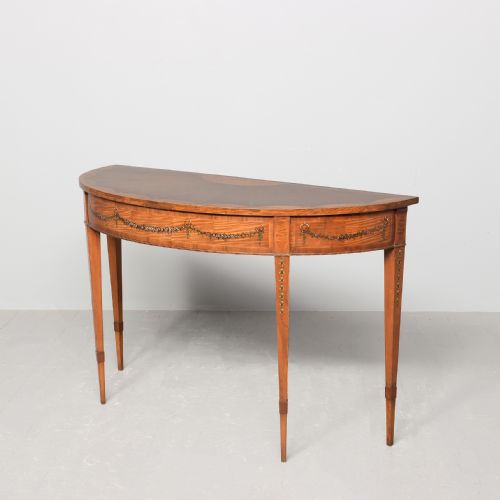
- A half-moon shape popular for console and hall tables designed to sit flush against a wall. This form allows the table to occupy minimal floor space in narrow corridors.
- Crossbanding
- A border of veneer laid with the grain running perpendicular to the main surface of the table top. It creates a neat visual frame around the central timber.
- Stringing
- A narrow inlaid line of contrasting light wood, such as boxwood, set into the mahogany surface. This technique highlights the geometric outlines of drawers and legs.
- Console table
- A wall-mounted or freestanding table designed primarily for display rather than heavy utility. They frequently feature decorative legs and architectural aprons.
- Patina
- The deep, warm surface sheen developed by old wood through decades of handling, wax polishing and exposure to light. It is a key indicator of age and authenticity.
Georgian Mahogany Wall Table: Frequently Asked Questions
What is the difference between a console table and a side table?
A console table is traditionally designed to stand against a wall, sometimes anchored to it for stability, and prioritises decorative display. Side tables are generally freestanding pieces built with four fully finished legs.
In older houses, console tables often matched pier glasses or mirror frames, while side tables served practical roles in dining rooms and parlours.
How do I spot a Georgian revival piece from an original?
Original pieces display authentic tool marks, hand-cut joinery and timber shrinkage appropriate to the eighteenth or early nineteenth century. Revival pieces made in the twentieth century often use standardised machine-cut joints and modern secondary woods.
Examining the underside, drawer linings and the nature of the timber finish helps clarify the true age of the construction.
Where should I place a demi-lune table?
A demi-lune table fits naturally into entrance halls, landings or narrow corridors where a rectangular table would obstruct foot traffic. Its curved front softens the geometry of square rooms.
Pairing one beneath a mirror or painting creates a balanced focal point upon entering a room.
How do I care for antique mahogany furniture?
Keep mahogany tables away from direct sunlight and heat sources to prevent the wood from drying out and the veneer from lifting. Regular dusting with a soft, dry cloth maintains the surface.
Apply traditional beeswax periodically to nourish the timber and preserve the natural patination without building up heavy chemical layers.