


Georgian Mahogany Pole Screen
A georgian mahogany pole screen brings upright elegance and adjustable needlework to firesides across the centuries.
Georgian Mahogany Pole Screen
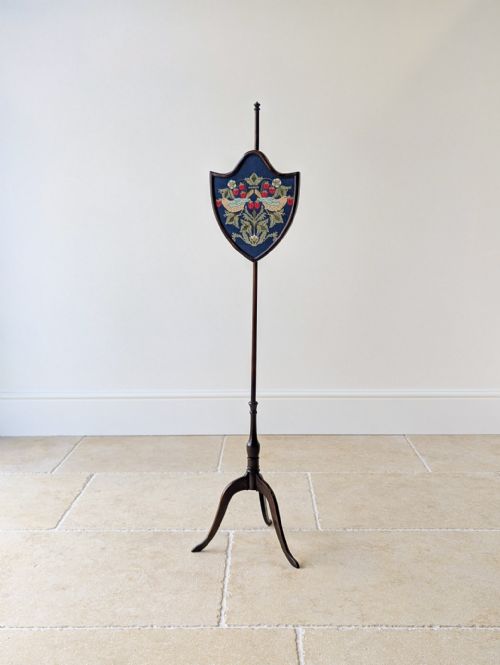
A georgian mahogany pole screen serves as a movable shield designed to protect delicate facial complexions from the fierce heat of an open hearth. These freestanding pieces feature a vertical wooden shaft mounted on a stable base, typically resting upon tripod legs.
The primary form encountered here combines rich timber with a sliding panel that adjusts vertically to suit the user. These screens span multiple eras, encompassing George III, Regency, and William IV styles alongside 19th-century interpretations.
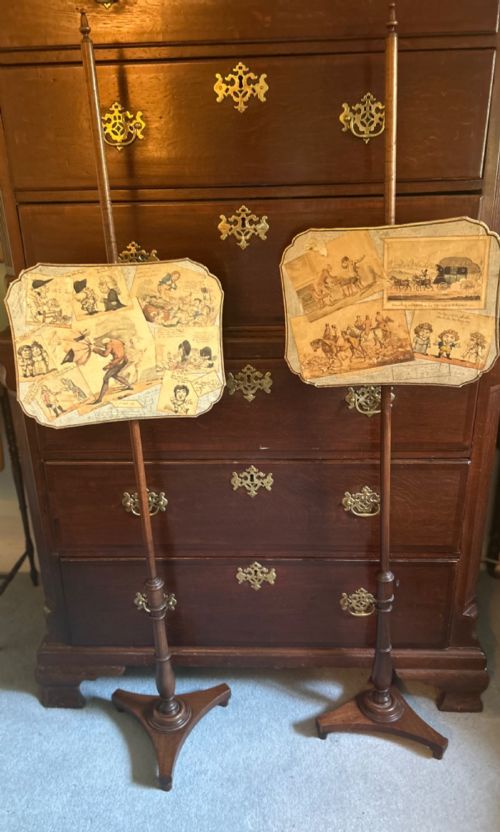
Beyond purely functional origins, these items function as decorative focal points within traditional reception rooms. Examples range from modest single items to matched pairs adorned with intricate textile inserts.
What varies in quality
The refinement of the base carving and the stability of the tripod construction dictate the foundational worth of the piece. Crisp turning on the central column and well-proportioned legs indicate superior workshop execution.
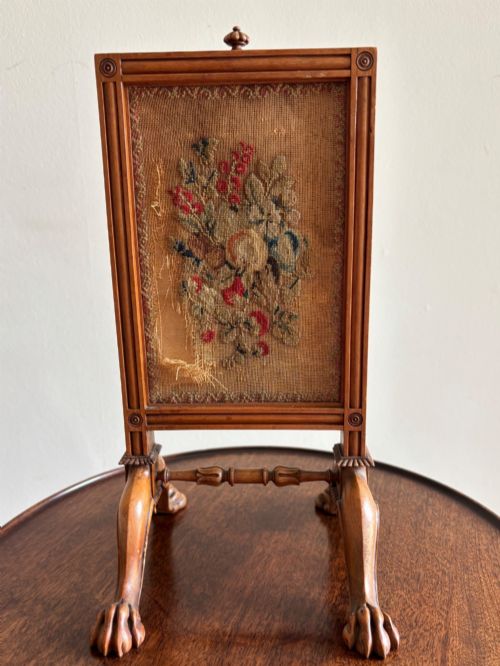
The artistry and preservation of the needlework panel significantly influence the overall character of the screen. Finely worked tapestry and intact historic textiles elevate the piece far beyond utilitarian fire guards.
Listings feature mahogany, rosewood, and goncalo alves alongside brass, glass, and wool textiles.
The Georgian Mahogany Pole Screen Glossary
- Pole screen
- A vertical firescreen mounted on a slender shaft with an adjustable panel. It blocks radiant heat from an open fire.
- Tripod base
- A three-legged support system providing stability for the upright pole. These often terminate in pad or scroll feet.
- Needlepoint
- Stitched yarn worked over a canvas mesh foundation. It forms the decorative imagery seen within the sliding shield.
- Poker work
- A pyrolography technique using heated metal to scorch designs into wood. This creates monochromatic artistic panels.
Georgian Mahogany Pole Screen: Frequently Asked Questions
How do you adjust the panel height?
A brass thumb screw or an internal friction collar secures the sliding shield to the central vertical pole. Loosening this mechanism allows the panel to slide up or down.
Once the desired blocking position against the hearth heat is reached, the mechanism is retightened to hold the screen in place.
Were these used strictly for fire protection?
While originally designed to shield ladies' faces and heavy cosmetics from melting near open coal fires, their utility evolved. They quickly became status symbols in fashionable drawing rooms.
Their adjustable panels also served to block drafts or direct light away from seating areas during long evenings.
How do I distinguish George III from Regency examples?
George III pieces frequently exhibit classical restraint, featuring mahogany with subtle carving, straight tripod legs, and fine needlework. They lean towards architectural dignity.
Regency variants often introduce bolder forms, sometimes incorporating rosewood, goncalo alves, or more exuberant pedestal bases reflecting changing nineteenth-century tastes.
Can these be used as floor lamps today?
Some historical examples undergo conversion to hold electrical fittings, adapting the original upright shaft into a lighting support. This repurposes the furniture for modern illumination needs.
Unconverted pieces retain their original purpose as display stands for antique textiles and historic needlework panels.