

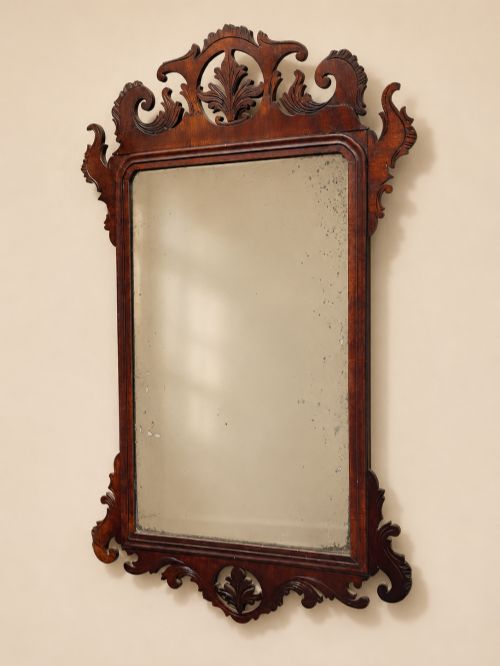
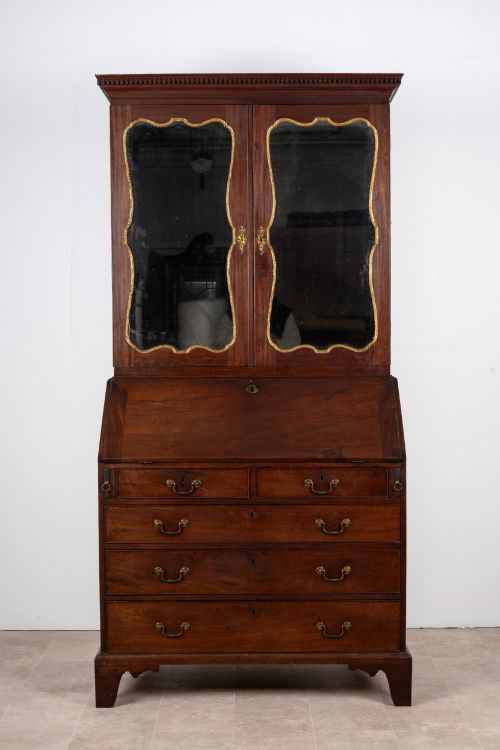
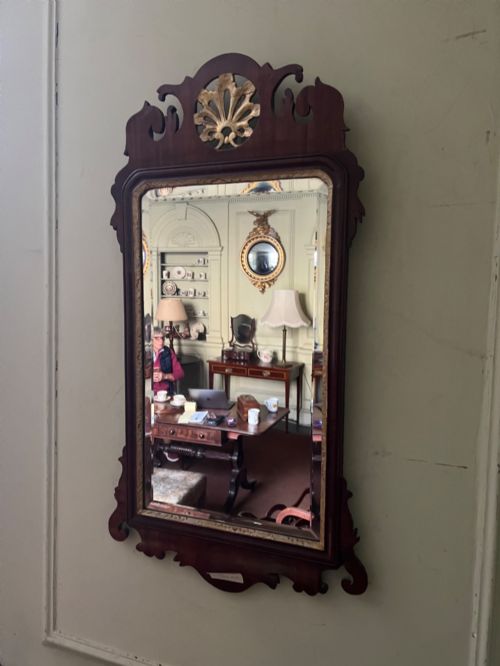
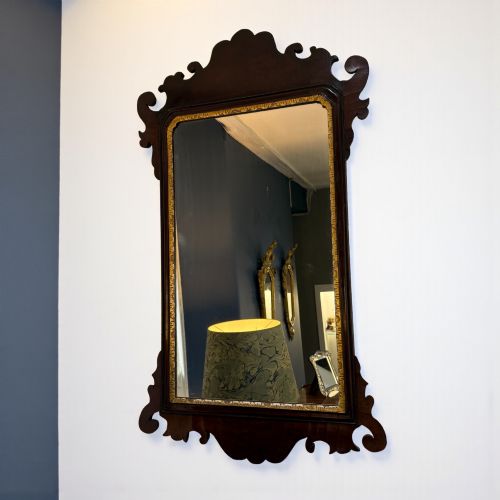
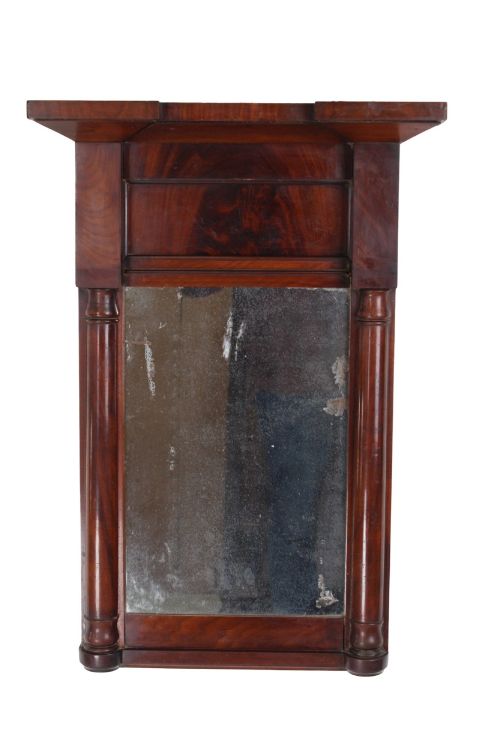
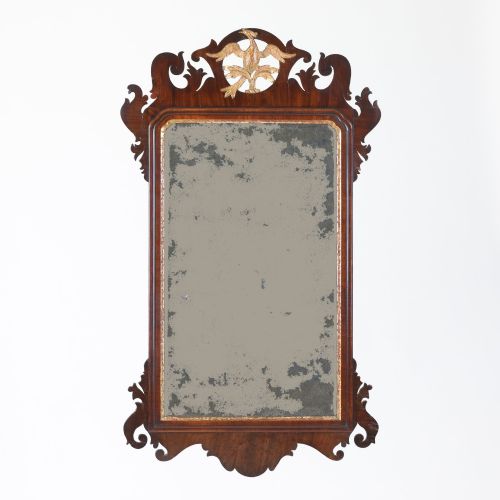

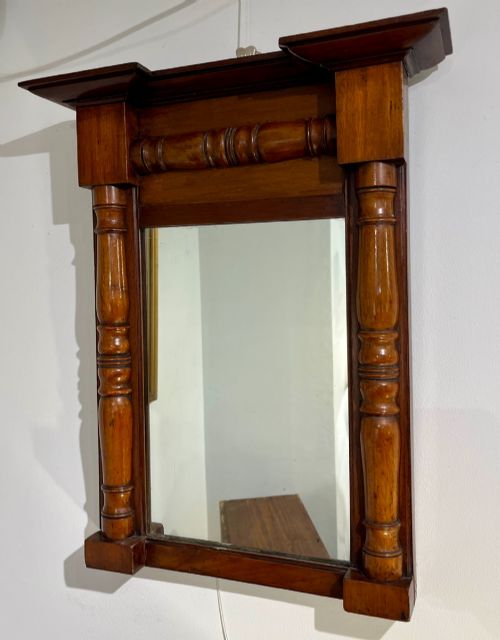
Georgian Mahogany Mirror Frame
A georgian mahogany mirror frame brings warmth and linear depth to a room through dark timber and reflective glass.
Georgian Mahogany Mirror Frame
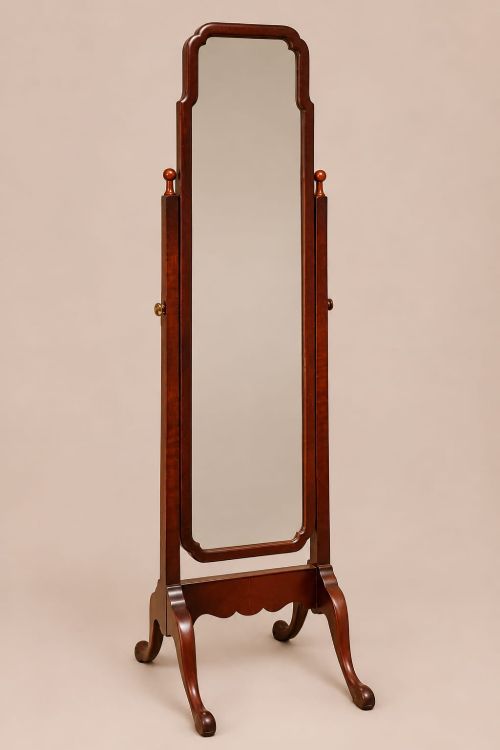
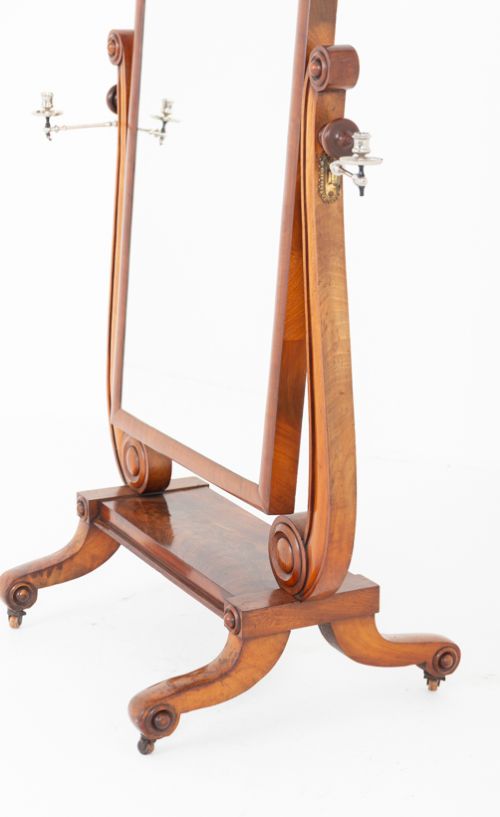
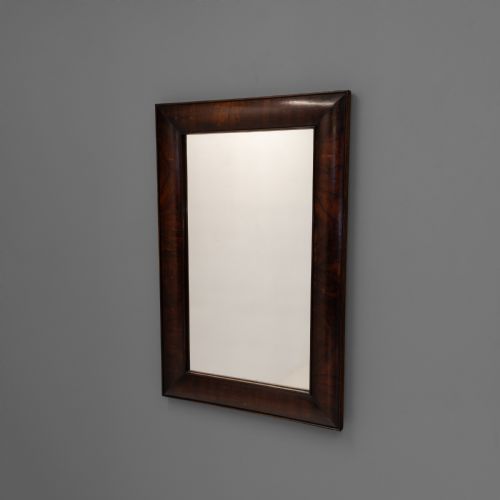
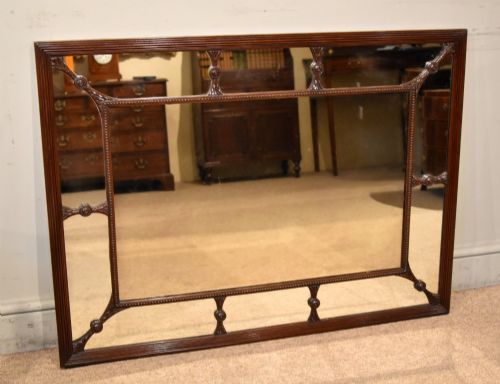
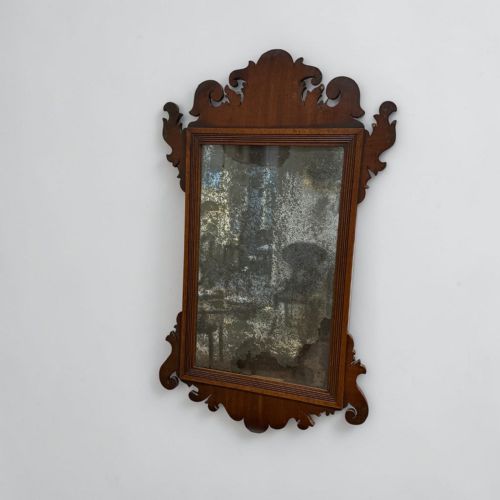
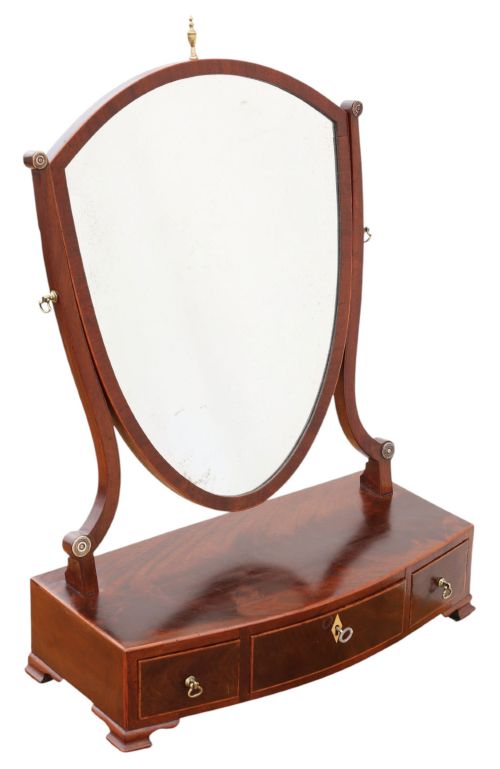
A georgian mahogany mirror frame encompasses wall mirrors, dressing table mirrors, and freestanding cheval mirrors made primarily in the eighteenth and nineteenth centuries. You will frequently encounter wall-hanging fretwork examples alongside swivel dressing mirrors designed for the tabletop.
The selection ranges from small swing toilet mirrors to large overmantel and pier mirrors suited for reception rooms. Pieces span genuine Georgian periods as well as later revival interpretations created across the nineteenth and twentieth centuries.
How they were made
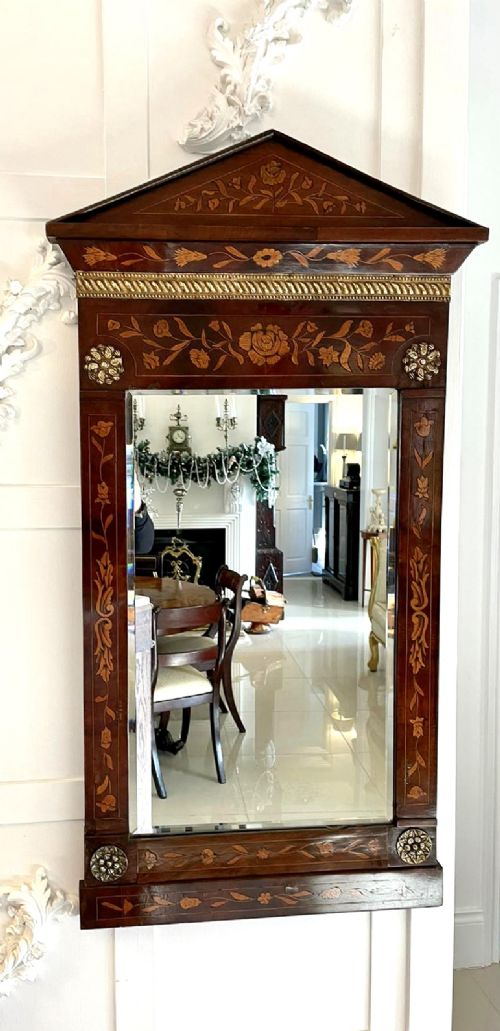
Craftsmen built these frames using dense mahogany timbers, frequently applying parcel-gilt details, brass hardware, and intricate wood inlay to enhance the primary wood. Mirror glass is set within shaped wooden rebates, supported by fret-cut backboards.
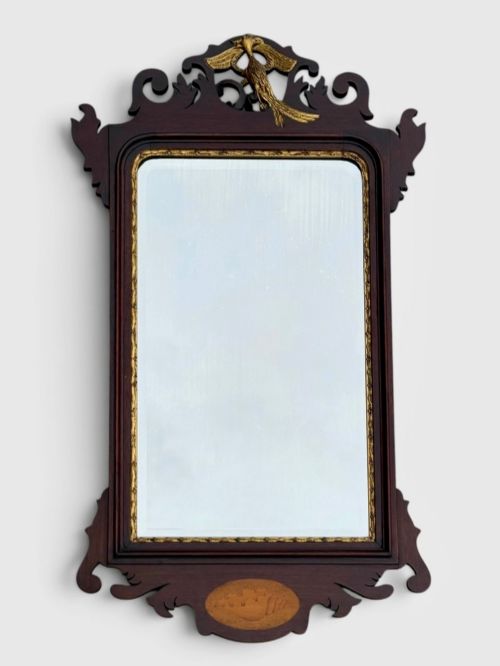
Fretwork frames rely on precise jigsaw cutting to produce symmetrical pierced scrollwork, while architectural pier mirrors utilise applied mouldings and gilded accents to achieve depth.
Georgian Mahogany Mirror Frame Retail Price Guide 2026
Typical asking prices for georgian mahogany mirror frame among the pieces listed under this phrase on Sellingantiques today, from the lower quarter to the upper quarter. They describe what is for sale here now, not the wider market.
Listings combine genuine eighteenth-century pieces with later Victorian and Edwardian revivals executed in mahogany and walnut.
What varies in quality
Quality rests upon the crispness of the fret-cut carving and the depth of the mahogany grain rather than surface polish alone. Superior examples display refined proportions and clean joints where the frame corners meet.
The presence of original mirror glass, subtle parcel-gilt touches, and well-executed fretwork, such as carved ho-ho birds, distinguishes ambitious workshop production from simpler commercial alternatives.
William Kent
The Georgian Mahogany Mirror Frame Glossary
- Fretwork
- Openwork ornamentation cut from thin timber using a fine saw. This technique creates lightweight decorative borders on wall mirrors.
- Parcel-gilt
- Partial gilding applied to specific carved details on a wooden frame. It highlights architectural mouldings against the dark mahogany.
- Pier mirror
- A tall wall mirror designed to hang on the narrow wall space between windows. These often feature architectural framing.
- Cheval mirror
- A full-length dressing mirror supported by a freestanding frame with pivoting pivots. It allows the glass to tilt at various angles.
- Vauxhall mirror
- A type of mirror plate characterised by a bevelled edge and thicker glass composition. It indicates high production standards in earlier English mirrors.
Georgian Mahogany Mirror Frame: Frequently Asked Questions
Where should I hang a wall mirror?
These frames suit reception rooms, hallways, and bedrooms where reflected light opens up the floor plan.
Position the glass at eye level to maximise both illumination and balance within the room's proportions.
How do I identify a swing dressing mirror?
Swing mirrors feature a pivoting plate mounted between two upright supports on a box base or tabletop stand.
This mechanism allowed users to adjust the angle for grooming in bedrooms and dressing rooms.
Are revival pieces considered authentic antiques?
Revival items date from later periods such as the Edwardian era or the late nineteenth century while copying earlier Georgian designs.
They represent historical craftsmanship styles rather than original eighteenth-century production dates.