
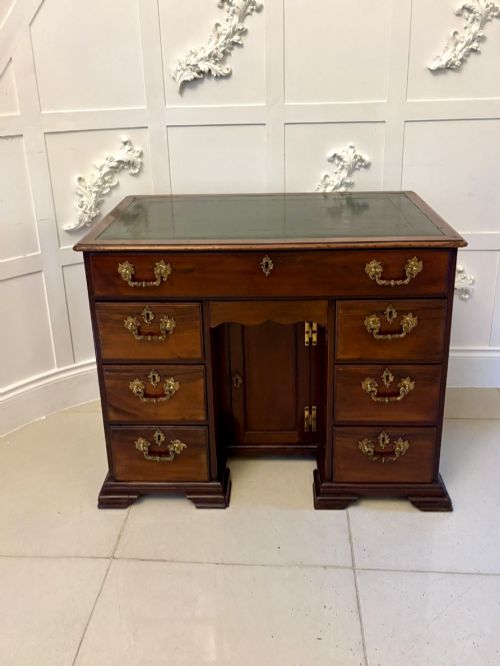
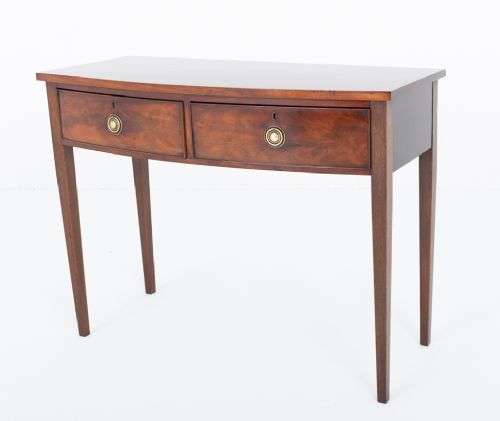
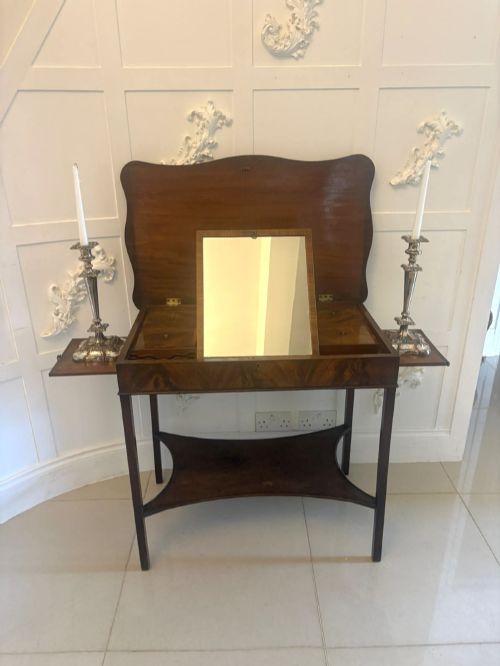
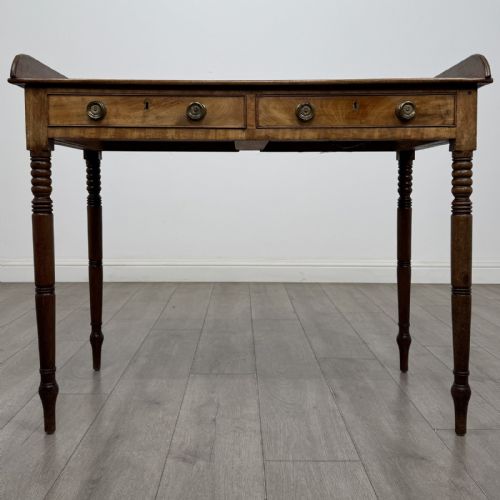
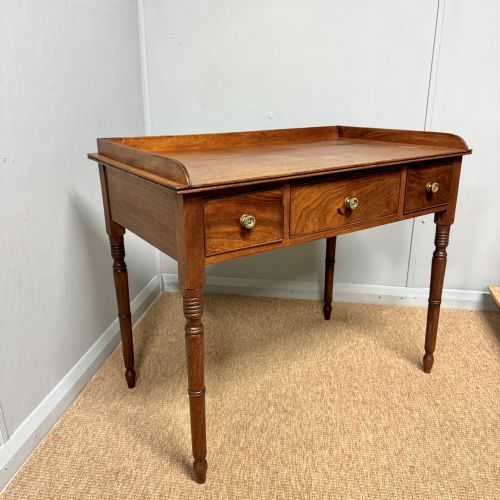
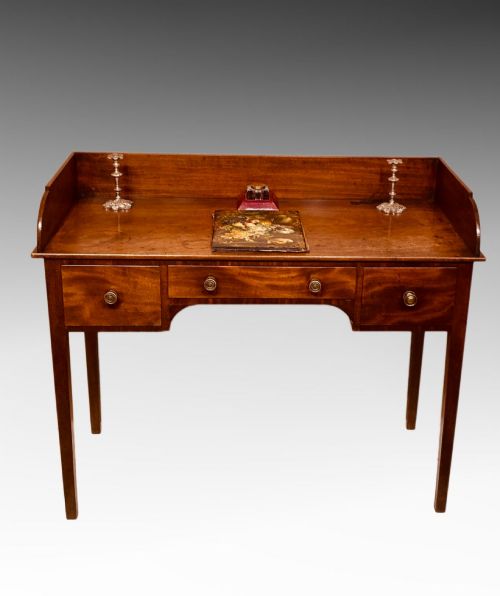
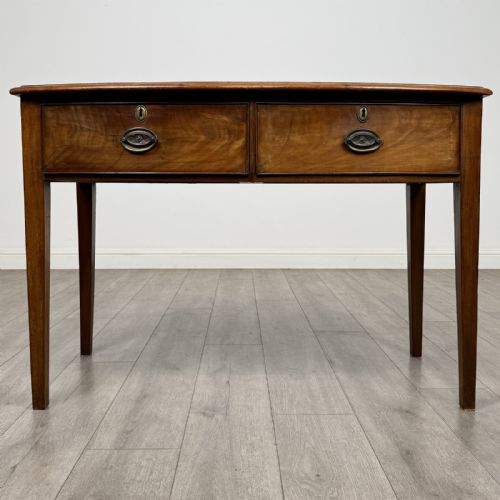
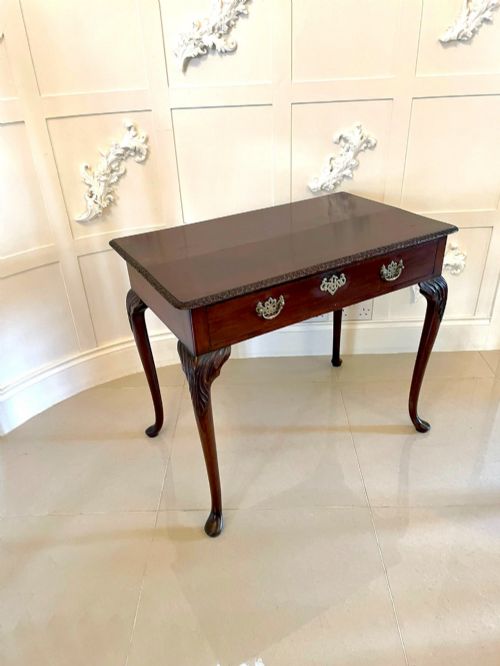
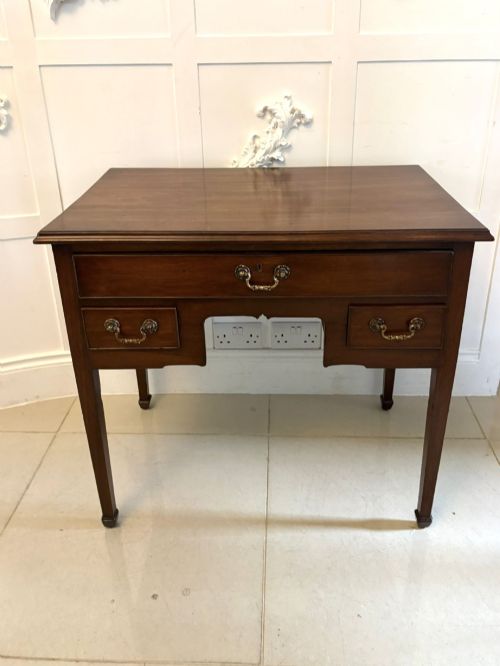
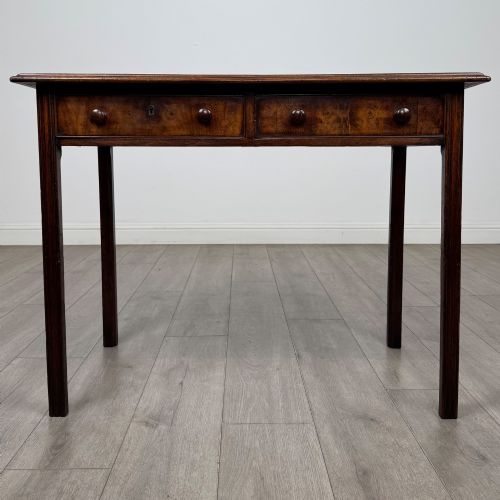
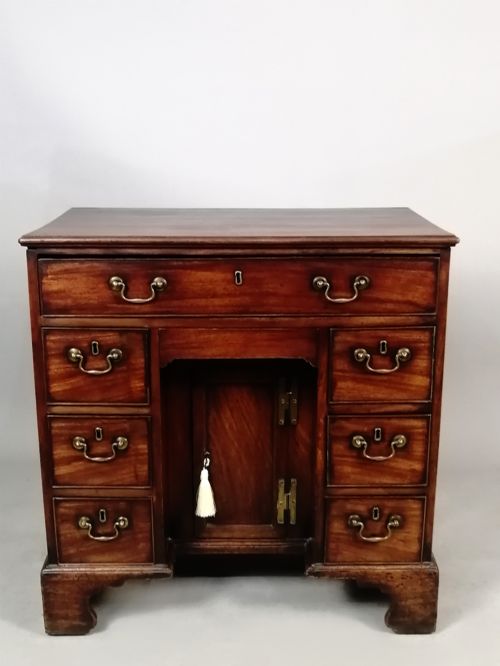
Georgian Mahogany Dressing Desk
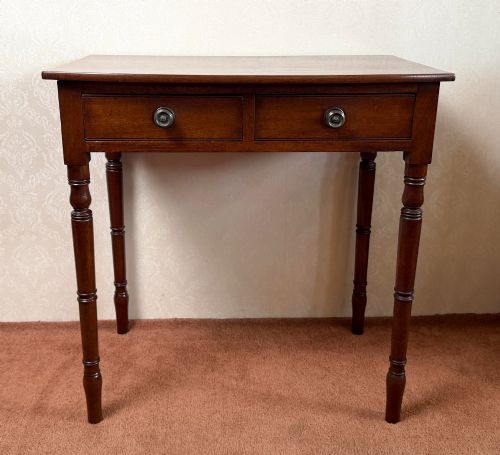
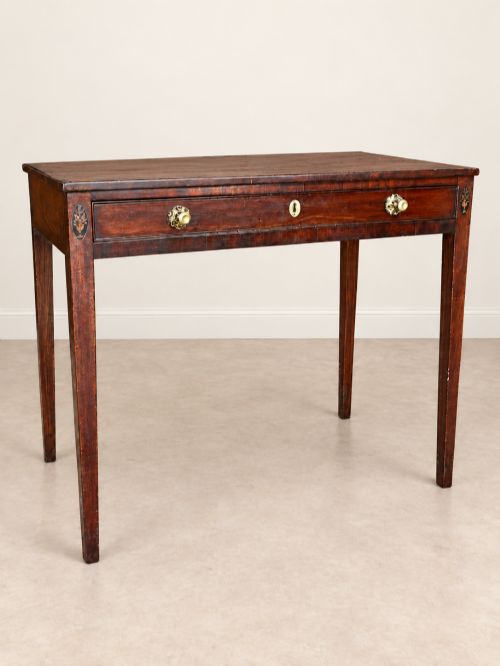
A georgian mahogany dressing desk brings rich timber grain and compact utility to a room, offering a tactile writing surface built to last.
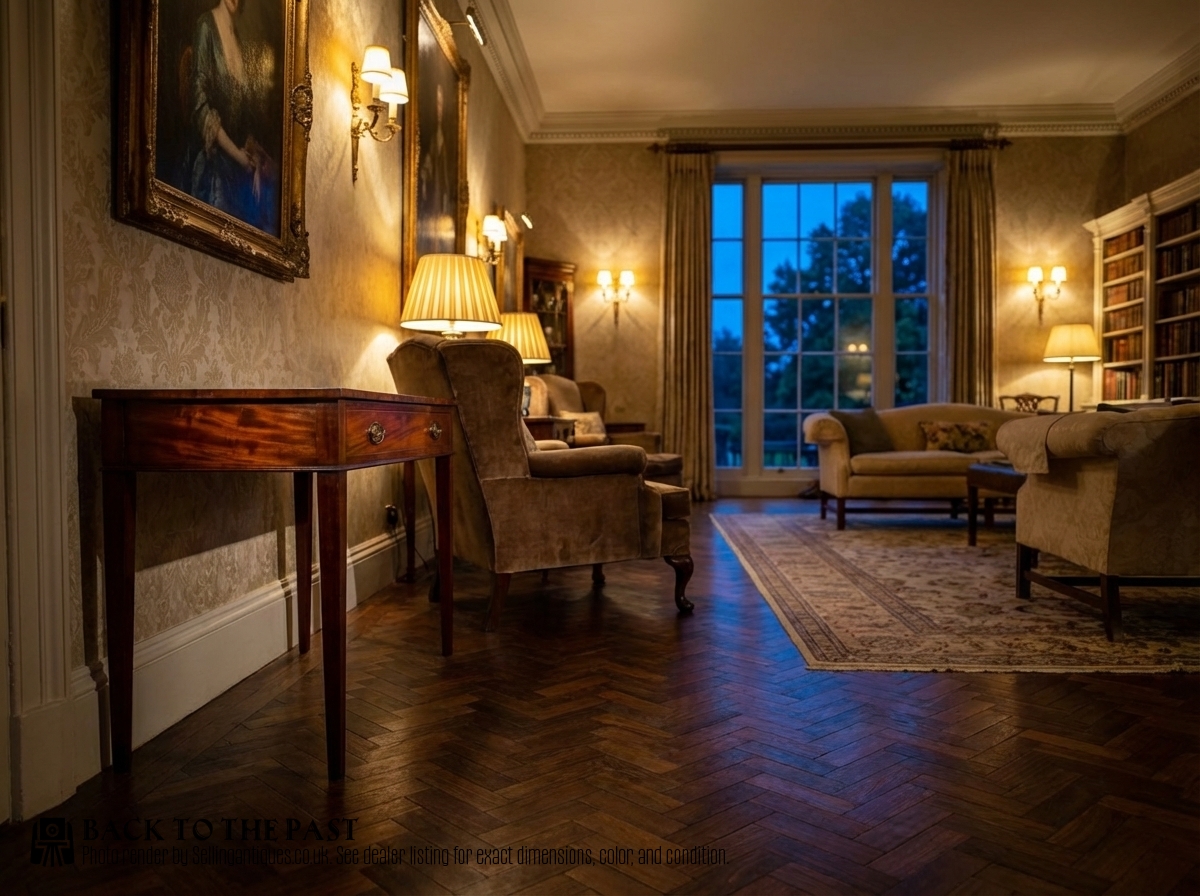
Materials and Construction
Craftsmen utilised solid mahogany and flame mahogany veneer applied over secondary timbers such as oak, pine, and deal. Surfaces gained structural integrity and depth through careful timber selection and traditional joinery.
Fittings incorporated cast brass handles and escutcheons, occasionally paired with leather writing surfaces, glass elements, and delicate boxwood stringing. Drawers were built with hand-cut dovetails to withstand daily use.
Standards of Craftsmanship
Quality rests in the crispness of timber carving, the choice of figured flame mahogany veneer, and the structural harmony of the proportions. Superior examples display refined edge moulding and balanced drawer arrangements.
The integrity of the original brass hardware and the precision of the drawer linings separate standard utility pieces from exceptional cabinet work.
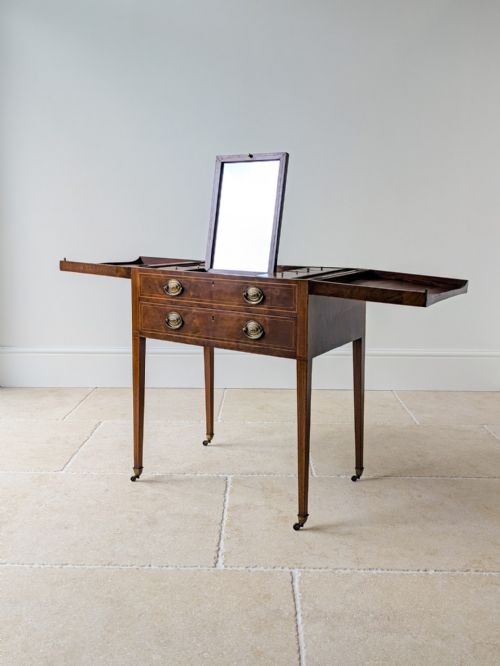
Gentlemen shared these refined spaces too, employing specialised dressing chests for their linens and powders.
The Georgian Mahogany Dressing Desk Glossary
- Lowboy
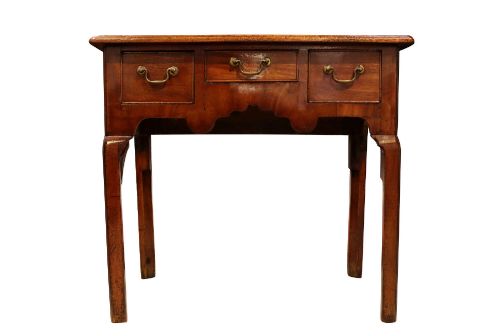
- A small dressing table or side table featuring one or more rows of drawers beneath a flat top, typically raised on slender legs. This form gained popularity during the eighteenth century.
- Kneehole desk
- A desk or dressing table featuring a central recessed space for the legs, flanked by pedestals of small drawers. This compact design maximises storage within a modest footprint.
- Flame mahogany
- A veneer cut from timber where the branch meets the trunk, producing a distinctive flickering flame pattern. Cabinet makers used this figure on prominent drawer fronts and tabletops.
- Serpentine front
- A convex central section flanked by concave curves, creating a fluid undulating line across the front of a desk or table. This shaping required advanced woodworking skill.
- Bow front
- A gently curved convex front profile that softens the corners of a dressing table or side table. The curve adds visual movement to dense mahogany timber.
Georgian Mahogany Dressing Desk: Frequently Asked Questions
What is the difference between a lowboy and a dressing desk?
A lowboy is a low table with drawers primarily used as a side table or dressing surface, often standing on cabriole or straight legs. A dressing desk typically incorporates specific compartments or writing spaces.
Both forms utilise mahogany timber and share eighteenth-century origins, though desks focus more on writing utility.
How do I identify a George III dressing table?
George III pieces display restrained classical proportions, dense mahogany construction, and understated brass drop handles. Look for hand-cut dovetails and solid timber secondary woods inside the drawers.
Later revival pieces often lack the subtle patination and crisp drawer fit found in eighteenth-century originals.
Were these desks used for writing or grooming?
Many examples served dual functions, operating as writing tables by day and vanity tables for personal grooming by morning. Fitted drawers held papers, cosmetics, and writing implements.
Surviving pieces often feature adjustable mirrors or compartments suited to these varied domestic tasks.
What woods were used alongside mahogany?
Makers used secondary timbers such as oak and pine for drawer linings, internal framing, and carcase backs. Boxwood appeared frequently as contrasting stringing or inlay detail.
Leather inserts provided a durable writing surface on top of the mahogany framework.