





Georgian Mahogany Casket
A georgian mahogany casket brings tactile weight and rich timber tone into a room, offering both practical storage and period presence.
Georgian Mahogany Casket
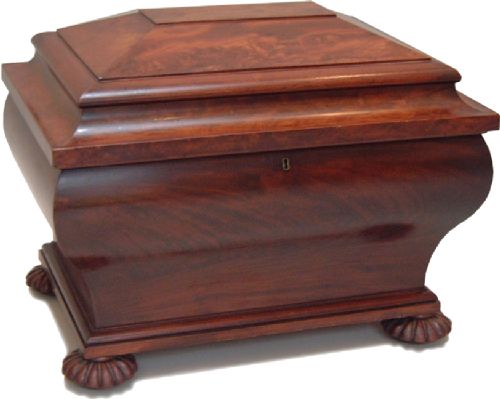
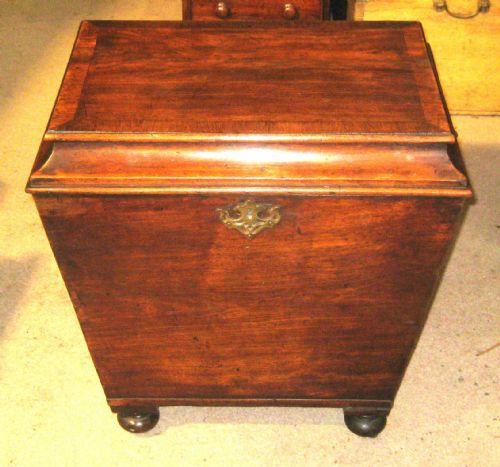
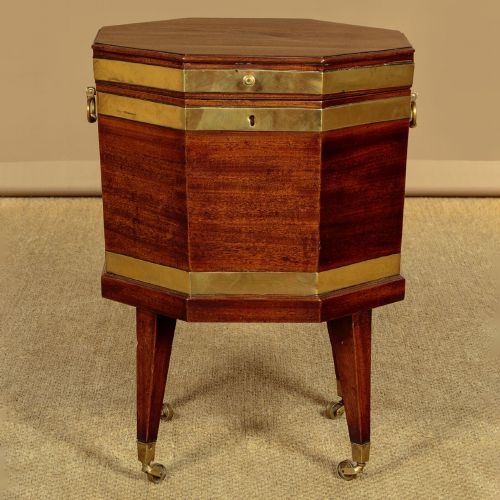
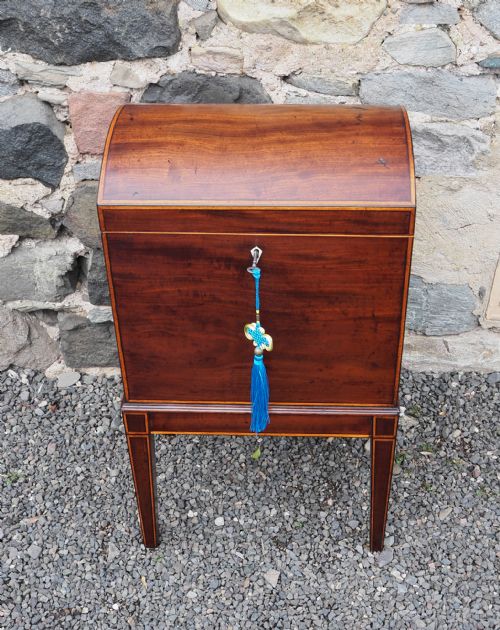
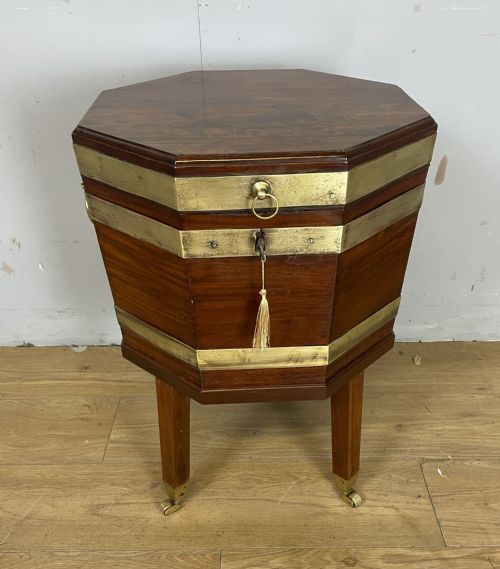
A georgian mahogany casket encompasses a diverse group of domestic containers created to secure valuables, liquids, tea, or medicinal supplies during the eighteenth and early nineteenth centuries. These items range from compact tea caddies and sewing boxes to large octagonal and sarcophagus style cellarettes designed to hold wine bottles.
Buyers searching for a georgian mahogany casket will most frequently encounter tea caddies and cellarettes spanning the Georgian, Regency, and William IV periods. The inventory includes domed boxes, stationary boxes, and apothecary fittings alongside painted or brass bound examples.
Originating primarily within English workshops of the seventeen-fifties through the eighteen-thirties, these objects reflect the changing domestic habits of polite society. Their survival demonstrates the enduring appeal of dense tropical hardwood shaped for daily use.
How they were made
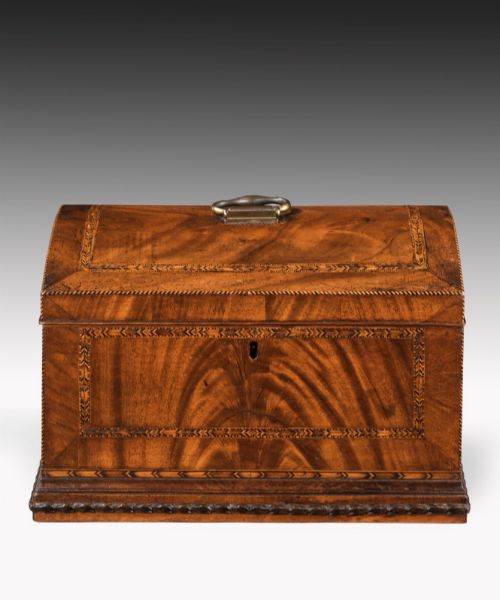
Makers utilised solid mahogany and figured flame mahogany veneers over secondary timbers, often accentuating the exterior with contrasting boxwood inlay or bone stringing. This combination provided stability and a striking visual contrast across lids and panels.
Heavy brass mounts, drop handles, and escutcheons appeared frequently on larger cellarettes and wine coolers, secured with traditional dovetail joinery at the corners. Lighter items such as tea caddies relied on precise boxwood stringing and fitted interior compartments to organise loose leaf canisters and mixing glasses.
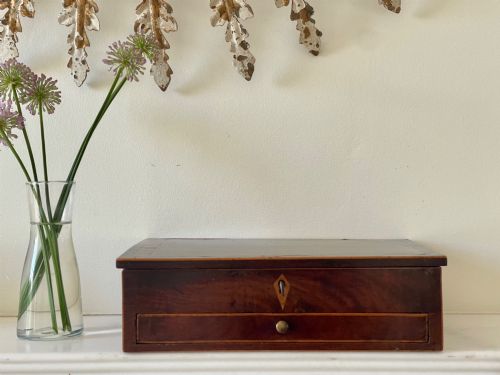
The object forms include sewing boxes, apothecary chests, and stationary boxes alongside traditional tea caddies and wine coolers.
What varies in quality
The choice of timber creates a fundamental distinction, where standard mahogany gives way to deeply figured flame mahogany veneers that catch the light across curved or domed lids. Grain selection dictates the visual impact of the piece before any polish is applied.
Construction detail separates utilitarian containers from high-status objects, seen in the precision of boxwood inlay, the weight of cast brass fittings, and the survival of internal compartments. Original hardware and intact interior fittings elevate the standing of a box.
Gillows of Lancaster
The Georgian Mahogany Casket Glossary
- Cellarette
- A low freestanding cabinet or fitted box designed to hold bottles of wine near the dining table. They frequently feature lead linings or internal dividers.
- Sarcophagus style
- A heavy, tapering form with a domed lid popular during the Regency period, mimicking ancient monumental tombs. It provides substantial internal volume for wine coolers.
- Tea caddy
- A lidded container built to store loose tea leaves securely under lock and key when tea was an expensive luxury. Interiors often contain distinct canisters and a mixing glass.
- Flame mahogany
- A distinctive wood grain figure resembling flickering flames, achieved by cutting across the branch junction of the tree. It was favoured for high-status veneered surfaces.
- Boxwood inlay
- Narrow strips of pale yellowish boxwood inserted into grooves within the darker mahogany to form geometric borders and decorative stringing.
Georgian Mahogany Casket: Frequently Asked Questions
What were cellarettes used for?
Cellarettes served as secure storage for wine bottles near the dining table before built-in sideboards took over the function.
They often contained lead-lined interiors to hold ice and water, keeping bottles chilled for guests during long meals.
How do I care for mahogany?
Keep wooden boxes away from direct sunlight and heat sources to prevent the timber and veneers from drying out and splitting.
Apply a traditional wax polish occasionally and buff with a soft cloth to maintain the natural sheen of the grain.
How do I date a box?
Examine the construction methods, such as hand-cut dovetails, secondary woods inside, and the style of the brass hardware.
Federal and Regency pieces often show distinctive sarcophagus shapes and bold brass paw feet that contrast with earlier simpler Georgian rectangular boxes.
Were tea caddies locked?
Tea was a costly commodity in the Georgian period, so caddies were routinely fitted with working locks and keys.
Households kept the leaves under strict control, entrusting the key only to the head of the house or a trusted housekeeper.