
Georgian Mahogany Carver Set
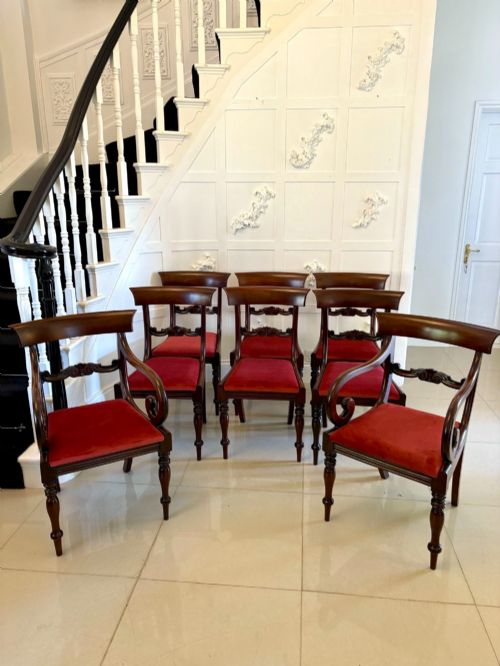
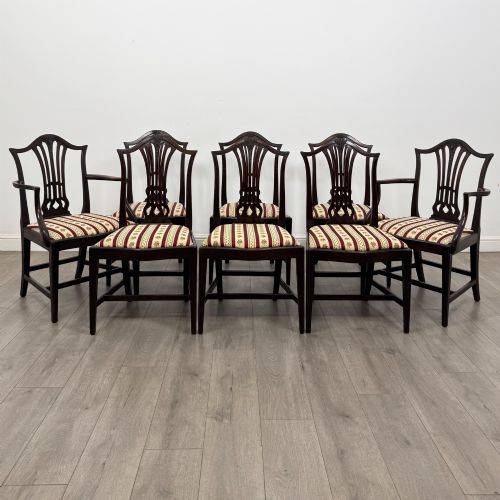
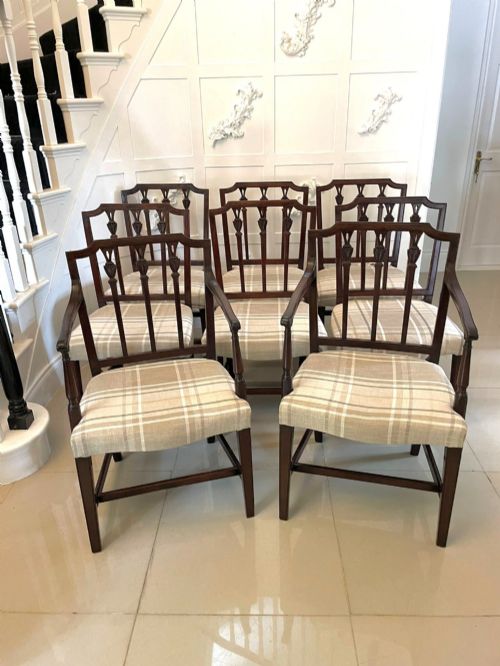
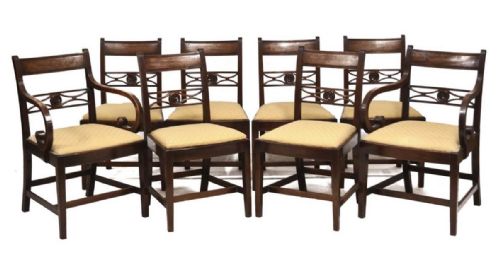
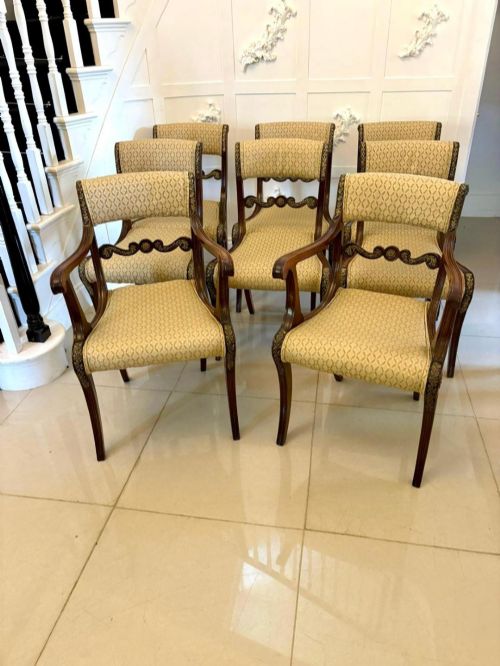
A georgian mahogany carver set brings substantial dining accommodation together through matched armchairs and side chairs crafted in rich timber.
Georgian Mahogany Carver Set
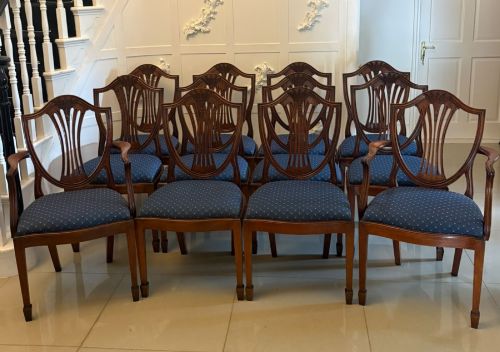
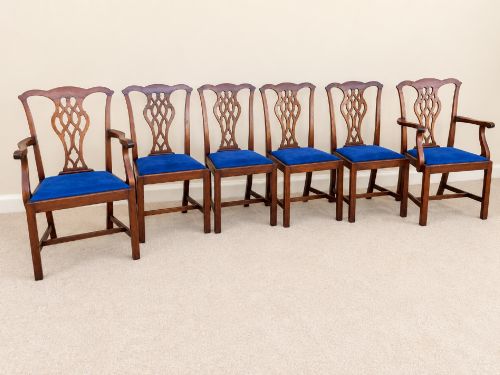
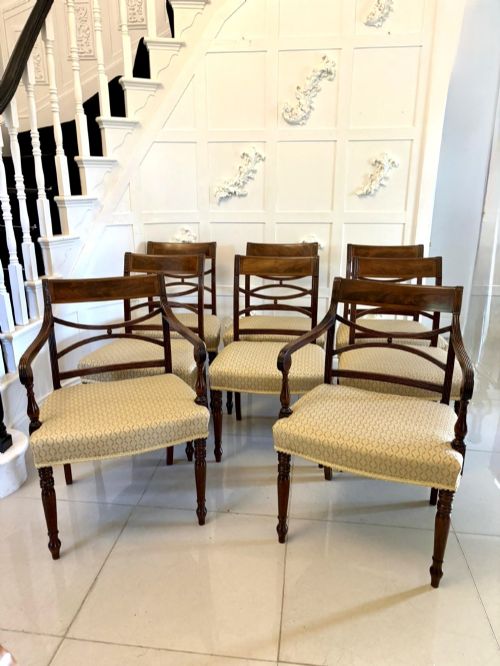
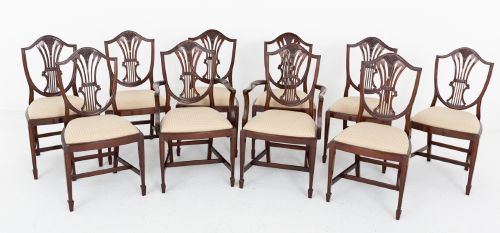
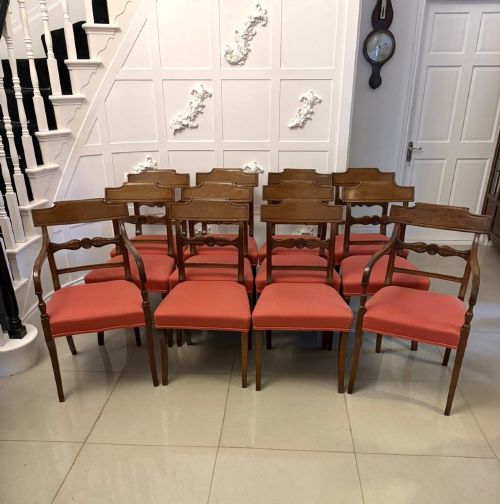
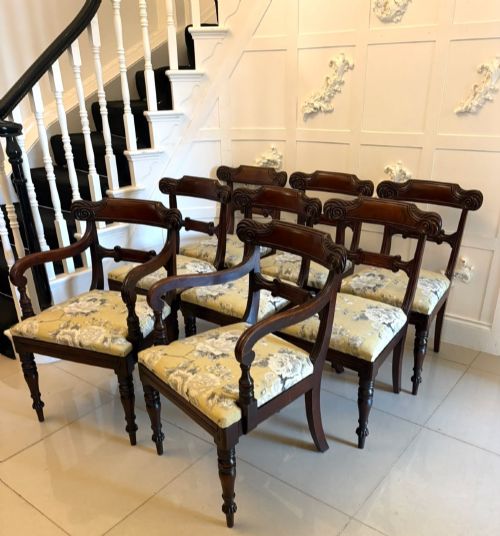
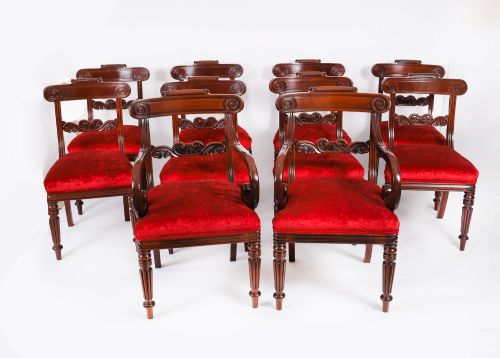
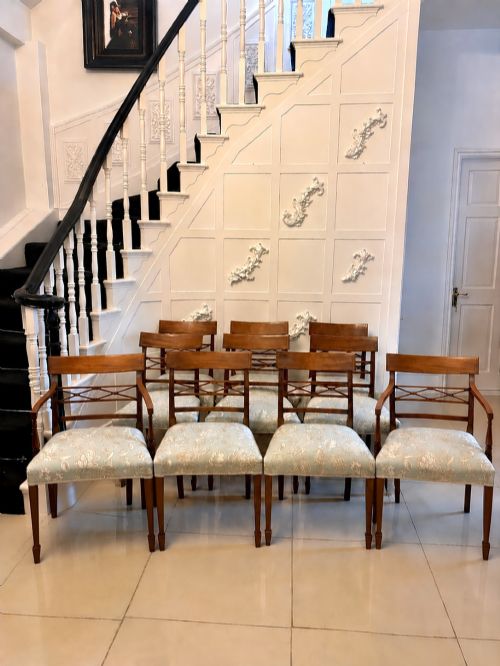
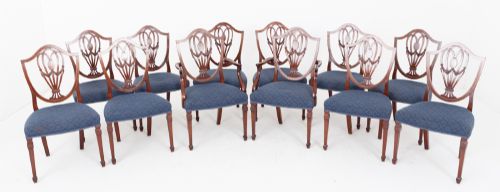
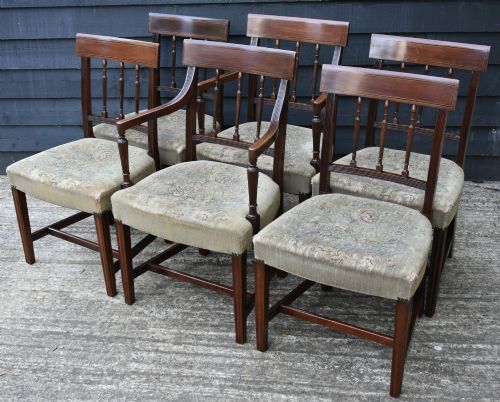
A georgian mahogany carver set comprises multiple dining chairs including larger armchairs designed for the heads of the table. These groupings frequently appear as sets of six, eight, ten or twelve pieces combining single chairs with matching carvers.
The selections span authentic eighteenth and nineteenth century production alongside revival periods up to the twentieth century. Many suites follow recognised stylistic paths including Sheraton, Hepplewhite, Chippendale, and Regency designs.
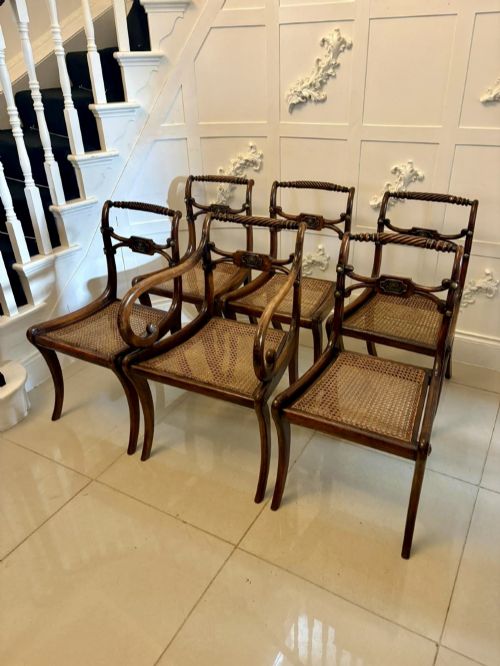
Makers utilised dense timber alongside diverse upholstery materials such as fabric, velvet, leather, and textile inserts. Certain examples incorporate cane seats or brass detailing to enhance the primary mahogany construction.
Assessing craftsmanship
Quality rests upon the crispness of carved details in the timber and the structural rigidity of the frame joints. Superior examples exhibit tightly fitted mortise and tenon construction alongside carefully selected grain patterns.
Consistency across a whole suite distinguishes standard production from exhibition grade sets. Uniformity in timber colour, carving depth, and arm proportions indicates a cohesive original suite rather than assembled matches.
Carver armchairs provided essential elbow room for eighteenth century gentlemen wearing elaborate coats with wide cuffs.
Waring & Gillow
The Georgian Mahogany Carver Set Glossary
- Carver
- An armchair designed with elbow supports to match a set of single dining chairs. These pieces historically stood at the head and foot of the dining table.
- Shield back
- A chair back shaped in the outline of a heraldic shield, popularised by designers like Hepplewhite during the late eighteenth century. The central splat typically fans outward toward the top rail.
- Splats
- The vertical wooden strip positioned in the middle of a chair back. Elaborate piercing and carving on this element often denote stylistic periods.
- Drop-in seat
- A removable wooden frame padded and upholstered separately before dropping into the seat rebate of the chair frame. This design allowed straightforward reupholstering without dismantling the chair.
- Reeded legs
- Cylindrical furniture legs carved with parallel vertical grooves resembling parallel reeds. This decorative treatment appears frequently on Regency and Sheraton pieces.
Georgian Mahogany Carver Set: Frequently Asked Questions
How many carvers belong in a large set?
Larger dining sets typically include two carvers alongside six, eight, or ten single chairs. This arrangement provides armchairs for the heads of the table while maintaining uniform side seating.
Historical dining customs dictated that the host and hostess occupied the armchairs while guests sat in the matching single chairs.
Can I mix revival periods with original ones?
Mixing eighteenth century originals with later revival pieces requires careful attention to timber tone and carving scale. Georgian revival sets from the early twentieth century often match the aesthetic of earlier eras closely.
Evaluating the specific shade of mahogany and the height of the seat rails helps determine visual harmony around a dining table.
How do I care for leather and fabric seats?
Upholstered seats benefit from regular gentle dusting and appropriate conditioning depending on whether they feature leather, velvet, or woven textile. Maintaining stable room humidity protects both the fabric and the underlying timber frame.
Avoid placing antique seating in direct sunlight to prevent fading on both the mahogany polish and the textile coverings.
What defines a Sheraton style chair?
Sheraton style chairs typically feature geometric frames, straight tapered legs, and rectilinear backs with delicate inlay work. Cabinet makers during this period utilised satinwood banding and subtle stringing against the mahogany background.
These designs emphasise refined elegance and classical proportions rather than heavy carving.