

Georgian Mahogany Breakfront
When you search for a georgian mahogany breakfront, you are looking at substantial architectural furniture built to anchor a formal room.
Georgian Mahogany Breakfront
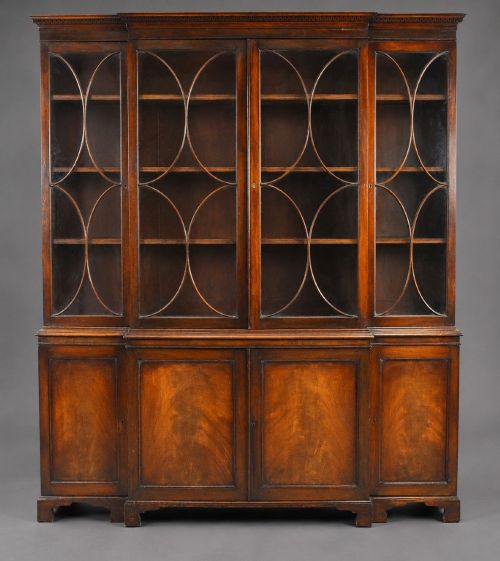
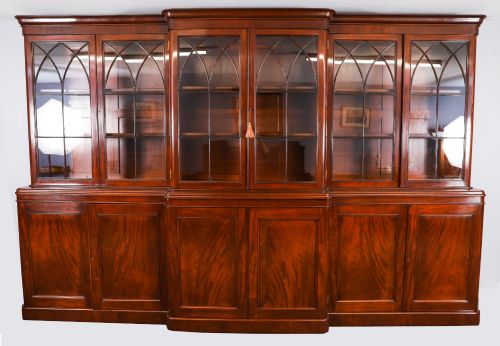
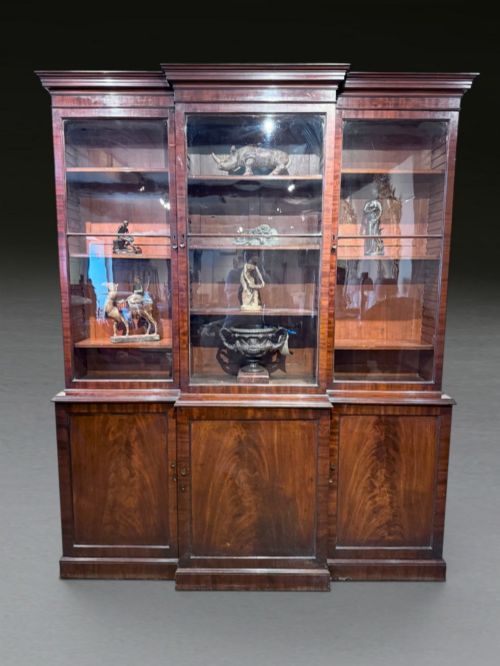
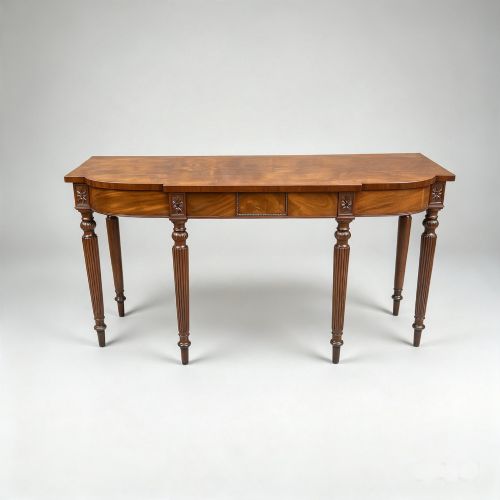
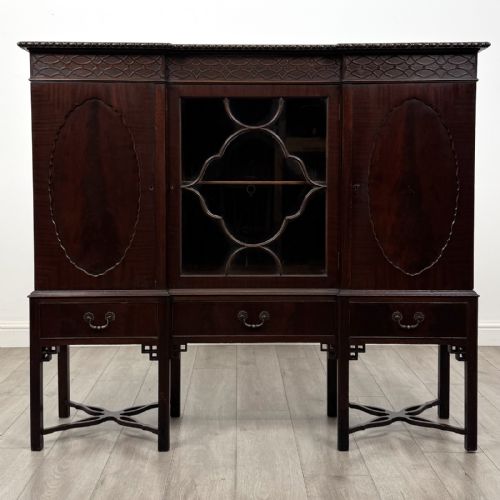
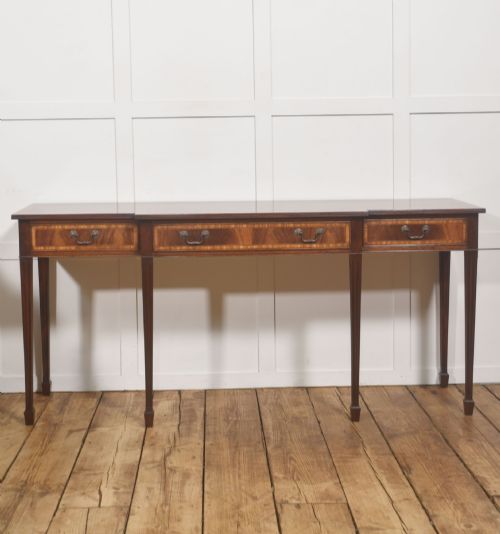
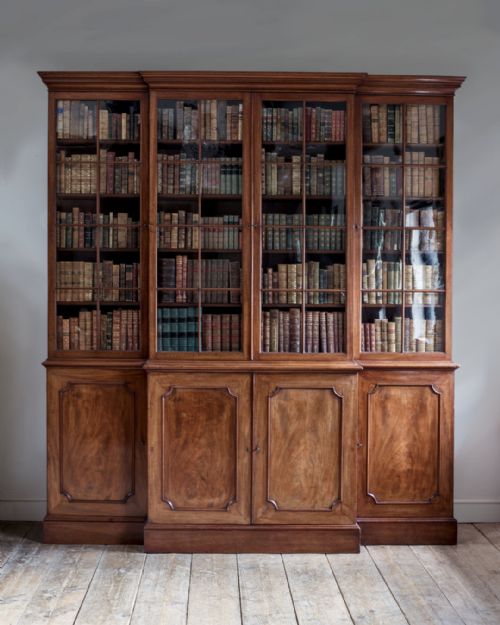
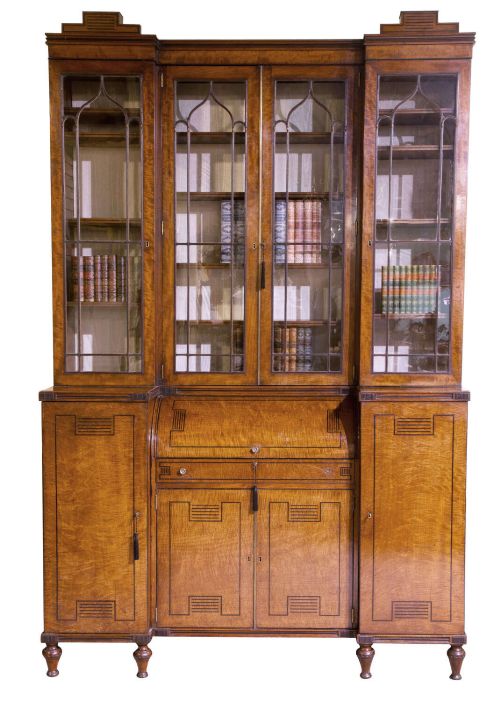
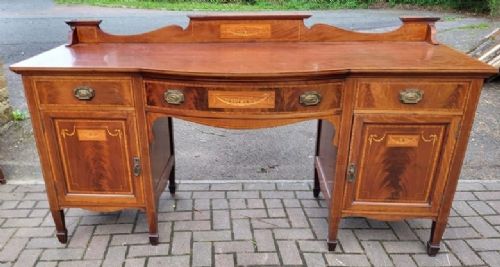
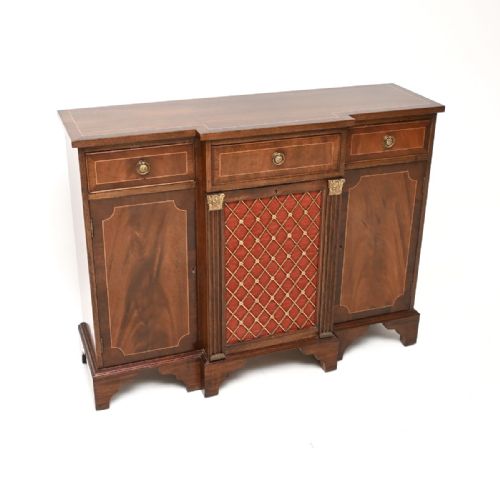
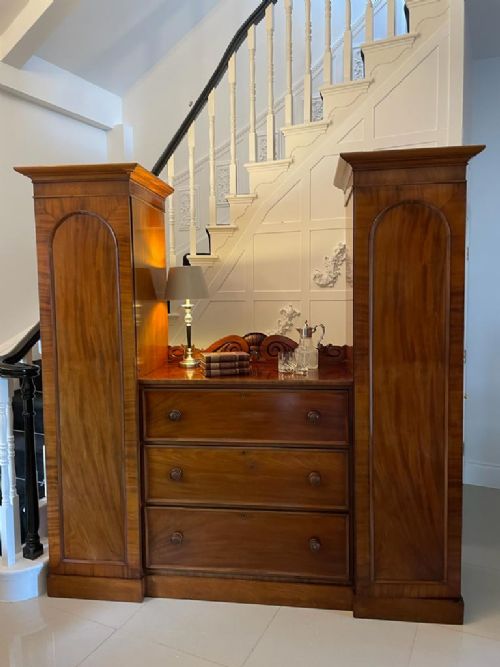
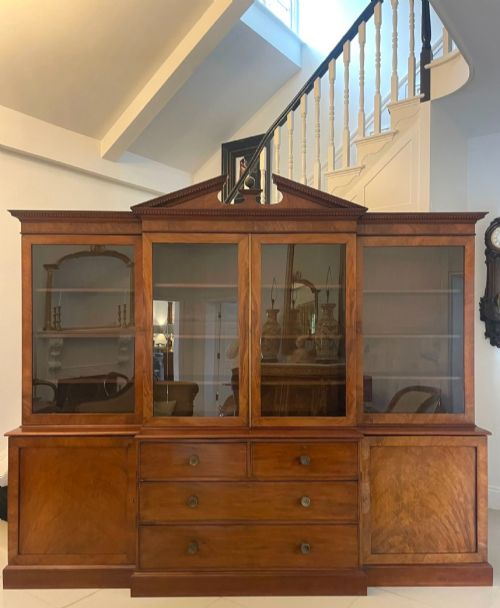
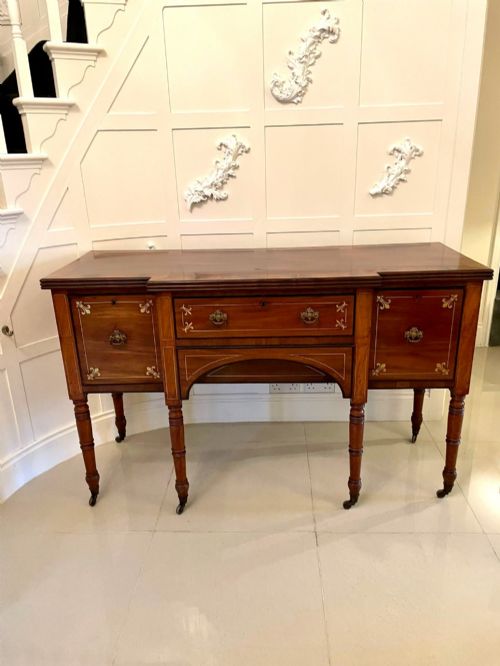
A georgian mahogany breakfront typically presents as a large bookcase, sideboard, or wardrobe featuring a projecting central section flanked by recessed wings. This architectural rhythm creates depth and shadow across the facade, which cabinet makers utilised to break up the mass of large pieces.
The selections span grand 18th century George III library bookcases to later 19th century Victorian examples and 20th century Georgian revival interpretations. Bookcases and sideboards dominate the material record, often outfitted with glazed doors, flame veneer panels, and brass details.
How They Were Made
Makers built these pieces using solid timber frames lined with secondary woods like oak, applying figured mahogany and flame mahogany veneer to the primary visible surfaces. Cabinet makers matched the grain across wide drawer fronts and cupboard doors to create symmetrical patterns that caught the light.
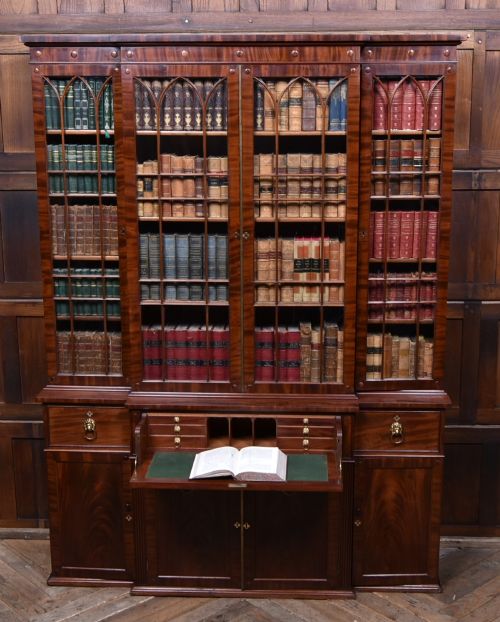
Detailing relied on precision joinery, brass inlay, astragal glazing bars on bookcases, and carved elements such as lion paw feet or reeded pilasters. Surface finishes built up through repeated polishing brought out the deep reddish-brown tones inherent in the timber.
Georgian Mahogany Breakfront Retail Price Guide 2026
Typical asking prices for georgian mahogany breakfront among the pieces listed under this phrase on Sellingantiques today, from the lower quarter to the upper quarter. They describe what is for sale here now, not the wider market.
Several pieces arrive equipped with fierce carved lion paw feet, ready to stand their ground in the dining room.
What Varies in Quality
The distinction between standard utility pieces and the finest examples lies in the selection of the timber and the crispness of the carving. Master workshops chose intensely figured flame grain veneers and matched them meticulously across the entire breakfront elevation.
Proportion and architectural harmony define the upper tier of production, where cornices, plinths, and door proportions balance one another precisely. Secondary woods, such as solid oak drawer linings rather than deal, mark the standard of construction expected in superior pieces.
The Georgian Mahogany Breakfront Glossary
- Breakfront
- An architectural furniture facade where the central section projects forward from the side sections. This design technique adds visual weight and complexity to large bookcases and sideboards.
- Astragal
- A small convex moulding used to divide panes of glass in a bookcase door. Fine astragals create delicate geometric lattices across large glazed openings.
- Flame Mahogany
- A veneer cut from the fork of the mahogany tree where the branch meets the trunk. It produces a distinctive flickering flame pattern that decorators prize for principal drawer fronts and doors.
- Compactum
- A large fitted wardrobe or multi-purpose clothing cupboard with internal drawers, hanging space, and shelves. These large storage pieces often follow a breakfront format to manage their considerable scale.
- Secretaire
- A writing drawer or pull-out desk fitted with small drawers and pigeonholes concealed behind a drop-front panel. In breakfront pieces, this feature integrates neatly into the central section without disrupting the exterior lines.
Georgian Mahogany Breakfront: Frequently Asked Questions
What is a breakfront?
A breakfront is a cabinet design where the central section projects further forward than the flanking ends, creating three distinct vertical planes. This architectural arrangement breaks up the long facade of large furniture.
Cabinet makers applied this layout to bookcases, sideboards, and wardrobes to add depth and shadow. It remains one of the defining silhouettes of formal Georgian and Regency case furniture.
How do I date a mahogany bookcase?
Dating relies on observing construction methods, glass types, and stylistic details across the piece. Earlier 18th-century pieces often feature hand-pulled glass and solid mahogany linings, while later revival pieces show standardised machine-sawn components.
Examining the backboards, drawer construction, and brass hardware provides further clues to whether a piece originates from the Georgian period or a later 19th-century workshop.
Where should I place a breakfront sideboard?
These large sideboards require a substantial dining room or hallway with sufficient wall space to accommodate their projecting central block. Because of their depth, they need a room where people can circulate comfortably around them.
Placing them away from direct sunlight and heat sources protects the polished mahogany surface and delicate veneer work from drying out over time.
What is flame mahogany veneer?
Flame mahogany is a highly figured wood veneer harvested from the junction where a mahogany branch joins the main trunk. The resulting grain swirls in dramatic, flame-like patterns across the surface.
Craftsmen matched these striking grain patterns symmetrically across cabinet doors and drawer fronts to create decorative impact on high-status furniture.