
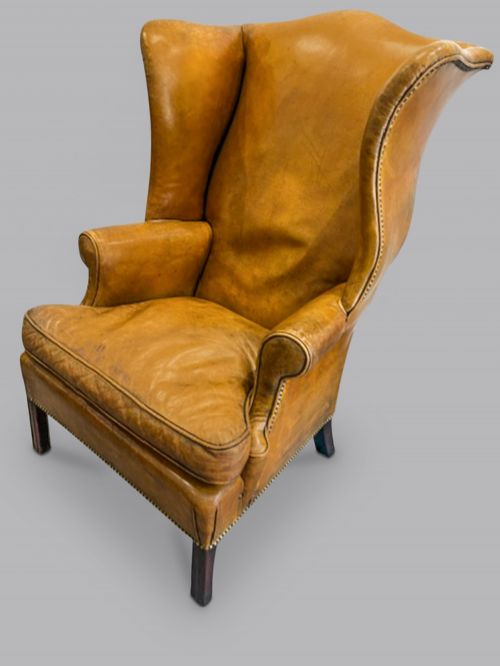


Georgian Leather Wing Chair
A georgian leather wing chair combines deep-seated comfort with draught-defying side panels, offering a commanding presence beside any fireplace.
Georgian Leather Wing Chair
A georgian leather wing chair is an upholstered armchair designed to shield the sitter from draughts while keeping body heat close to the user. These seating forms range from authentic eighteenth-century examples to later twentieth-century revivals produced in Edwardian and interwar workshops.
The pieces encountered on this page span several centuries of production, appearing in genuine period formats alongside George III, George II, and Georgian Revival interpretations. Most examples utilise traditional arm-chair proportions paired with characteristic winged backs that frame the sitter.
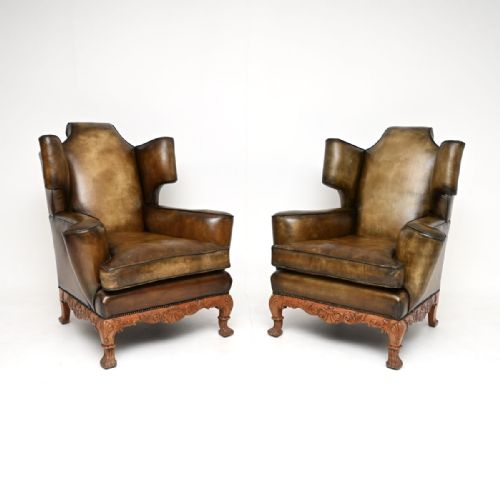
Makers across the Georgian, Victorian, Edwardian, and later twentieth-century periods adapted the form using materials such as mahogany, walnut, oak, and hardwood frames. Buyers find both single armchairs and matched pairs intended for libraries, drawing rooms, and studies.
How they were made
Frames are constructed from sturdy timbers including mahogany, walnut, oak, and hardwood, providing a rigid internal skeleton to support the heavy upholstery. Joinery relies on traditional techniques suited to heavy domestic use over generations.
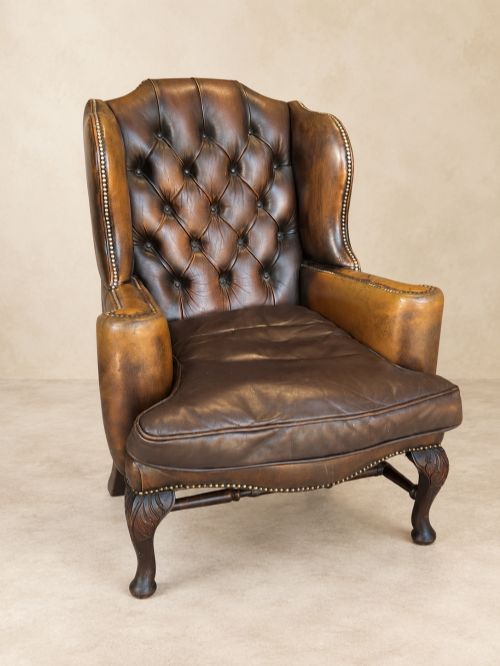
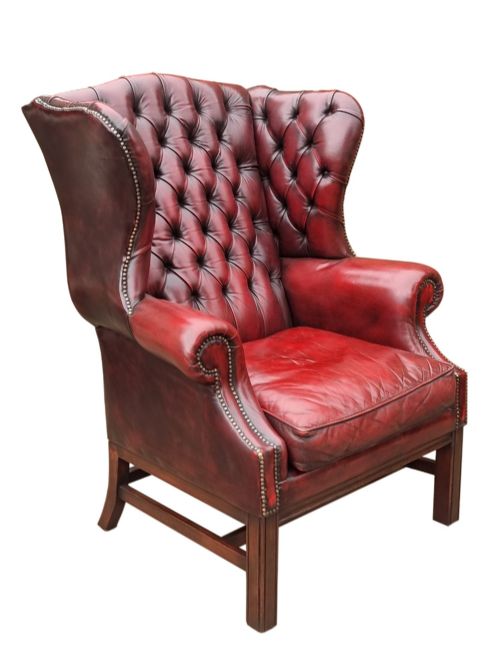
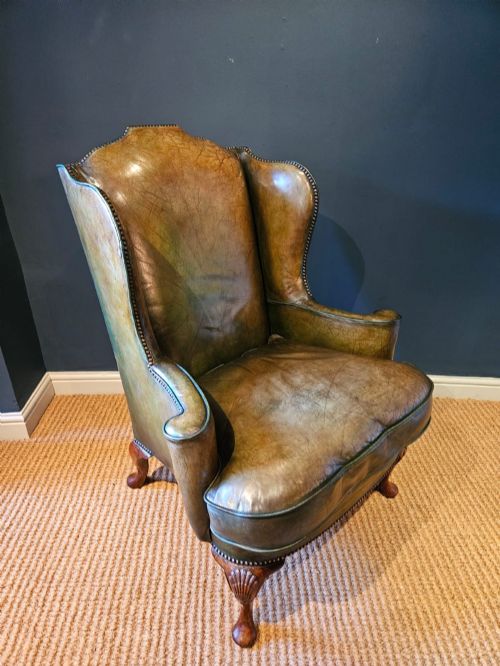
Upholstery involves durable leather stretched over padding and secured with brass detailing. Many examples feature hand-coloured or hand-dyed finishes applied to the leather hides, complemented by buttoning across the backrests.
Support beneath the seating and frame relies on wooden legs, frequently fashioned into cabriole shapes from walnut or mahogany. Brass elements often appear as tacking or structural accents.
The wings were originally designed to catch chimney smoke smells, which explains why old chairs smell faintly of peat fires.
What varies in quality
The calibre of a georgian leather wing chair rests primarily on the integrity of its timber frame and the depth of execution in its carving and joinery. Period examples demonstrate hand-shaped cabriole legs and precise woodworking that distinguish them from later revival pieces.
Leather quality shapes the tactile character of each chair, with hand-dyed and hand-coloured hides developing a rich patina over decades of handling. The subtlety of buttoning and the tightness of the upholstery tension separate standard workshop production from finer artisan output.
The Georgian Leather Wing Chair Glossary
- Wingback
- An armchair design featuring projecting side panels attached to the arms or back to deflect draughts. These panels also served to trap heat from a nearby fireplace.
- Cabriole leg
- A furniture leg that curves out in a convex arc and tapers inward in a concave arc, terminating in a foot. This form draws inspiration from animal limbs and frequently appears on walnut or mahogany frames.
- George III
- The period of British history spanning from 1760 to 1820, characterised by refined proportions and specific classical design revivals. Furniture from this era forms the benchmark for later stylistic copies.
- Georgian Revival
- A design movement during the late nineteenth and early twentieth centuries that recreated eighteenth-century forms. Artisans during this period produced substantial wing chairs using traditional materials.
- Buttoning
- An upholstery technique where indentations are formed across the leather backrest by pulling ties deep into the padding. This method secures internal stuffing while creating a textured surface pattern.
Georgian Leather Wing Chair: Frequently Asked Questions
What is a georgian leather wing chair used for?
These armchairs were originally placed near fireplaces to protect sitters from cold draughts while trapping warmth around the upper body. Today, they serve as focal seating in libraries, studies, and formal drawing rooms.
Their substantial proportions and supportive winged backs make them ideal for reading or relaxing in comfort. They function both as practical everyday seating and as decorative anchor pieces in traditional interiors.
How do I tell an original from a revival?
Differentiating period pieces from later revivals requires examining the construction methods, timber ageing, and wear patterns visible on the frame. Eighteenth-century examples show hand-cut joinery and timber characteristics consistent with early tool use.
Revival pieces from the Edwardian era or the 1920s and 1930s utilise older styles but display machine assistance in their timber preparation and standardised hardware. Comparing the patina of the leather and the timber undersides helps clarify the production era.
What woods were used for the frames?
Cabinetmakers relied on durable native and imported hardwoods to support the heavy leather upholstery. Mahogany and walnut appear frequently, valued for their strength and suitability for carved details like cabriole legs.
Oak and general hardwood timbers also form the internal skeletons of many pieces, providing structural rigidity. These woods were chosen to withstand the substantial weight and tension of traditional upholstery methods.
How should I care for vintage leather?
Leather upholstery benefits from regular dusting with a soft, dry cloth to prevent grit from settling into the grain. Conditioning treatments help maintain the suppleness of hand-dyed or hand-coloured hides over time.
Keeping these chairs away from direct sunlight and heat sources prevents the leather from drying out or cracking. Proper environmental placement preserves the natural patina developed across decades of use.