





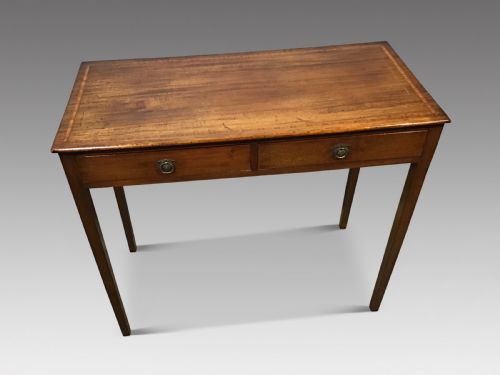


Georgian Inlaid Server Desk
These georgian inlaid server desk options bring formal dining room presence into the home, offering deep surface space and refined period timberwork.
Georgian Inlaid Server Desk
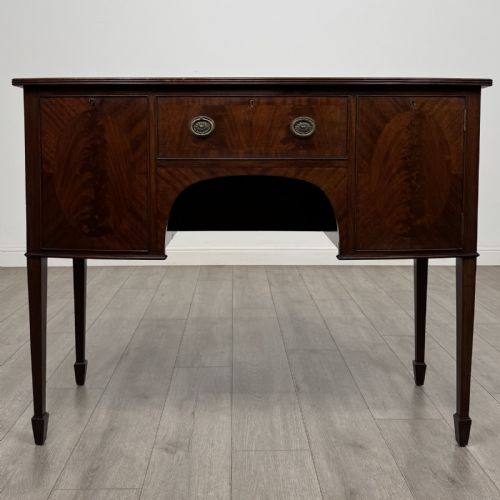
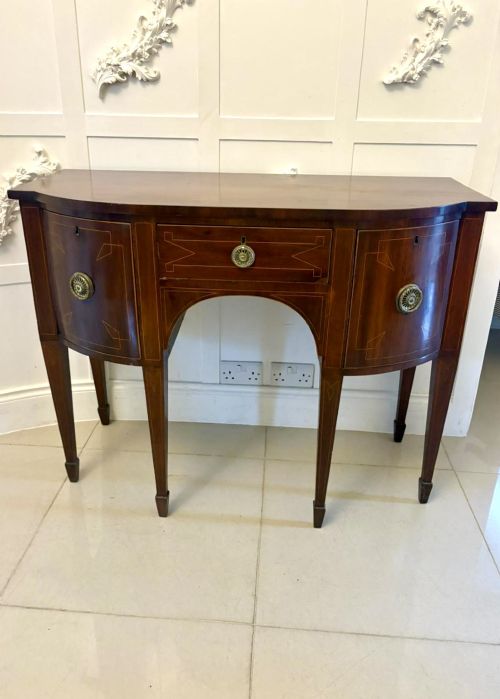
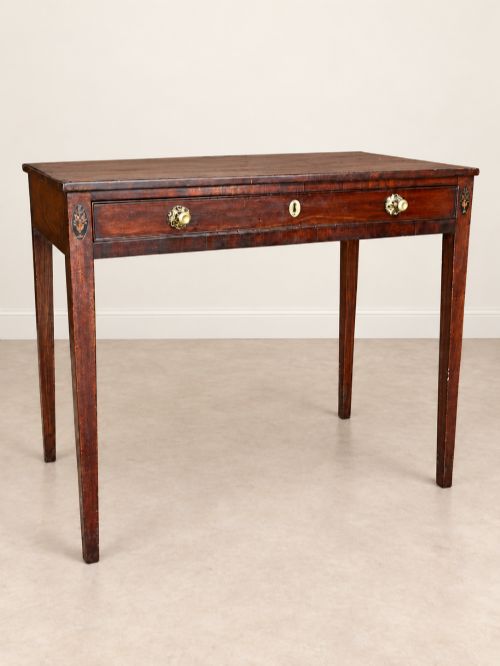
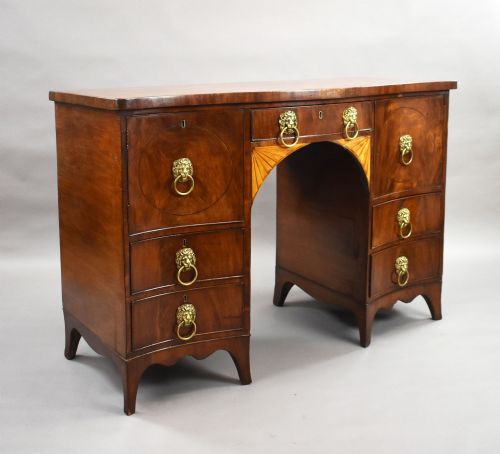
When searching for a georgian inlaid server desk, you encounter a selection of sideboards, side tables, lowboys, and servers built across periods spanning the Georgian era, Regency, Victorian, Edwardian, and the early twentieth century. The forms range from simple lowboys and side tables to large bowfront, serpentine, and breakfront sideboards.
Mahogany forms the primary timber across the inventory, frequently paired with walnut and fruitwood marquetry. Stylistic influences draw heavily from George III, Sheraton, and Regency design traditions, alongside later revivals such as Regency Revival.
Most examples you meet on this page date from the Georgian and Regency periods or later Edwardian and 1920s reproductions. They serve dining rooms and living spaces alike, providing functional surface areas combined with period decorative inlay.
How they were made
Cabinet makers constructed these pieces using solid mahogany and walnut, shaping timber into curved bowfronts and serpentine outlines. Secondary woods provided structural support while the main exterior surfaces displayed carefully selected grain patterns.
Inlay work relied on contrasting materials such as boxwood and fruitwood, applied in delicate stringing or elaborate marquetry motifs. Brass hardware, including handles and escutcheons, was fitted to drawers and doors to complete the construction.
Georgian Inlaid Server Desk Retail Price Guide 2026
Typical asking prices for georgian inlaid server desk among the pieces listed under this phrase on Sellingantiques today, from the lower quarter to the upper quarter. They describe what is for sale here now, not the wider market.
Listings span multiple eras from original Georgian and Regency pieces through to Edwardian and 1920s revival items.
What varies in quality
The sophistication of the timber figure and the precision of the boxwood or fruitwood inlay dictate the visual standing of each piece. Superior examples display seamless integration of marquetry alongside well-proportioned architectural outlines such as bowfronts or breakfronts.
Secondary detailing, including the selection of matching brass mounts and the crispness of edge mouldings, separates standard workshop production from finer cabinet work.
The Georgian Inlaid Server Desk Glossary
- Lowboy
- A small occasional table featuring drawers, commonly raised on tall legs. It frequently functions as a side table or dressing surface.
- Marquetry
- The art of forming decorative patterns using thin veneers of different woods. It adds pictorial or geometric detail to tabletops and drawer fronts.
- Serpentine
- A furniture front characterised by a concave central section flanked by two convex ends. This fluent line requires advanced woodworking skill.
- Breakfront
- A cabinet or sideboard whose central section projects forward from the flanking wings. It creates distinct architectural proportions.
- Stringing
- Thin lines of contrasting wood inlay used to outline drawer edges and tabletops. It defines the structural geometry of period timber.
Georgian Inlaid Server Desk: Frequently Asked Questions
What is a georgian inlaid server desk used for?
These items serve primarily as dining room sideboards or decorative side tables for displaying objects and storing tableware.
Their substantial surface area and internal drawer space make them practical for serving food or organising household items.
How do I identify a Georgian piece?
Look for proportion, timber choice, and specific decorative details like boxwood stringing or subtle fruitwood marquetry.
Pieces from this era often feature mahogany construction with classic architectural lines rather than heavy Victorian ornamentation.
Where should I place a sideboard?
Dining rooms remain the traditional location, providing a surface for serving meals and storing dining accessories.
They also sit comfortably in large hallways or living spaces where a substantial surface and low profile are required.
What is the difference between Edwardian and Georgian pieces?
Edwardian items date from the early twentieth century and often lighter interpretations of earlier eighteenth-century designs.
Georgian pieces represent the original period of manufacture, showing different construction methods and authentic age-related timber patination.