


Georgian Hunting Scene Painting
A georgian hunting scene painting captures the raw energy of the chase through oil paint on canvas, wood, or lacquer.
Georgian Hunting Scene Painting
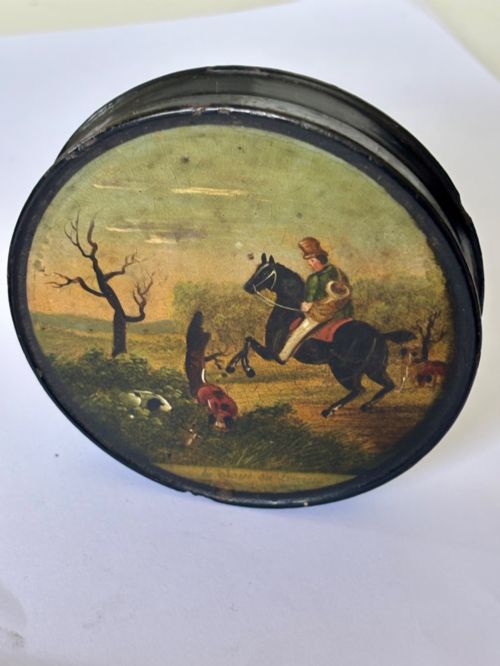
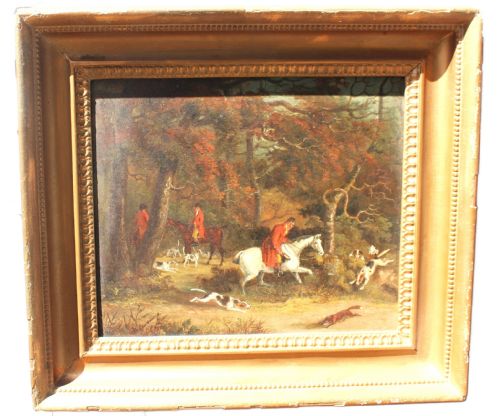
A georgian hunting scene painting brings the historic countryside and the thrill of the pursuit directly into an interior. The selections here span oil paintings on canvas and wood, alongside painted papier-mache snuff boxes depicting similar sporting subjects.
Most examples date from the nineteenth century and the Georgian period, often reflecting British and French sporting art traditions. Buyers encounter everything from large canvas works showing hounds and huntsmen to smaller decorative items carrying the same rural iconography.
How they were made
Artists built these works using oil paint applied to woven canvas stretched over wooden frames, or directly onto prepared wood panels. The medium allowed for rich depth in depicting coats of hounds, horses, and the changing tones of woodland clearings.
Alternative items utilise papier-mache and lacquer to form small functional pieces like snuff boxes, decorated with miniature scenes of the chase. These utilised durable moulded bases finished with detailed painted surfaces.
Even a mail coach caught in a snowdrift cannot escape the reach of historic sporting art.
What varies in quality
Quality rests in the precision of the brushwork and the anatomical accuracy of the animals and figures within the landscape. Superior works capture the tension of the hounds on the scent and the realistic movement of horses rather than relying on stiff, formulaic compositions.
The choice of support and the preservation of the paint surface also divide the standard of pieces. Finer works retain their original canvas and framing context, showing clear depth in the oil paint without heavy obscuring overpaint.
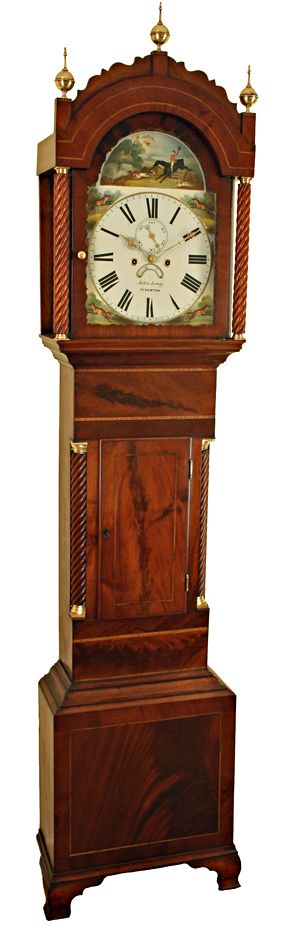
Samuel John Egbert Jones·Dean Wolstenholme·James Pollard·Long of Tiverton
The Georgian Hunting Scene Painting Glossary
- Oil on Canvas
- Pigments bound in a drying oil medium applied to a woven fabric support. This was the primary method for producing large sporting art works during the period.
- Papier-mache
- A composite material made from paper pulp or layers of paper bound with glue, then moulded and lacquered. It provided a smooth surface for detailed miniature painting on small boxes.
- Sporting Art
- A genre of painting and illustration dedicated to depicting field sports, horses, hounds, and rural pursuits. It flourished across Britain during the eighteenth and nineteenth centuries.
- Wood Panel
- A rigid wooden support used by artists before or alongside canvas. It offered a stable base for detailed oil painting in smaller formats.
Georgian Hunting Scene Painting: Frequently Asked Questions
What subjects do these paintings show?
These works typically depict mounted huntsmen, packs of hounds following a scent, and rural shooting parties in wooded landscapes. They record the social traditions of the countryside during the Georgian and nineteenth-century periods.
Alongside canvas art, the theme extends to decorated objects like papier-mache snuff boxes showing similar pursuits. Each piece focuses on action and movement within rural settings.
Where should I hang an oil painting?
These works suit traditional reception rooms, studies, or hallways where their rich oil colours complement period woodwork and furniture. They require placement away from direct sunlight and excessive moisture to protect the canvas and paint layer.
Lighting should be subtle to enhance the depth of the oil medium without generating heat near the surface. A stable indoor climate ensures the wood and canvas remain preserved over time.
How do I care for papier-mache boxes?
Small lacquered items require gentle dusting with a soft, dry cloth and protection from direct heat sources. Moisture can damage the moulded base and lift the painted surface, so they must stay in dry environments.
Handling should be minimal to preserve the delicate lacquer and paintwork on the lid. Keeping them out of bright sunlight prevents the colours from fading.
How can I tell the period of a painting?
Dating relies on examining the style of the clothing, the breed and depiction of the horses and hounds, and the canvas preparation behind the frame. Nineteenth-century works often show freer brushwork and different stretcher construction compared to earlier Georgian examples.
Signatures, attributions, and the framing materials also offer clues to the origin of the piece. Comparing the technique to known works from the era helps confirm the timeframe.