



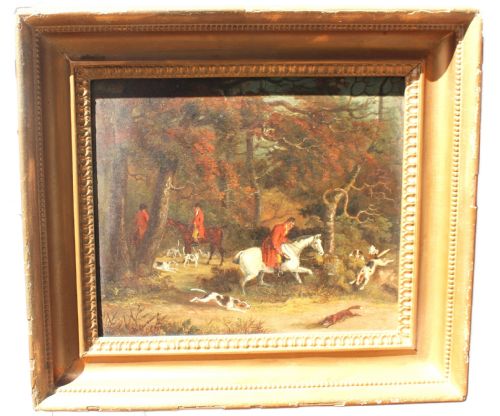
Georgian Hunting Art
Georgian hunting art captures the kinetic energy and social theatre of early equestrian and field sports through period oils, watercolours and engravings.
Georgian Hunting Art
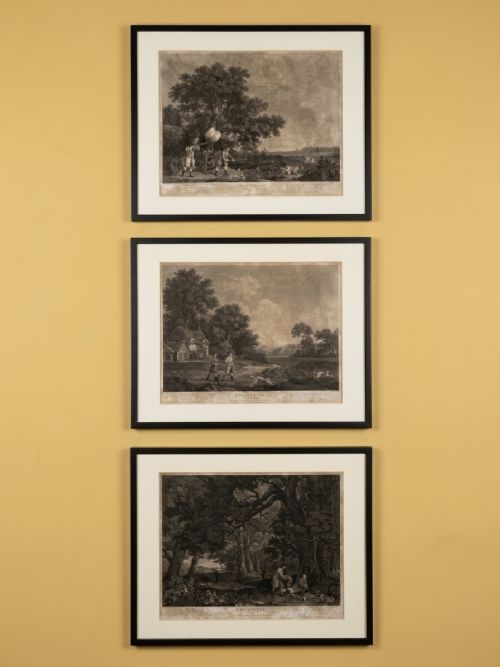
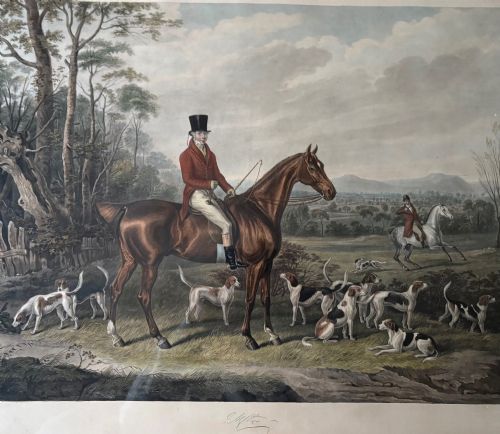
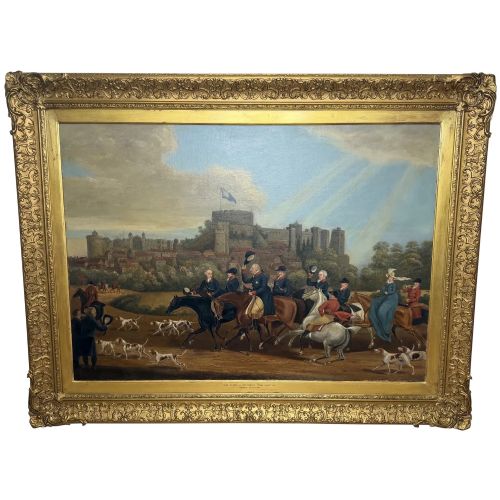
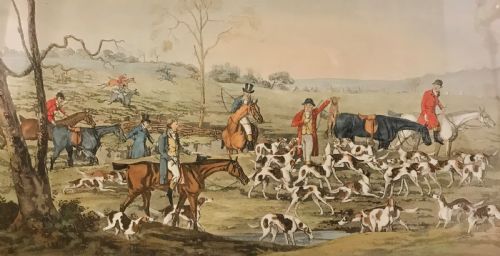
Georgian hunting art centres on framed oil paintings on canvas and wood, alongside delicate watercolours and hand-coloured engravings depicting hounds, shooters, and country gentlemen. These works originate predominantly from the eighteenth and nineteenth centuries, spanning the Georgian, Regency and Victorian eras.
Buyers encounter diverse formats ranging from large coaching scenes and canine portraits to intimate folk art horn beakers and carved coconut shell drinking vessels. The subjects frequently record specific pursuits such as pheasant shooting, fox hunting, and falconry across rural landscapes.
The material record includes works attributed to named British artists and printmakers, preserved in original gilt wood frames or mounted as paper prints. Each piece documents the visual culture of British field sports during a period of agricultural and social change.
Materials and methods
Painters utilised oil on canvas and wood panels, applying rich pigments to capture the textures of animal coats, winter foliage, and hunting attire. Watercolours and inks on paper record finer linear details in preparatory studies and finished portraits.
Printmakers employed engraving, aquatint and lithography to reproduce popular sporting compositions for wider distribution. Skilled artisans also worked with organic materials, carving intricate scenes into horn beakers and coconut shells.
Georgian Hunting Art Retail Price Guide 2026
Typical asking prices for georgian hunting art among the pieces listed under this phrase on Sellingantiques today, from the lower quarter to the upper quarter. They describe what is for sale here now, not the wider market.
One exceptional sporting character preserved in the listings is John 'Mad Jack' Mytton, accompanied by his wax seals and signet ring.
Judging the range
Quality rests upon the artist's command of anatomical proportion in horses, hounds, and human figures, as well as the atmospheric depth of the surrounding landscape. Masterworks by documented painters exhibit fluid brushwork and acute observation that distinguish them from simpler folk art productions.
The survival of original framing, particularly period gilt wood, enhances the historical integrity of painted works. For prints and engravings, the clarity of the plate impression and the precision of contemporary hand colouring dictate visual distinction.
William Woollett·George Stubbs·Samuel Raven·J F Marie Huet Villiers·Thomas Beach·James Ward·H Alken·Samuel John Egbert Jones·Dean Wolstenholme·James Pollard
The Georgian Hunting Art Glossary
- Aquatint
- An intaglio printmaking technique that produces tonal areas resembling watercolour washes. It was frequently used for sporting prints to render soft skies and shaded terrain.
- Gilt wood
- Carved timber coated with gold leaf or gold paint. This material is traditional for framing fine Georgian oil paintings.
- Folk art
- Utilitarian objects and naive visual works created outside the formal academic tradition. Examples include carved horn beakers and coconut vessels decorated with hunting motifs.
- Hand-coloured engraving
- A printed line engraving enhanced with applied watercolour tints by hand. Publishers issued these sets to satisfy the demand for vibrant sporting imagery.
- Oil on wood
- A painting executed on a wooden panel rather than stretched canvas. This rigid support was common in early nineteenth-century cabinet pictures.
Georgian Hunting Art: Frequently Asked Questions
How do I identify a Georgian hunting painting?
Examine the canvas preparation, pigment characteristics, and costume details of the figures depicted. Georgian works typically display natural earth tones and clothing styles specific to the late eighteenth and early nineteenth centuries.
Compare the composition to documented works by period sporting artists. Framing materials and stretcher construction also provide reliable clues to the age of the piece.
Were these hunting scenes painted from life?
Many sporting artists accompanied wealthy patrons into the field to sketch hounds, horses, and landowners directly from observation. These field studies were later developed into finished oils within the artist's studio.
Other compositions, particularly popular print series, were constructed to formulaic patterns that satisfied public demand for dramatic sporting narratives rather than strict documentary truth.
How should I display antique paper prints?
Protect delicate watercolours and hand-coloured engravings by mounting them away from direct sunlight using acid-free materials. UV-filtering glass prevents the pigments and paper from fading over time.
Maintain stable indoor humidity levels to prevent the paper from cockling within the frame. Hang the artworks on interior walls where temperature fluctuations remain minimal.
What is the difference between an oil and a print?
An oil painting is a unique, hand-painted work executed directly onto canvas or a wood panel using suspended pigments in oil. Brushstrokes and texture remain entirely individual to the maker.
Prints and engravings are multiple impressions transferred from an engraved metal plate or lithographic stone. They often bear publication dates and publisher details along the lower margin.