
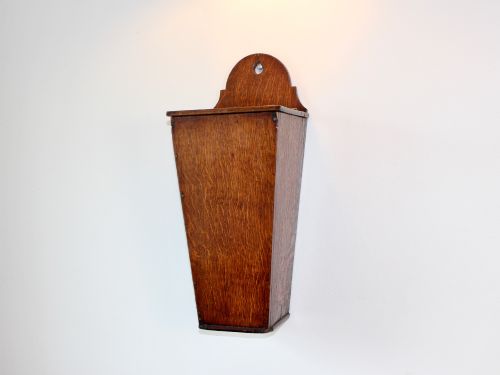


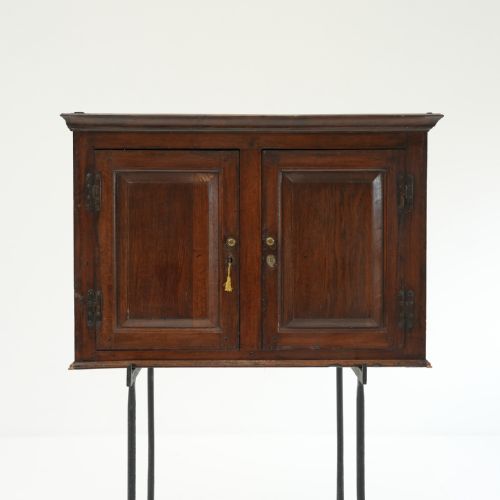


Georgian Hanging Box
A georgian hanging box brings domestic history to the wall, offering compact timber storage for candles, salt, and spices.
Georgian Hanging Box
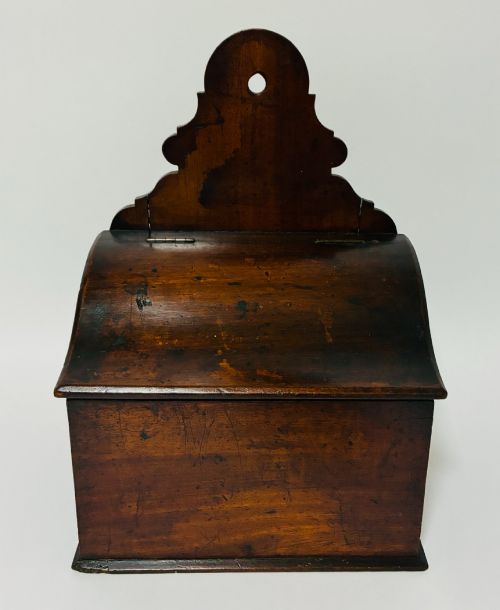
A georgian hanging box encompasses wall-mounted salt boxes, candle boxes, and spice cupboards executed primarily in oak, mahogany, and pine. These utilitarian objects served everyday domestic functions in eighteenth and nineteenth century interiors.
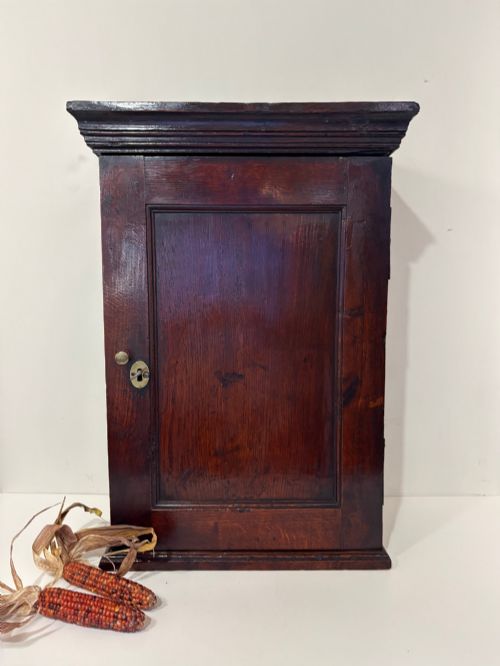
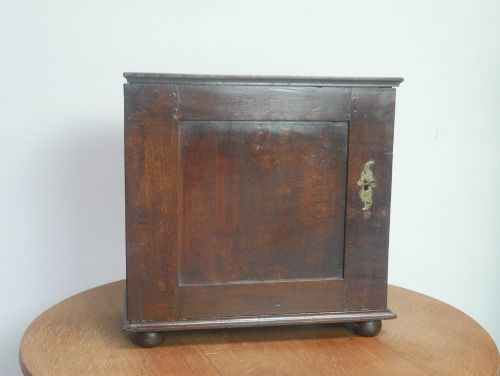
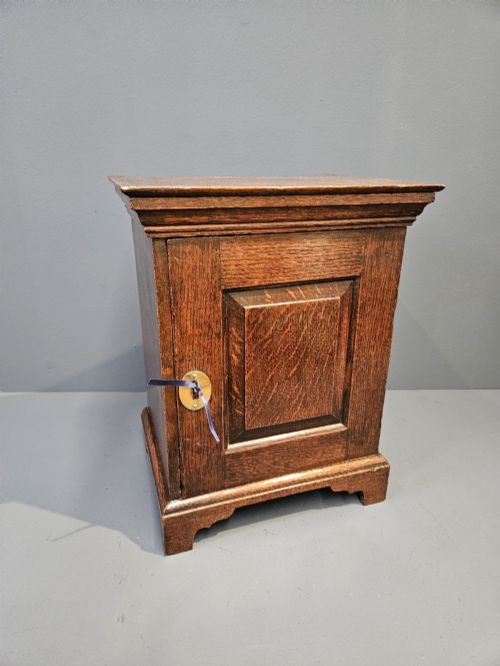
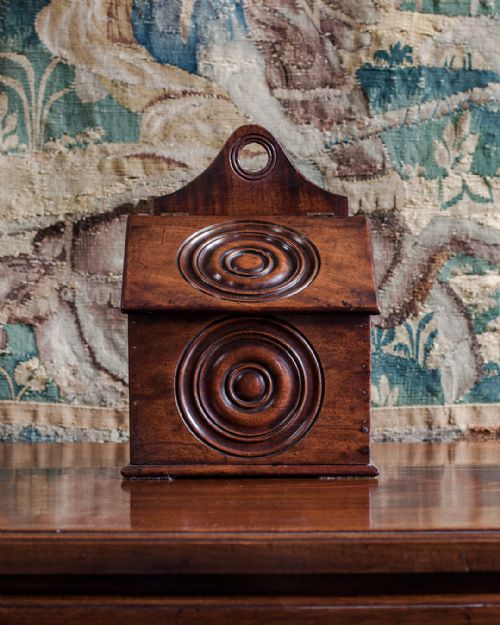
The selections here range from vernacular Welsh pine and oak pieces to refined George II and George III mahogany specimens. Collectors encounter both simple sliding-lid candle boxes and sophisticated wall cabinets featuring internal drawers.
Most examples date from the eighteenth century, though regional vernacular styles extend into the nineteenth century. Wall boxes and spice cupboards provide direct connection to period domestic routines.
How They Were Made
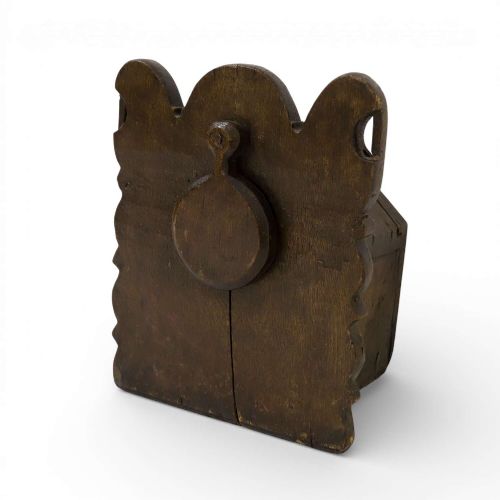
Joinery relied on solid timber construction using oak, mahogany, and pine, frequently assembled with pegged joints or dovetails. Backboards incorporated hanging holes or brackets designed for wall suspension.
Iron and brass hardware, including hinges, latches, and hooks, secured the lids and doors while providing structural reinforcement. Boxwood inlay and remnants of red paint appear on specific regional examples.
Object forms span wall boxes, candle boxes, wall cabinets, spice cupboards, salt boxes, and knife sharpeners.
What Varies in Quality
Timber selection dictates the distinction between vernacular workshop items and formal cabinet work, moving from local pine and plain oak to figured mahogany. Surface patination and the survival of original finishes determine the visual presence of each piece.
Hardware originality separates unaltered survivors from pieces with replaced hinges or latches. The presence of sophisticated details like boxwood stringing, fielded panels, or fitted interior drawers elevates specific cabinets above standard utility boxes.
The Georgian Hanging Box Glossary
- Salt Box
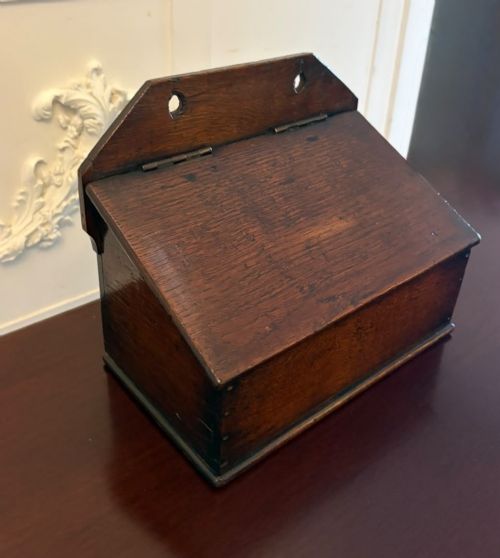
- A wall-mounted container featuring a sloping lid designed to keep domestic salt dry and accessible. These receptacles frequently hung near fireplaces or in kitchens.
- Candle Box
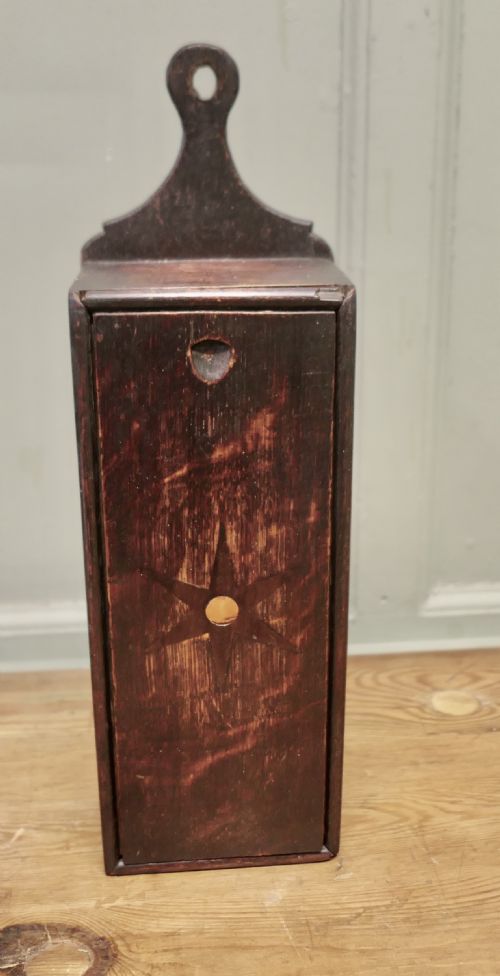
- A vertical wooden container constructed with a sliding or hinged lid to store tallow or wax candles. Hanging versions protected household lighting from dampness and pests.
- Spice Cupboard
- A small wall cabinet fitted with a panelled door enclosing internal small drawers or compartments. These containers preserved expensive culinary spices in eighteenth-century homes.
- Vernacular
- Objects made by regional craftsmen following local traditions rather than metropolitan academic designs. Welsh and English country pieces demonstrate distinct local construction methods.
- Treen
- Small domestic wooden objects made by turners and joiners for everyday household use. These items include boxes, turned vessels, and kitchen implements.
Georgian Hanging Box: Frequently Asked Questions
Where were hanging boxes placed?
These boxes hung on walls near hearths, kitchens, or doorways for immediate access to frequently used items.
Their suspension kept salt, candles, and spices away from damp flagstone floors and household pests.
How do I hang an antique box?
Utilise the existing suspension holes or brackets incorporated into the original timber backboards.
Ensure appropriate wall fixings support the weight of the solid wood without straining historic joints.
What is the difference between salt and candle boxes?
Salt boxes typically feature a sloping front lid and a high panelled back with a hanging hole. Candle boxes often present a more vertical, tapered rectangular profile with a sliding lid.
How do I care for antique pine and oak?
Maintain stable indoor humidity levels and keep wooden surfaces away from direct heat sources. Apply occasional traditional wax polish to nourish dry historic timber.