
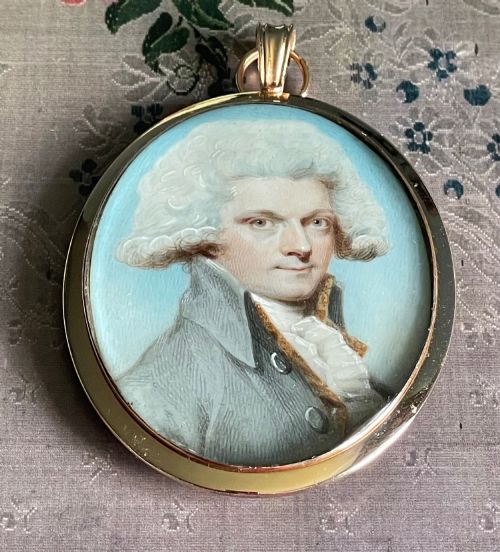

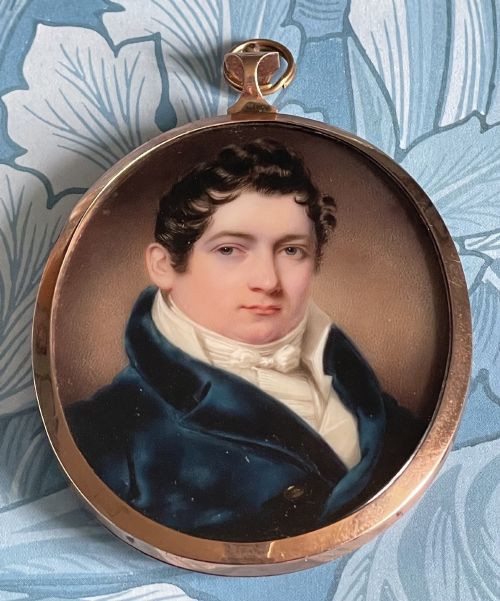

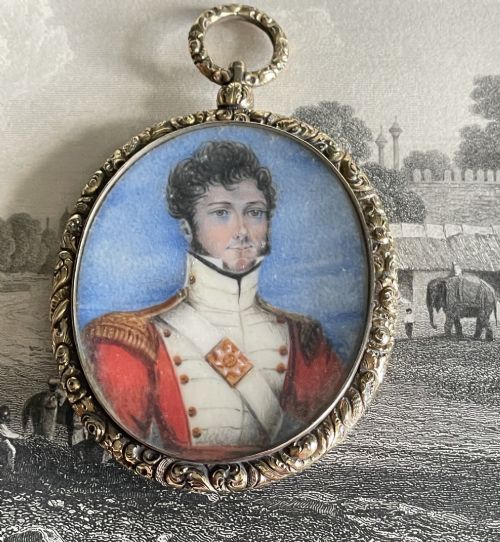
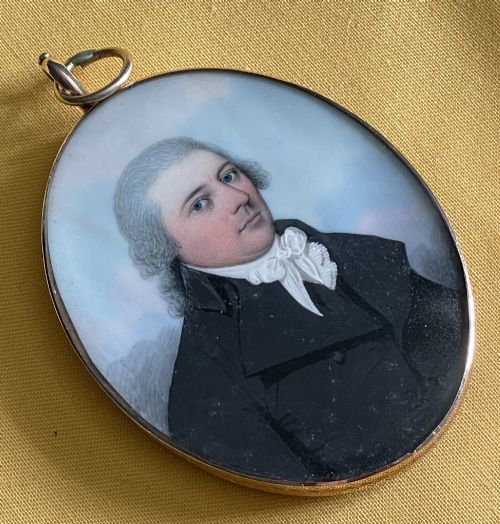


Georgian Gold Portrait Pendant
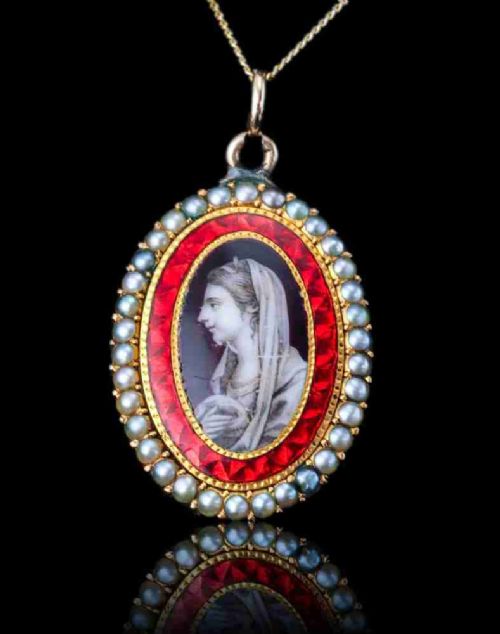
A georgian gold portrait pendant holds a painted face beneath glass, keeping a specific person close against the chest.
Georgian Gold Portrait Pendant
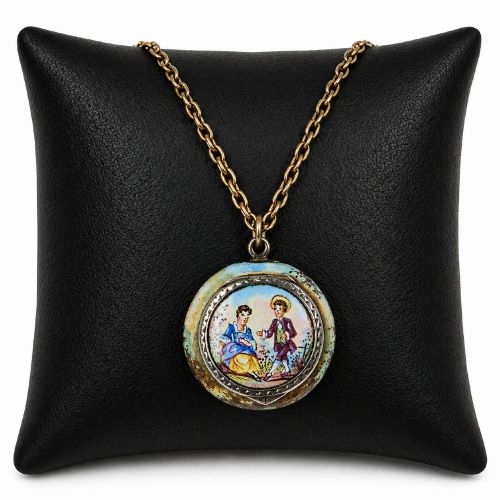
A georgian gold portrait pendant combines wearable jewellery with miniature fine art, taking the form of a locket or framed painting. You are looking at small-scale likenesses of gentlemen, ladies and officers created to be worn on a chain or pinned to dress.
The versions most likely to meet you on this page date from the eighteenth and nineteenth centuries, often framed in yellow gold or gilt metal. They present detailed depictions executed in watercolour, enamel or pigment, occasionally backed by hair work or memorial inscriptions.
Makers ranged from named artists working in oils and watercolours to regional craftsmen producing simple silhouette pieces. Their works capture individual identities from the georgian period down to the victorian era.
Materials and Construction
Gold frames in various purities enclose panels of glass protecting delicate watercolour paintings on paper, vellum or ivory. Artisans also utilised enamel fused to copper and carved agate to receive the pigment.
Enamelling required firing mineral colours at high temperatures to achieve permanent vibrancy, whilst watercolour miniatures demanded microscopic brushwork under magnification. Frames were cast or hammered from gold, gilt metal and pinchbeck, often integrating glass backs to display woven hair.
Subjects often wore their Sunday best for the painter, yet naval officers still managed to look windswept on ivory.
Judging Quality and Execution
The weight and finish of the gold mount also distinguish fine pieces, alongside the clarity of the protective glass and the preservation of the delicate painted surface beneath.
Henry Bone ARA·Charles Shirreff·John Miers·John C D Engleheart·Charles Hayter·Christian Friedrich Zincke·William Naish·George Engleheart·James Ferguson·William Grimaldi·Samuel Cotes·AE Chalon
The Georgian Gold Portrait Pendant Glossary
- Miniature
- A small-scale painting executed with fine detail. These works required specialised brushes and steady hands to achieve lifelike proportions.
- Enamel
- Powdered glass fused to metal through firing. This technique created durable, glossy surfaces that retained their colour over centuries.
- Vellum
- Prepared calfskin used as a painting surface. It provided a smooth, flat ground for detailed watercolour application.
- Fob seal
- A small pendant used for pressing into sealing wax. Some incorporated carved intaglios or miniature portraits.
- Intaglio
- A design carved into a gemstone so that it leaves a raised impression in wax. Collectors value them for their crisp relief carving.
Georgian Gold Portrait Pendant: Frequently Asked Questions
How were portrait pendants worn?
Owners suspended them from chains around the neck or pinned them directly to garments as jewellery.
They served as intimate personal ornaments, keeping the likeness of a relative or spouse near the heart.
What is inside the back of a pendant?
Many examples contain woven hair work arranged behind glass as a token of remembrance.
Others feature engraved initials, dates or empty compartments once meant for holding locks of hair or dried flowers.
How do I date a portrait pendant?
Costume, hairstyle and frame construction offer the clearest clues to age.
Georgian clothing styles, rounded gold frames and specific mounting techniques help separate eighteenth-century pieces from later victorian revivals.
Are these portraits painted on ivory?
Many eighteenth and nineteenth century miniatures use thin slices of ivory as a painting ground.
The translucent quality of ivory lent a natural luminosity to painted skin tones.