



Georgian Gold Pill Box
These georgian gold pill box examples are small, precious containers crafted to hold powders, scents or pills in the pocket.
Georgian Gold Pill Box
When searching for a georgian gold pill box, you encounter pocket containers and diminutive receptacles primarily catalogued as snuff boxes, vinaigrettes, and etui cases.
The pieces appearing here span the Georgian, George III, George IV, and William IV periods, alongside items dated around 1800, 1880, and the eighteenth century.
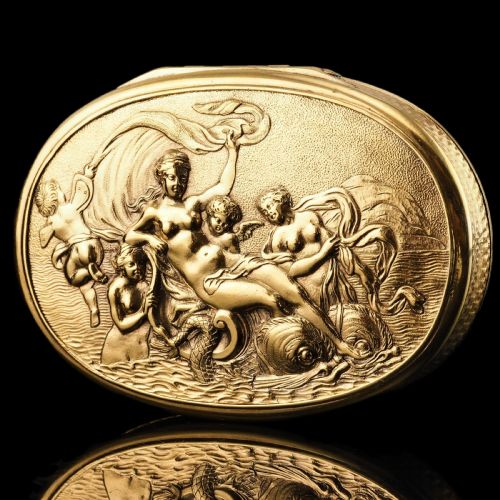
Forms range from simple oval and book-shaped containers to table boxes featuring tortoiseshell, agate, bloodstone, and enamel decorations.
How they were made
Makers utilised solid gold, eighteen-carat gold, and two-colour or vari-coloured gold alongside silver gilt, vermeil, and sterling silver.
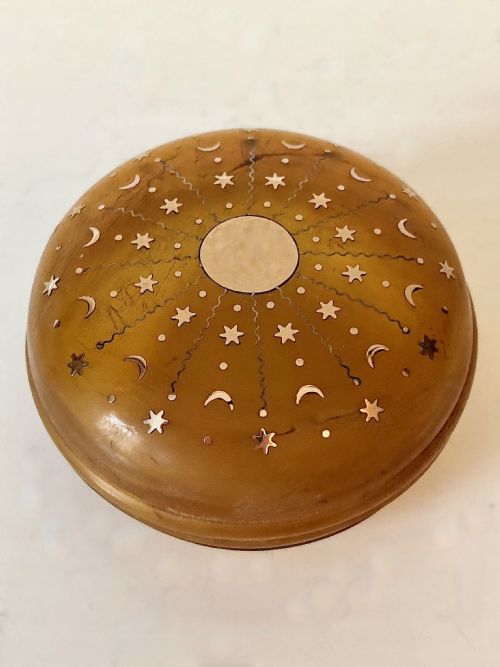
Surfaces display intricate engraving, repoussé rococo motifs, painted miniatures of scenes like Venus, and delicate gold pique inlay set into tortoiseshell.
What varies in quality
Quality rests upon the crispness of the chasing, the precision of the gold pique work, and the artistic merit of painted enamel scenes.
Maker marks, London assay office hallmarks, and the use of precious stones such as agate or bloodstone elevate the standing of individual containers.
Jacob Amyand·Giles Loyer·Alexander James Strachan·Charles Rawlings·Edward Farrell
The Georgian Gold Pill Box Glossary
- Vinaigrette
- A small hinged box containing a perforated inner grille that held a sponge soaked in aromatic vinegar. These were carried to counter unpleasant odours in public spaces.
- Etui
- A small ornamental case used to hold needles, tweezers, scissors, or small implements. They typically feature precious metal mounts.
- Silver gilt
- Silver that has been coated with a thin layer of gold on its surface. This technique provides the rich appearance of solid gold.
- Pique
- A method of decorating tortoiseshell or ivory by inlaying tiny pins or strips of gold to form patterns. It requires immense patience and steady hands.
- Vari-coloured gold
- Gold alloyed with different metals such as copper or silver to produce varied hues within a single design. This creates distinct colour contrasts across floral or scenic motifs.
Georgian Gold Pill Box: Frequently Asked Questions
What were these small boxes used for?
These containers were carried in pockets or reticules to hold snuff, scented vinegars, or small medicinal pills during social outings.
The inclusion of internal grilles in vinaigrettes and specialised compartments in etui cases highlights their functional design for personal grooming and health.
How do I identify a Georgian piece?
Georgian items often bear hallmarks indicating London production alongside royal cyphers or reigning monarch styles associated with the eighteenth and early nineteenth centuries.
The presence of characteristic neoclassical motifs, rococo scrolls, and specific maker marks helps anchor objects firmly within this extensive historical era.
Are these items made of solid gold?
The materials vary between solid gold, eighteen-carat gold, gold plating, and silver gilt depending on the specific box and its intended purpose.
Descriptions explicitly note the precise metal content, distinguishing between precious solid gold alloys and silver gilt or gold-plated alternatives.
How should I care for tortoiseshell containers?
Tortoiseshell requires careful handling away from direct sunlight and extreme humidity to prevent warping or cracking of the organic material.
Gentle dusting with a soft, dry cloth preserves the polished surface and the inlaid gold pique work without damaging the delicate shell.