




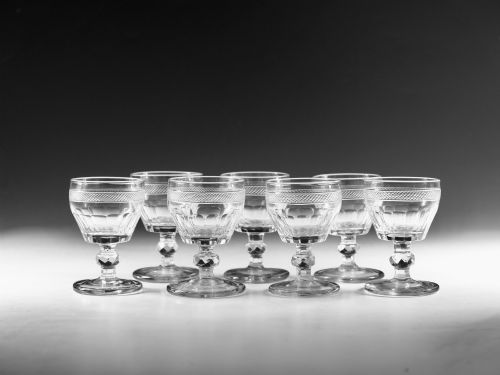
Georgian Glass Set
A georgian glass set brings together matched drinking vessels or cruets from the late eighteenth or early nineteenth century for daily dining.
Georgian Glass Set
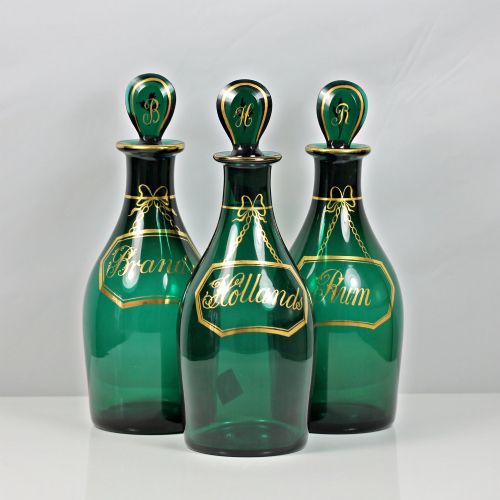
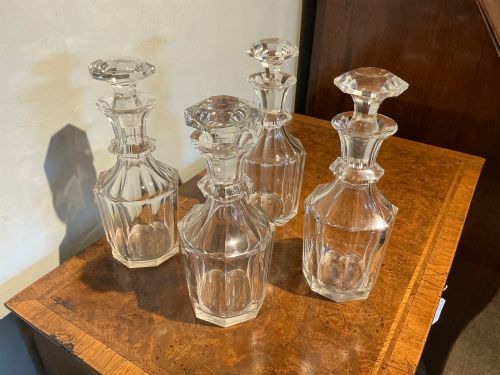
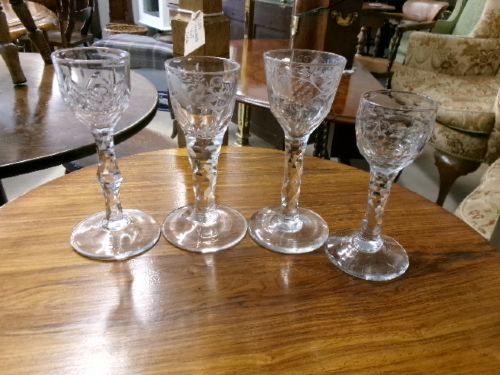
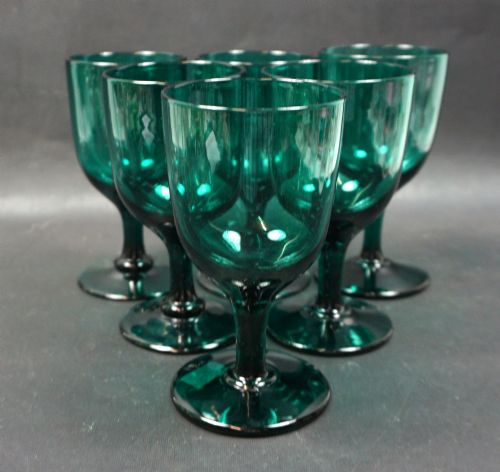
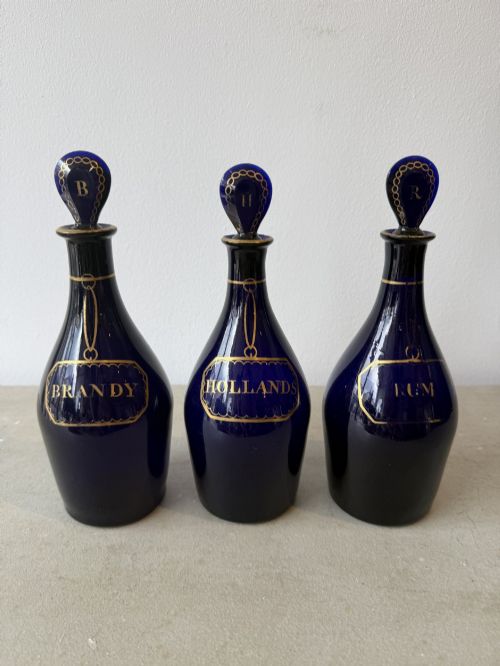
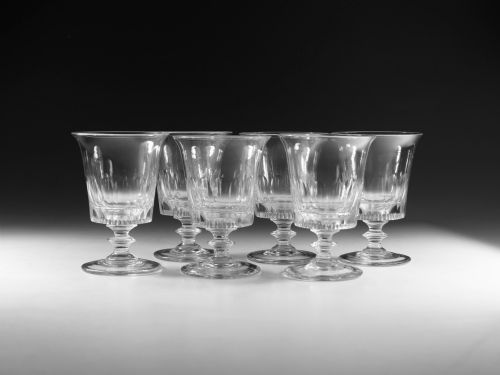
A georgian glass set comprises grouped vessels designed for the table, spanning wine glasses, rummers, decanters, jelly glasses, salt cellars and cruets. These groupings reflect the formal dining and entertaining habits of the period, often uniting matching forms intended to sit together on a sideboard or dining table.
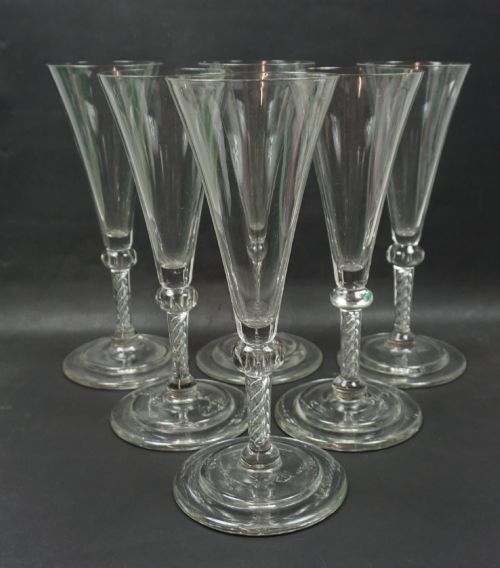
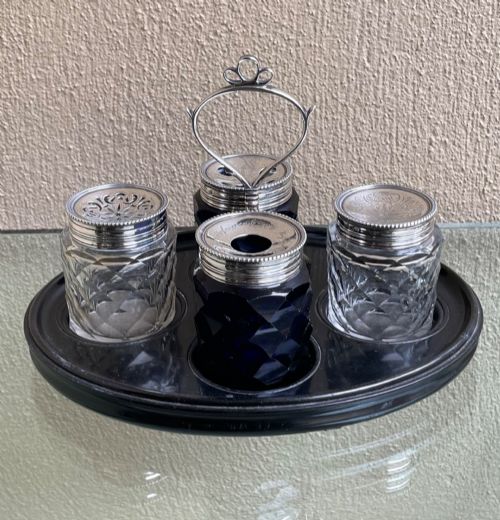
The selections encountered here range from Bristol blue and peacock blue wine glasses to cut glass salts with fitted saucers and multi-bottle cruet frames. Many retain their original companions, offering a coherent visual display rooted in the late eighteenth and early nineteenth centuries.
How they were made
The pieces rely primarily on lead crystal and blown glass, often shaped into faceted stems, air twists or opaque twists. Makers utilised traditional blowing, moulding and hand-cutting techniques to achieve deep refraction and distinct silhouettes such as square lemon squeezer feet.
Cruet frames and stands incorporate sterling silver, Old Sheffield plate, brass and mahogany, integrating metalwork and cabinetry with the glass containers. Silver mounts and stoppers often bear hallmarks or detailed hand-engraving that match the period style of the vessels.
Georgian Glass Set Retail Price Guide 2026
Typical asking prices for georgian glass set among the pieces listed under this phrase on Sellingantiques today, from the lower quarter to the upper quarter. They describe what is for sale here now, not the wider market.
Object forms span wine glasses, decanters, cruet sets and salt cellars.
What varies in quality
Quality rests on the clarity of the metal, the crispness of the wheel-cut facets and the uniformity across all pieces in the grouping. Sets where every glass or bottle shares identical weight, colour saturation and height command greater regard.
The presence of matching original components, such as stoppers in decanters or liners in salts, elevates the integrity of the whole. Superior craftsmanship shows in the balance of the stems and the precision of any silver or plated mounts accompanying the glass.
Charles Thomas Fox·Jonathan Douglas·Hester Bateman
The Georgian Glass Set Glossary
- Lead crystal
- Glass containing lead oxide, which increases weight, brilliance and the play of light through cut facets. It provides the heavy, resonant quality found in fine table glass.
- Rummer
- A large, sturdy drinking glass popular in the Georgian era for ale, wine or punch. These vessels typically feature a short stem and a capacious bowl.
- Cruet set
- A matched collection of glass bottles or cruets held within a frame of silver, plated metal or wood. They served condiments, oil and vinegar at the dining table.
- Lemon squeezer base
- A heavy, square-moulded glass foot shaped like a citrus squeezer. This form provided stability for rummers and decanters during the Georgian period.
- Air twist
- A decorative stem formation created by drawing out tiny air bubbles inside the molten metal. This technique produces spiral threads of air running down the glass.
Georgian Glass Set: Frequently Asked Questions
What is included in a georgian glass set?
A georgian glass set typically gathers multiple matching vessels such as wine glasses, rummers, jelly glasses or decanters designed for formal dining.
Some groupings also incorporate fitted silver or mahogany frames to hold cruet bottles or condiments together on the table.
How were these glass sets used originally?
These sets served beverages and condiments during multi-course Georgian meals and social gatherings. Wine glasses and rummers held specific drinks, while cruet bottles dispensed oils, vinegars and sauces at the table.
Jelly glasses and salts held individual portions for guests, functioning as both practical tableware and decorative displays.
How do I care for antique glass?
Wash glass sets by hand in warm water using mild soap, avoiding sudden temperature changes that can crack the material. Dry them immediately with a soft linen cloth to prevent water spots.
Store pieces securely on stable surfaces away from direct sunlight and heavy vibrations to protect delicate stems and rims.
How can I tell genuine Georgian glass?
Examine the weight and surface texture for the slight irregularities typical of hand-blown and hand-cut manufacture. Pontil marks on the undersides indicate traditional workshop production before mass-machine methods.
Check for the characteristic deep tone and high refractive index of lead crystal used during the period.