


Georgian Glass Caddy
A georgian glass caddy is a refined vessel for storing precious tea leaves, combining crisp brilliance with period elegance.
Georgian Glass Caddy
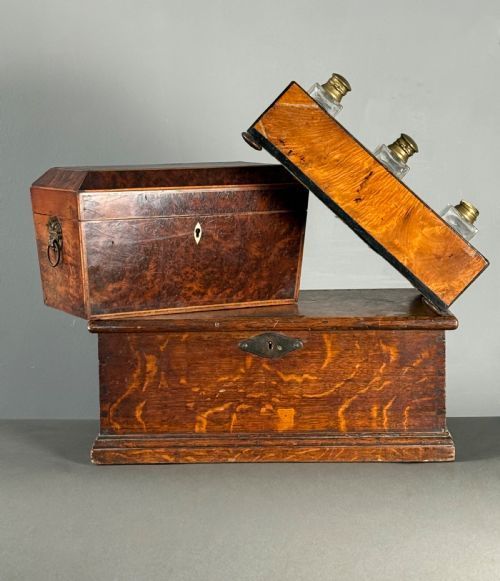
When you search for a georgian glass caddy, you encounter vessels and bowls designed for the tea table during the eighteenth and early nineteenth centuries. These pieces appear as standalone cut glass containers or as fitted internal mixing bowls housed within wooden boxes made of mahogany, satinwood or rosewood.
The versions most likely to meet you on this page include heavy cut glass jars mounted with silver gilt, alongside mahogany and satinwood tea caddies that retain their original glass mixing bowls and mixing sticks. Alongside these, you find related tableware such as cruet sets, glass trays and bottle carriers from the same eras.
How They Were Made
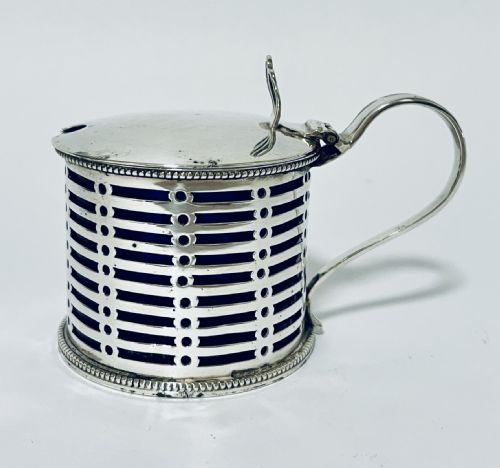
The glass elements rely on heavy lead crystal shaped through blowing and finished with deep brilliant-cut facets or sliced-cut patterns that catch the candlelight. Metal mounts and fittings utilise sterling silver, silver gilt and old Sheffield plate, adding secure rims and lids to the fragile glass bodies.
Wooden housing incorporates dense timbers like mahogany, laburnum and satinwood, often decorated with parquetry, penwork or inlaid details, whilst internal compartments sometimes feature velvet linings or brass hardware.
What Varies in Quality
The distinction between standard examples and superior pieces rests upon the crispness of the glass cutting and the weight of the metal mounts. Deeper, sharper facet-cutting and heavier silver-gilt collars indicate a higher grade of production intended for affluent households.
Integrity of components also dictates the standing of a piece, separating those retaining original mixing bowls, covers and matching silver elements from those assembled later from mismatched parts.
William Rudkins London
The Georgian Glass Caddy Glossary
- Cut glass
- Glass decorated by grinding designs into the surface using rotating wheels. This technique creates sharp geometric facets that refract light intensely.
- Silver-gilt
- Silver that has been coated with a thin layer of gold on the surface. This finish provides the rich warmth of gold whilst utilising sturdy silver underneath.
- Sarcophagus form
- A box design featuring a steep, flared lid resembling an ancient stone coffin. Regency cabinet makers favoured this substantial shape for tea caddies.
- Cruet set
- A matched group of glass bottles or casters held in a metal frame for condiments. These table sets frequently share materials with period glass caddies.
Georgian Glass Caddy: Frequently Asked Questions
What was a glass tea caddy used for?
These vessels held expensive loose leaf tea safely under lock and key in the formal reception rooms of Georgian homes. Tea was a luxury commodity, requiring secure storage to prevent domestic theft.
The central glass bowl inside wooden caddies served as a mixing vessel where green and black teas were blended together before brewing. Servants prepared the brew in the presence of guests using these exact implements.
How can I tell a Regency caddy from an 18th century one?
Eighteenth century pieces frequently display simpler geometric proportions and simpler box forms, whilst Regency examples often adopt architectural sarcophagus shapes with bold brass paw feet. Regency design leans toward heavier rosewood and elaborate parquetry.
Examine the interior hardware and construction methods, as Regency cabinet makers utilised distinct dovetailing and lining materials compared to earlier George II or George III workshops.
Did all glass caddies come inside wooden boxes?
Many glass caddies were produced as standalone vessels with their own fitted silver or metal lids, designed to stand independently on the sideboard or tea table. Others were manufactured specifically to slide into fitted wooden tea chests alongside mixing bowls.
Standalone cut glass canisters rely entirely on their thick walls and heavy bases for stability, whereas caddy bowls inside mahogany boxes depended on the surrounding timber for protection.
Can I use my glass caddy for daily tea storage?
While structurally sound, antique glass and delicate silver-gilt mounts require gentle handling that suits display better than vigorous daily kitchen use. Modern moisture and heavy handling can stress fragile eighteenth-century materials.
Display the piece on a sideboard or table where its cut facets catch natural light, preserving the fragile glass and internal components for future generations.