



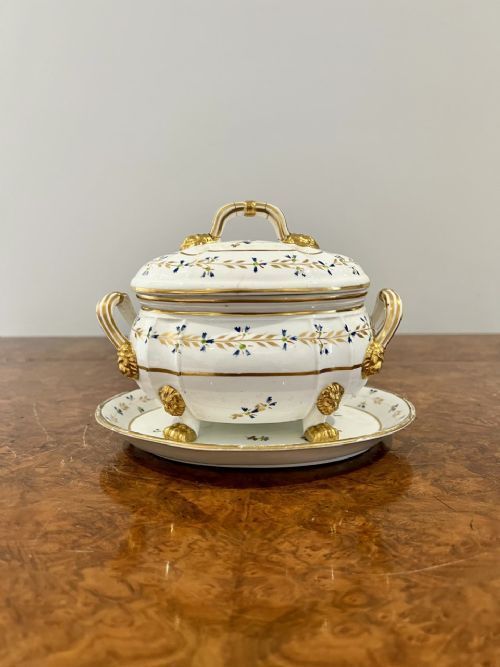
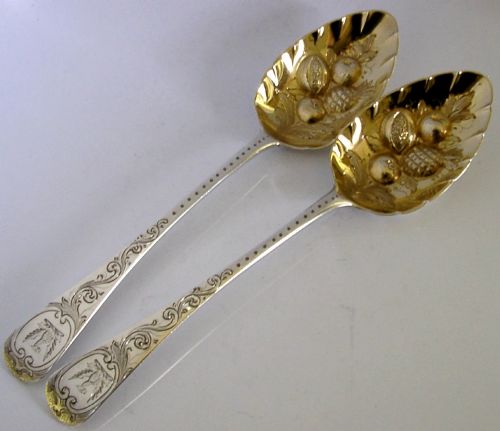
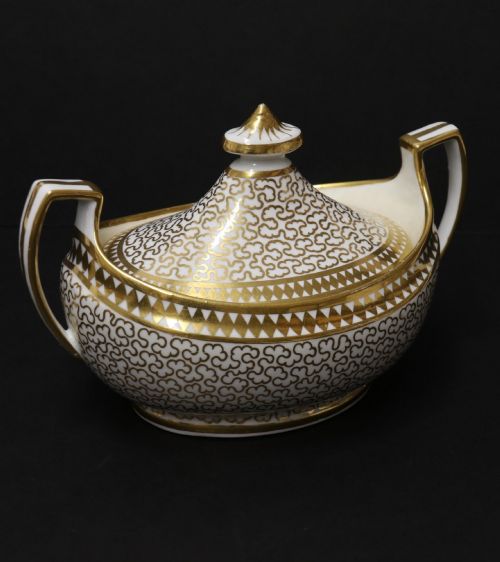


Georgian Gilt Bowl
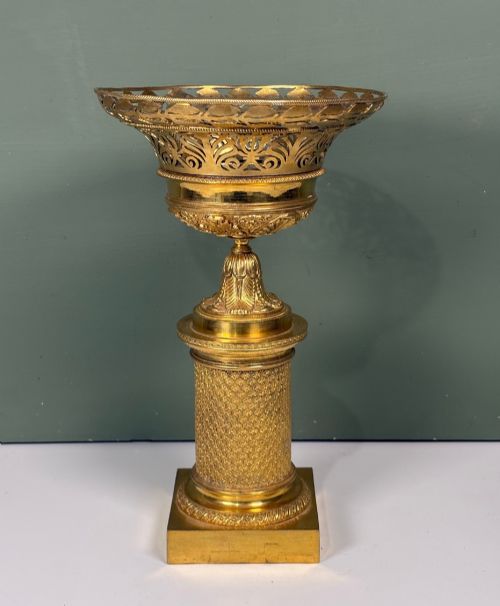
A georgian gilt bowl brings the warmth of gold leaf and silver-gilt into a room, offering both decorative presence and the craftsmanship of the eighteenth and nineteenth centuries.
Georgian Gilt Bowl
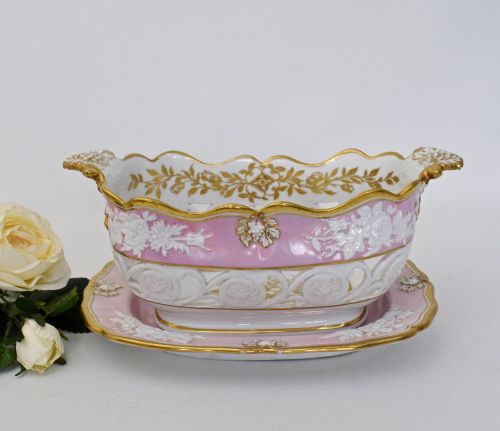
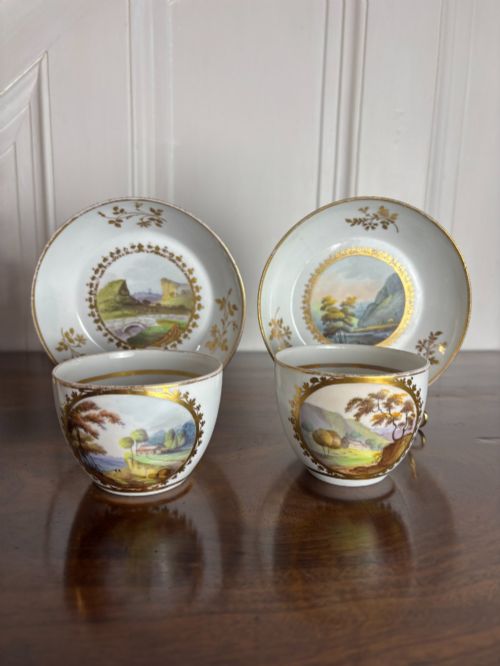
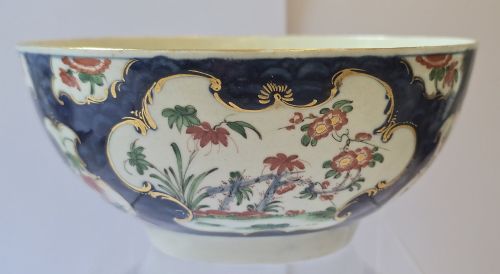
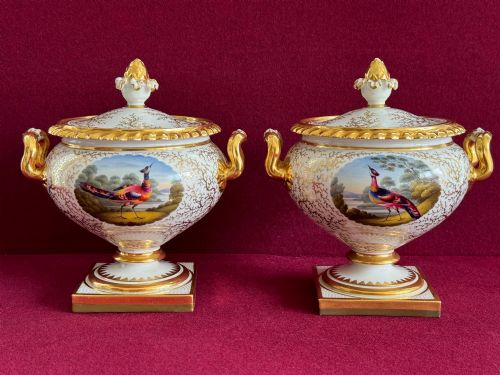
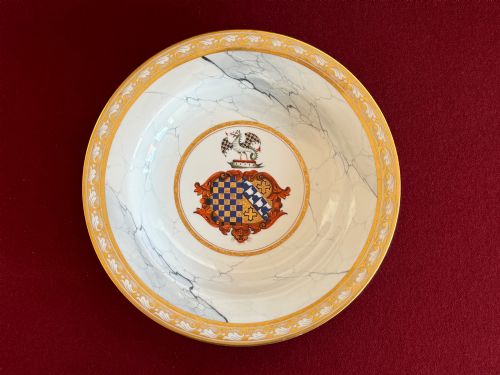
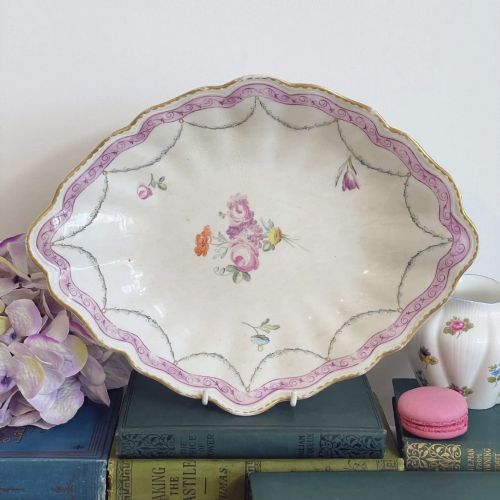
The pieces represented in these listings range from Worcester and Derby porcelain bowls with hand-painted scenes to sterling silver berry spoons, salts, and covered pedestal bowls bearing distinct makers' marks and period hallmarks.
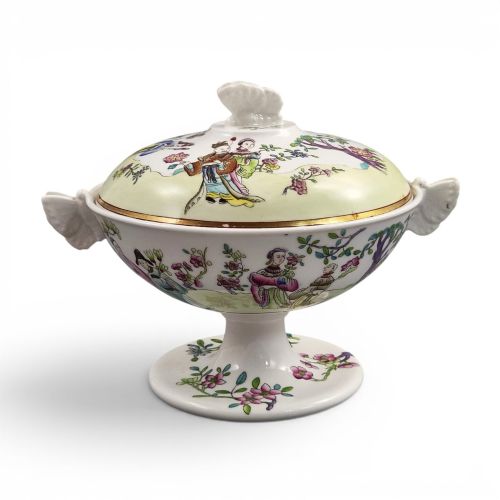
Porcelain examples often feature rich cobalt grounds, Imari palettes, or Chinoiserie patterns, whilst silver iterations demonstrate the refined smithing techniques characteristic of Georgian and Regency silversmiths.
Materials and production methods
Ceramic vessels on this page utilise porcelain, felspar porcelain, and ironstone ceramic, often shaped into covered tureens, sucriers, and cabinet bowls before receiving hand-painted polychrome decoration and applied gold leaf.
Silver and silver-gilt pieces employ sterling silver shaped through traditional smithing techniques, with internal gilding applied via mercury gilding or electrogilding methods to create the characteristic warm gold finish against polished silver.
Georgian Gilt Bowl Retail Price Guide 2026
Typical asking prices for georgian gilt bowl among the pieces listed under this phrase on Sellingantiques today, from the lower quarter to the upper quarter. They describe what is for sale here now, not the wider market.
Listings feature items spanning the 18th Century, Georgian period, Regency era, and 19th Century, utilising porcelain, sterling silver, and gold leaf.
Distinguishing quality in period gilt and ceramic pieces
Quality in a georgian gilt bowl or related vessel rests upon the crispness of the hand-painted details, the preservation of the delicate gold leaf or gilt interior, and the clarity of factory marks or silversmith hallmarks.
Superior ceramic pieces display finely executed polychrome landscapes, armorial crests, or balanced Chinoiserie motifs without fading, whilst top-tier silver items exhibit robust gauge metalwork and deeply struck maker stamps.
Barr Flight and Barr·Chamberlains Worcester·George Fox·John Kincard·William Chawner II
The Georgian Gilt Bowl Glossary
- Silver-gilt
- Sterling silver that has been coated with a thin layer of gold on its surface or interior. This technique provides the durability of silver with the rich appearance of solid gold.
- Sucrier
- A small covered sugar bowl designed for the tea table. These vessels frequently feature matching covers and delicate gilt handles.
- Felspar porcelain
- A specialised ceramic body patented in the nineteenth century containing feldspar. It offered enhanced durability and a bright white ground ideal for rich enamel colours and gilding.
- Imari
- A decorative style inspired by Japanese export porcelain characterised by underglaze blue, iron red, and abundant gold highlights. It remained popular across various English porcelain factories.
- Hallmark
- An official stamp applied to precious metals indicating the standard of purity, the maker, and the year of assay. These marks provide definitive dating for silver items.
Georgian Gilt Bowl: Frequently Asked Questions
What is a georgian gilt bowl used for?
These vessels originally served practical functions on the dining table or tea service, holding sugar, sweetmeats, or sauces.
Today, collectors use them primarily as decorative display pieces or cabinet items to introduce period elegance into interior spaces.
How do I care for antique gilt porcelain?
Antique porcelain and gilded surfaces require gentle handling and should be dusted softly with a dry cloth rather than washed.
Avoid immersion in water or chemical cleaning agents to preserve the delicate gold leaf and hand-painted enamel details.
How can I tell the difference between periods?
Dating relies on factory marks, ceramic body types like felspar porcelain, and stylistic shifts from eighteenth-century Rococo to Regency neo-classicism.
Silver items utilise official hallmarks and date letters stamped directly into the metal for precise chronological attribution.
Are silver-gilt items solid gold?
Silver-gilt pieces consist of sterling silver beneath a micro-thin layer of applied gold.
This traditional method combines the structural strength and weight of silver with the visual warmth of gold.