



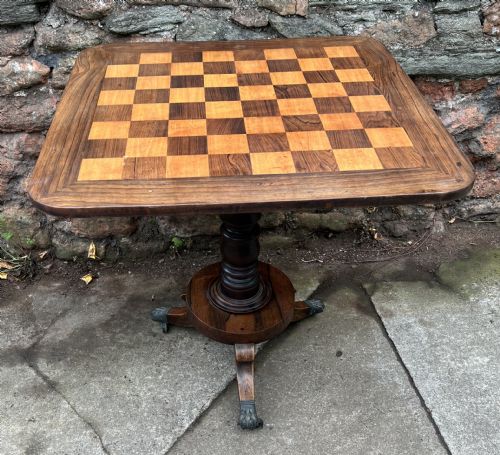


Georgian Games Board
A georgian games board brings tactile history and centuries of parlour strategy directly into a modern room.
Georgian Games Board
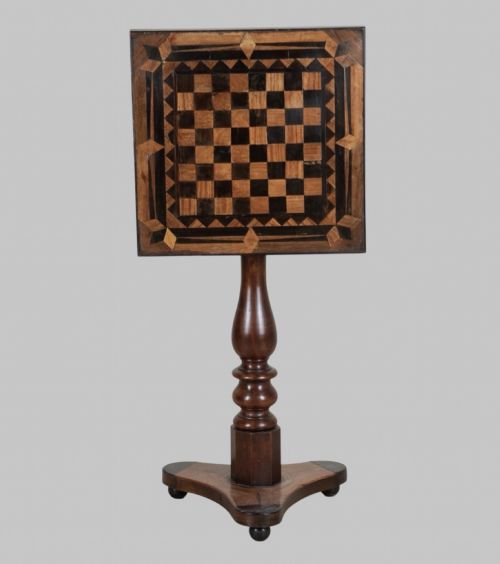
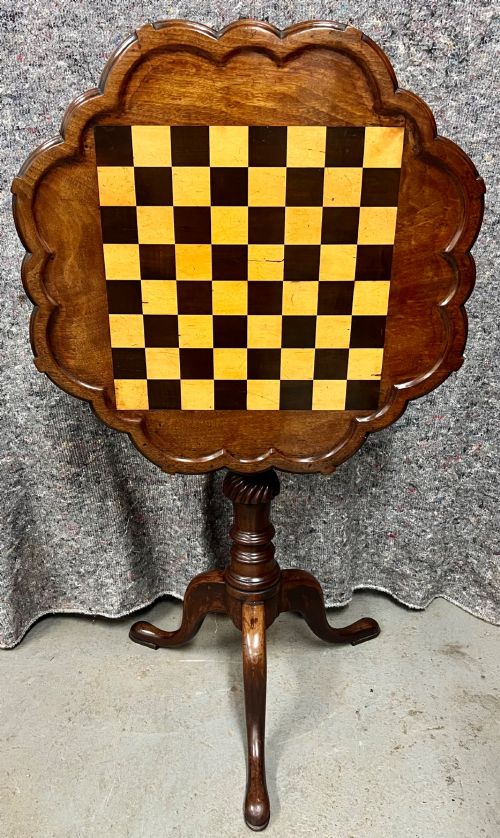
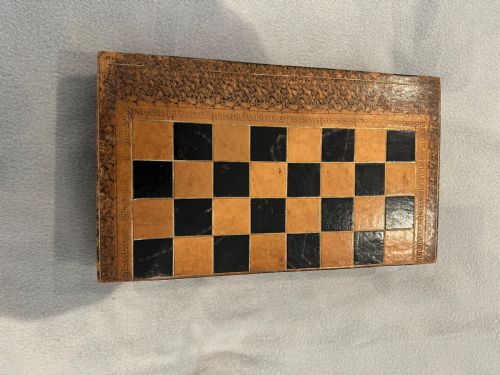
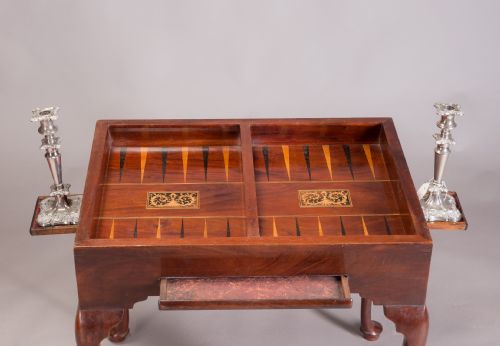
A georgian games board encompasses timber tables, hinged boxes and travelling sets designed for pastimes like chess, draughts and cribbage. These pieces stem primarily from the Georgian, Regency and Victorian eras, ranging from tripod occasional tables with inlaid chequered surfaces to portable leather bound faux book boxes.
The version most commonly met on this page is the occasional or chess table featuring inlaid contrasting woods upon the top. Alongside these stands, collectors frequently encounter specialist boxes and boards intended for card games like Pope Joan or peg-based scoring.
How they were made
Cabinetmakers constructed these boards using solid timbers and decorative veneers such as mahogany, rosewood and ebonised wood. Inlays of boxwood, satinwood and brass provided sharp contrast for playing squares and decorative borders.
Surface ornamentation relied on specialist techniques including delicate penwork decoration, gold leaf application and carved bone elements. Tripod bases and turned pedestals offered stable support for parlour use.
Georgian Games Board Retail Price Guide 2026
Typical asking prices for georgian games board among the pieces listed under this phrase on Sellingantiques today, from the lower quarter to the upper quarter. They describe what is for sale here now, not the wider market.
Prisoner of war camps produced remarkably intricate carved bone domino sets during the Napoleonic era.
What varies in quality
Quality depends upon the precision of the timber inlays and the complexity of the decorative surface work. Finely executed penwork and well matched grain patterns separate standard workshop output from exceptional examples.
The integration of the gaming surface into the wider furniture design dictates overall distinction. Tables that function successfully as both decorative occasional furniture and dedicated gaming platforms represent the upper tier of the range.
George Merrifield
The Georgian Games Board Glossary
- Penwork
- A decorative technique using fine ink drawing on wood, often finished with varnish to protect the detailed motifs. It appears frequently on Regency pieces.
- Cribbage
- A card game traditionally scored by pegging on a wooden board with numbered tracks. Dedicated boxes often incorporate storage compartments for cards and pegs.
- Tripod table
- A small freestanding table supported by a central pillar above three splayed legs. This form allowed easy relocation around a drawing room.
- Ebonised wood
- Timber treated to imitate the dark, dense appearance of ebony. It provides strong visual contrast against lighter inlay woods like boxwood.
Georgian Games Board: Frequently Asked Questions
What games were played on these boards?
These pieces accommodated traditional pastimes including chess, draughts, cribbage and card games such as Pope Joan. The variety of surface designs reflects the broad social appetite for parlour entertainment.
Many tables featured reversible or multi-use tops that allowed players to transition between board games and card play within the same evening.
How do I date a georgian games board?
Dating relies on identifying the prevailing furniture styles, timber choices and decorative techniques associated with specific periods. Regency and Georgian pieces often display specific leg turning, brass mounts and veneer patterns.
Cross referencing the construction methods against documented workshop practices helps narrow the decade of manufacture.
Were these boards meant for travel?
While heavy tripod tables remained stationary in drawing rooms, smaller boxes and faux book variants were designed for portability. These compact items allowed travellers to carry games across long journeys.
Faux book boxes disguised gaming equipment as leather bound volumes suitable for library shelving.
How should I care for antique wood surfaces?
Maintenance requires keeping wooden surfaces away from direct sunlight and maintaining stable room humidity to protect delicate veneers and inlays. Regular gentle dusting preserves the historic finish.
Applying occasional appropriate wax feeds the timber without building up unwanted residues on penwork or gilt decoration.