


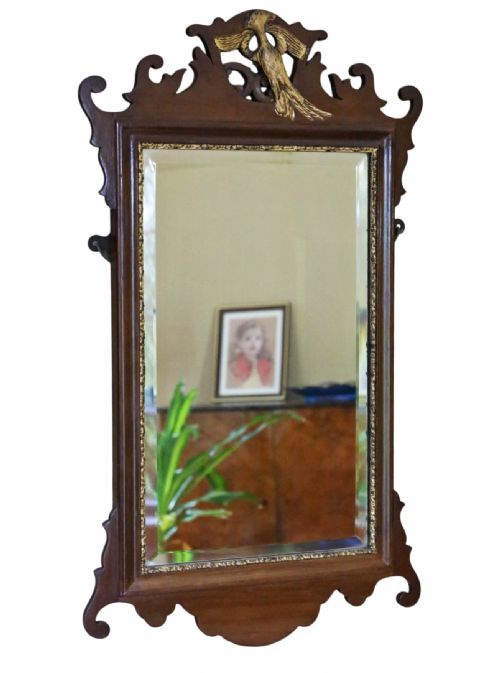


Georgian Fret Carved Mirror
A georgian fret carved mirror brings the sharp lines of mahogany and walnut fretwork into any room.
Georgian Fret Carved Mirror
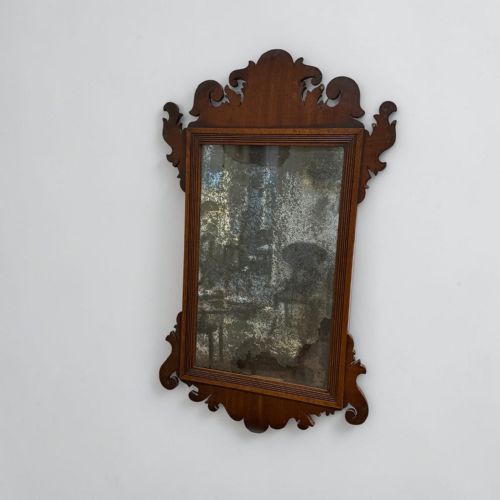
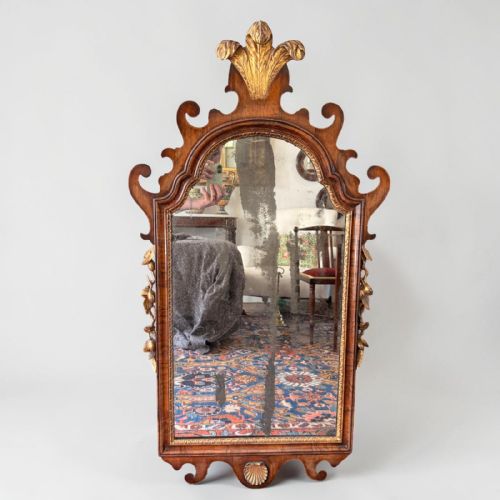
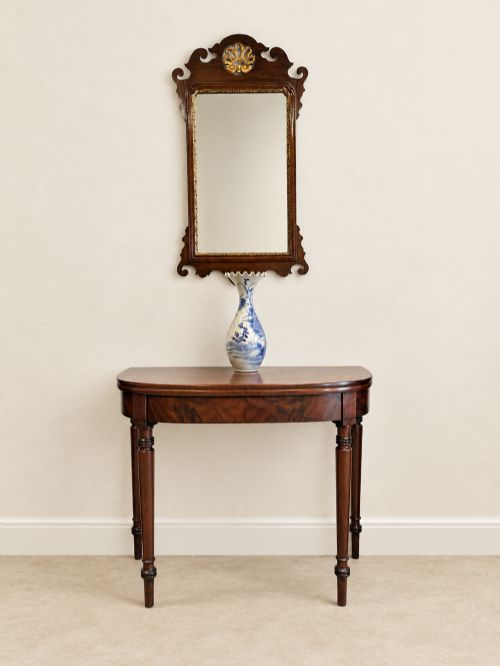
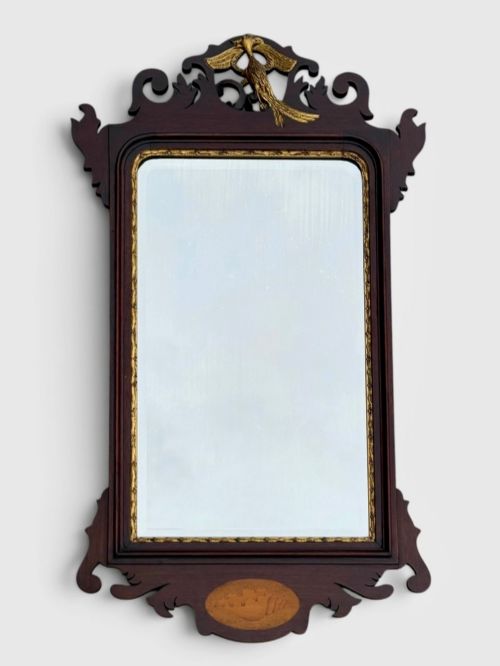
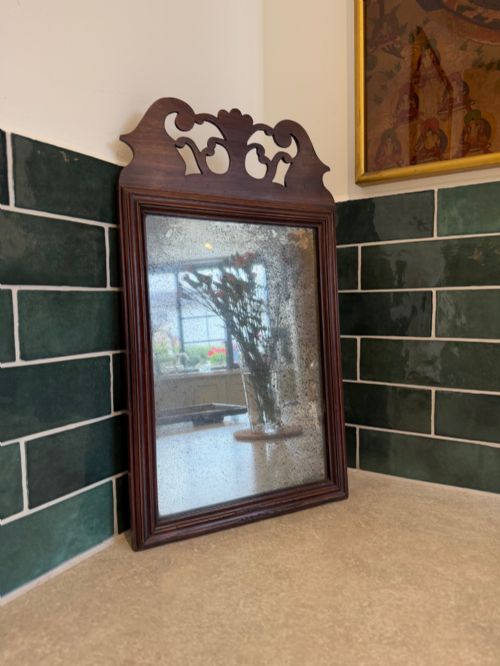
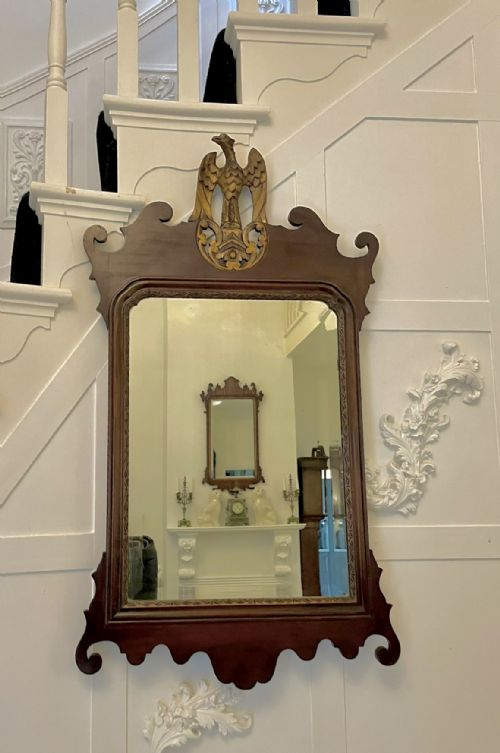
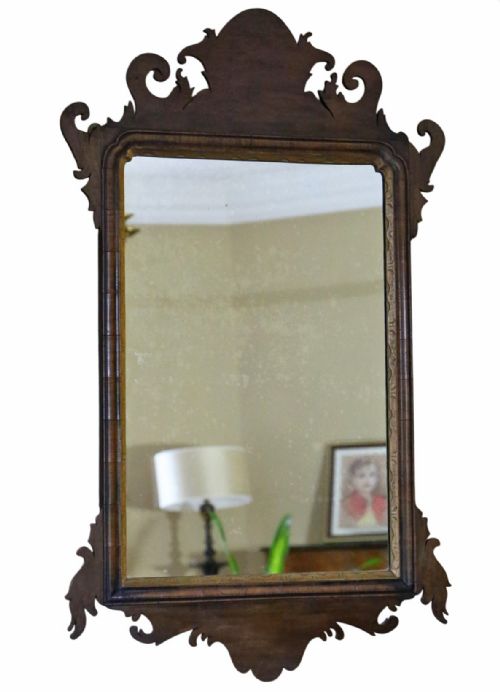
A georgian fret carved mirror is a wall hanging defined by intricate pierced wooden frames, predominantly found in mahogany and walnut. These pieces span the eighteenth century as well as later revivals from the Edwardian era and the early twentieth century.
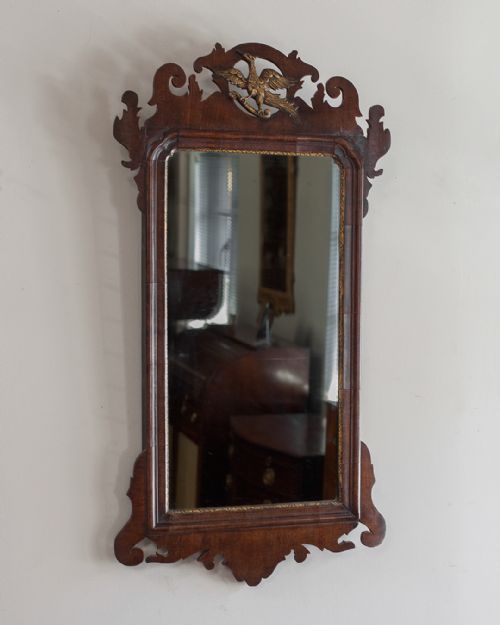
Most examples encountered here follow the classic wall mirror format, often featuring shaped crests such as the Ho Ho bird or scrollwork terminals. The selection ranges from compact early period walnut versions to larger Edwardian and revival interpretations.
Materials and construction
Makers utilised dense cabinet timbers like mahogany and walnut, selected for their stability when subjected to the intricate pierced sawwork of the fret cutter. These woods were often polished to a deep lustre or combined with giltwood details to catch the light.
The mirror plates themselves were set into rebated frames behind the fretwork border, occasionally utilising bevel-edged glass in later revival pieces or Vauxhall plates in earlier examples. Parcel gilt accents and wood inlay were frequently applied to highlight the carved crests and ears.
Assessing quality and proportion
The sophistication of the fret-cutting largely determines the distinction between standard and exceptional examples, with crisp, deep piercing showing greater control than shallow, mechanical sawing. The harmony of the proportions between the central glass plate and the surrounding fret frame dictates the visual balance.
Timbers selected for grain figure and colour elevate certain pieces above others, particularly in walnut and mahogany variants where rich figuring adds depth to the flat planes. The preservation of original parcel gilding and untouched mirror plates further separates fine specimens from heavily restored ones.
The Georgian Fret Carved Mirror Glossary
- Fret cut
- Wood pierced with intricate geometric or scroll patterns using a fine saw. This technique creates the signature silhouette of the frame.
- Parcel gilt
- Portions of a carved wooden surface highlighted with thin layers of gold leaf. It draws the eye to specific decorative motifs like birds or scrolls.
- Vauxhall mirror
- An early mirror plate distinguished by a heavy bevel and specific glass composition. These plates are typically found on eighteenth-century examples.
- Giltwood
- Timber carved and subsequently covered in gold leaf. It provides a bright contrast against dark mahogany and walnut frames.
Georgian Fret Carved Mirror: Frequently Asked Questions
How do I spot a later revival mirror?
Revival pieces often display machine-cut precision in the fretwork and utilise modern timber preparation methods that differ from eighteenth-century practice.
Examination of the backboards, fixings, and the ageing of the mirror glass helps clarify whether a piece dates to the Georgian period or the Edwardian revival.
What is a Ho Ho bird?
The Ho Ho bird is a stylised Chinese phoenix frequently carved into the crest of mid-eighteenth-century frames. It adds a whimsical focal point to the top scrollwork.
This motif reappears on later revival mirrors as a nod to classic Chippendale design.
Where should I hang these mirrors?
These mirrors suit rooms with traditional proportions, often placed above mantelpieces or console tables where their vertical lines draw the eye upward.
Their reflective plates also help distribute natural light around smaller or darker spaces.
Why choose walnut over mahogany?
Walnut frames typically date to the earlier part of the eighteenth century, offering a warmer, highly figured grain pattern.
Mahogany became dominant later, providing a harder timber that allowed for even finer and more robust fretwork piercing.