

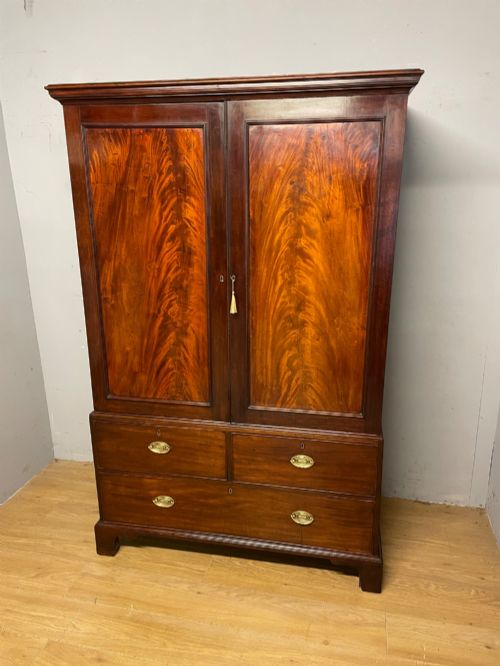
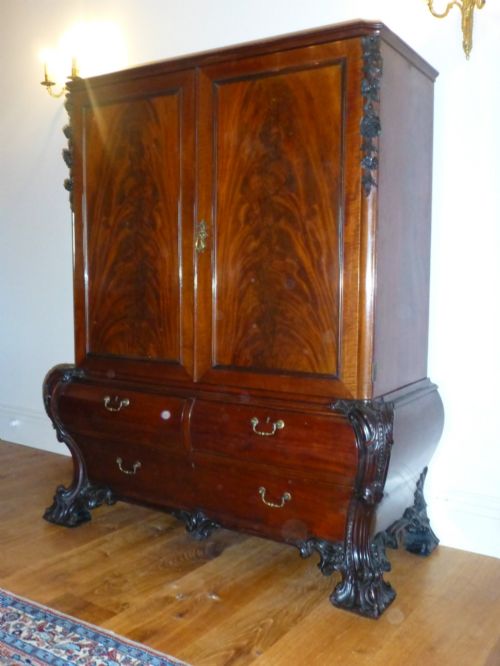
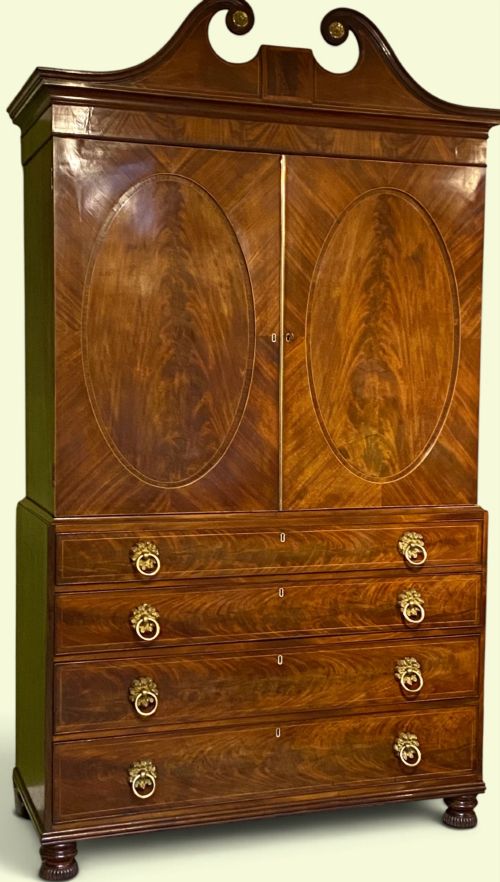
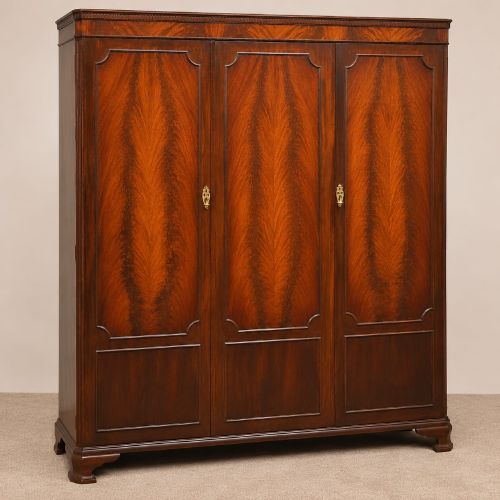
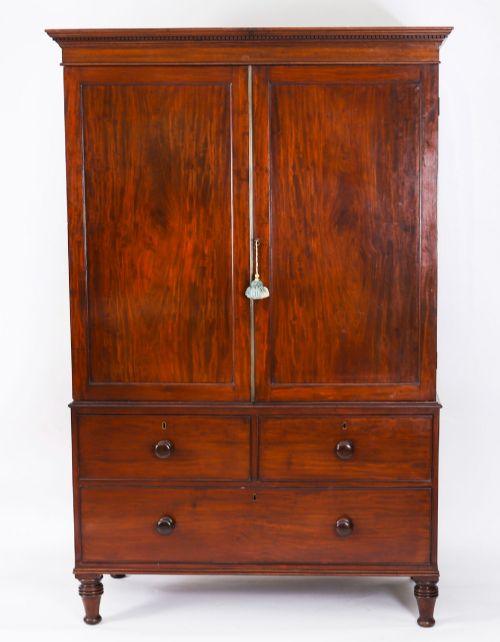
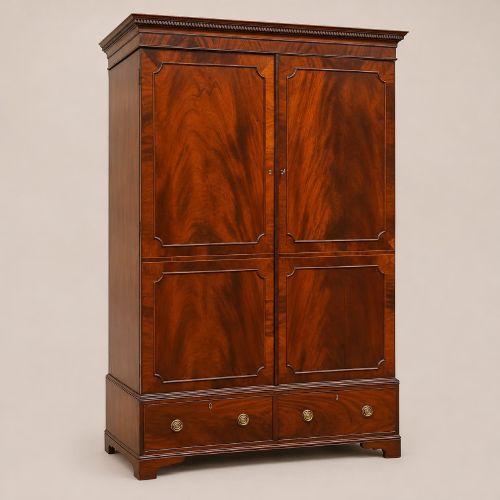
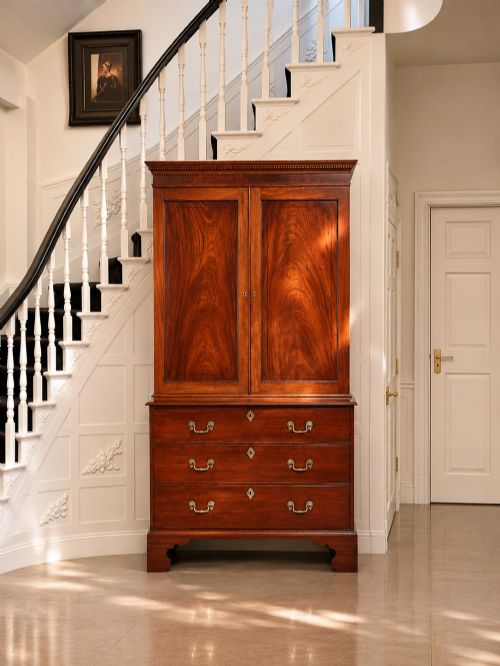
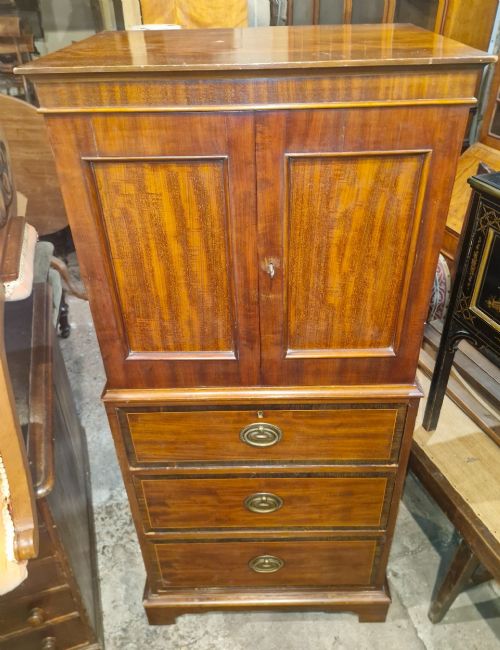
Georgian Flame Mahogany Press
A georgian flame mahogany press is a grand storage piece built to hold linen and garments with dramatic wood figures.
Georgian Flame Mahogany Press
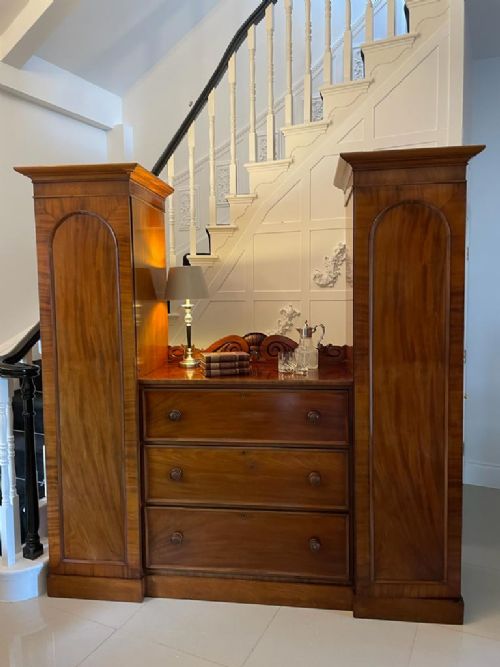
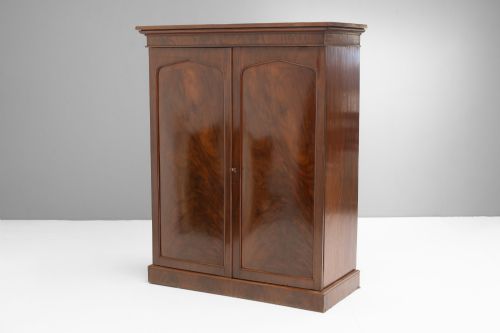
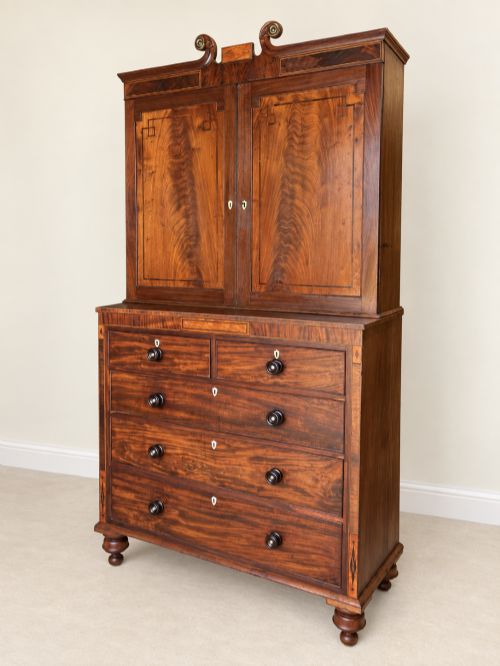
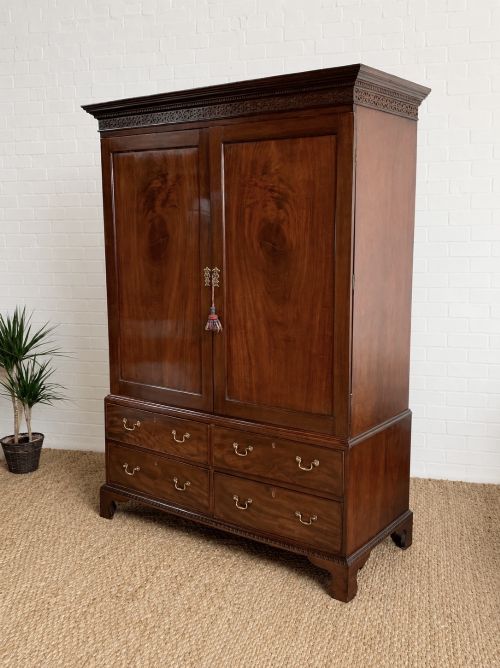
When searching for a georgian flame mahogany press, you are looking at substantial case furniture designed to store clothes and linens in a traditional bedchamber. These large pieces combine upper cupboard storage with lower drawer sections, appearing frequently in Georgian and Regency forms across this selection.
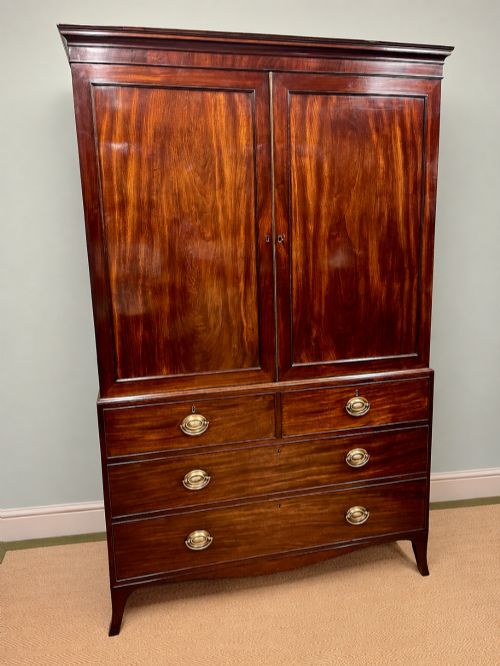
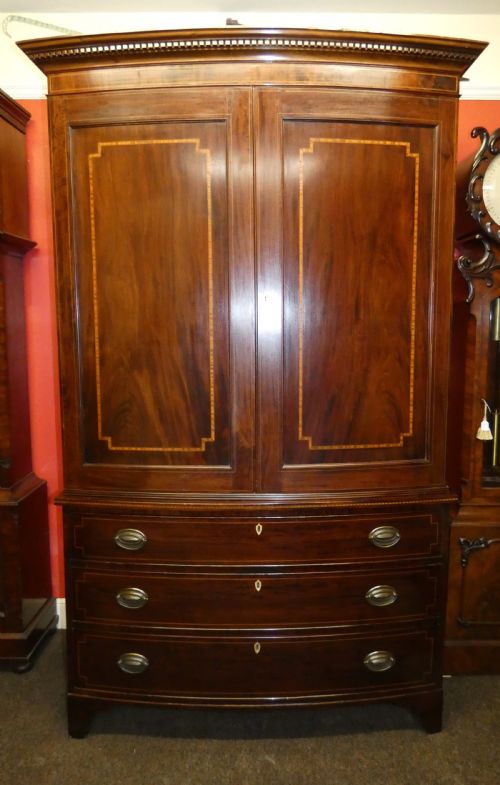
The version most commonly met on this page is the linen press with panelled doors above a chest of drawers, often constructed during the late eighteenth or early nineteenth century. Cabinet makers built these tall storage units to dominate the room, using symmetrical drawer configurations and enclosed shelving.
How They Were Made
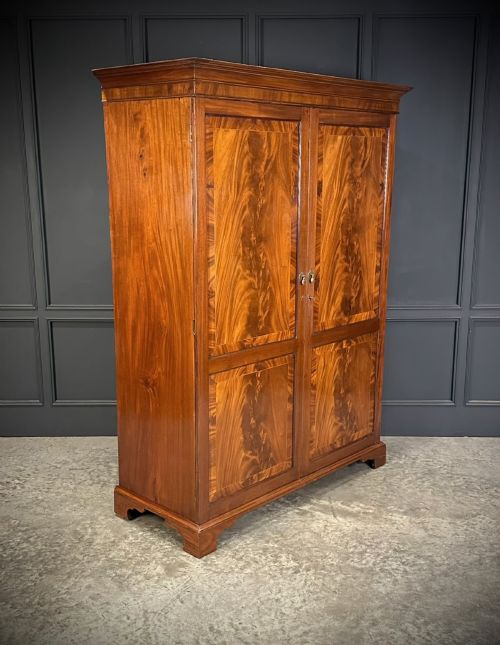
Cabinet makers constructed these large carcases using solid timber frames faced with carefully chosen veneers, applying flame mahogany specifically to prominent drawer fronts and door panels to create rippling patterns of grain. Secondary timbers such as oak provided structural stability to internal sliding trays and drawer linings.
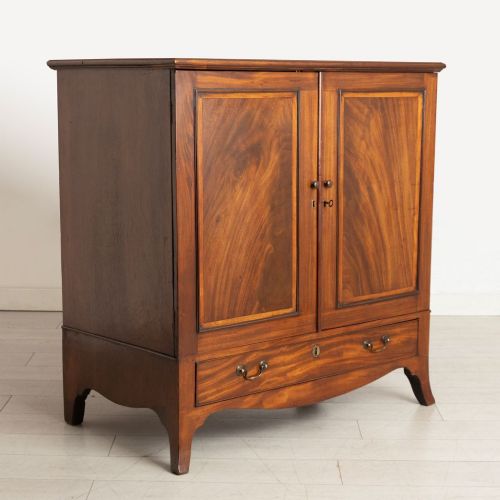
Detailing relied on precision joinery and subtle contrasts, incorporating satinwood inlay and boxwood stringing around the borders of panels. Brass handles and escutcheons secured the doors and drawers, while cornices often featured blind fretwork carvings or simple moulded pediments.
Georgian Flame Mahogany Press Retail Price Guide 2026
Typical asking prices for georgian flame mahogany press among the pieces listed under this phrase on Sellingantiques today, from the lower quarter to the upper quarter. They describe what is for sale here now, not the wider market.
Listings feature mahogany, oak, satinwood, and boxwood combined in Georgian and Regency linen presses.
What Varies in Quality
The visual impact of a georgian flame mahogany press depends heavily on the book-matching and selection of the wood veneers on the main doors. Superior examples display symmetrical flame figures that ripple uniformly across the timber, whereas lesser pieces rely on plain mahogany boards with minimal grain movement.
Proportion and interior arrangement also divide standard examples from the finest items. Pieces retaining their original interior sliding linen trays, finely cut bracket feet, and crisp inlaid stringing command greater attention than those altered or stripped of their internal fittings.
Gillows·Thomas Chippendale·Thomas Bradshaw
The Georgian Flame Mahogany Press Glossary
- Flame mahogany veneer
- A figured wood veneer sliced from timber where the branch meets the trunk, creating a distinct feather or flame pattern. Cabinet makers reserved this material for the most prominent exterior surfaces.
- Linen press
- A tall storage cabinet featuring upper doors that enclose sliding trays for folded textiles, mounted above a chest of drawers. These items served as the primary wardrobe before modern fitted closets.
- Compactum
- A multi-section wardrobe combining hanging space, shelves, and internal drawers within a single unified carcase. This form provided comprehensive storage for a gentleman's entire attire.
- Blind fretwork
- Carved ornamentation applied to cornices or friezes that creates an openwork geometric pattern without piercing the background wood. This decorative technique appeared frequently on mid-Georgian cabinetry.
- Stringing
- A thin inlay of contrasting light wood, such as boxwood or satinwood, set flush into darker mahogany surfaces. It defined the borders of drawer fronts and door panels.
Georgian Flame Mahogany Press: Frequently Asked Questions
What is inside a linen press?
The upper section typically contains shallow wooden sliding trays designed for stacking folded linen and garments. The lower base incorporates a chest of drawers for additional clothing storage.
Historically, these pieces held household textiles before hanging wardrobes became common in British bedrooms. Many examples retain these original internal trays.
Where were presses placed?
These large storage items stood primarily in principal bedrooms and dressing rooms of substantial country houses. Their imposing scale required tall ceilings and ample floor space.
They functioned as the main storage furniture for personal apparel and household linens in wealthy homes.
How do I date a Georgian press?
Dating relies on stylistic details such as the shape of the bracket feet, the style of the cornice, and the presence of stringing. Pieces from the seventeen-nineties often feature bow fronts and delicate satinwood inlay.
Later Regency variants display bolder architectural mouldings and heavier brass fittings while maintaining the traditional press configuration.