



Georgian Fire Shovel
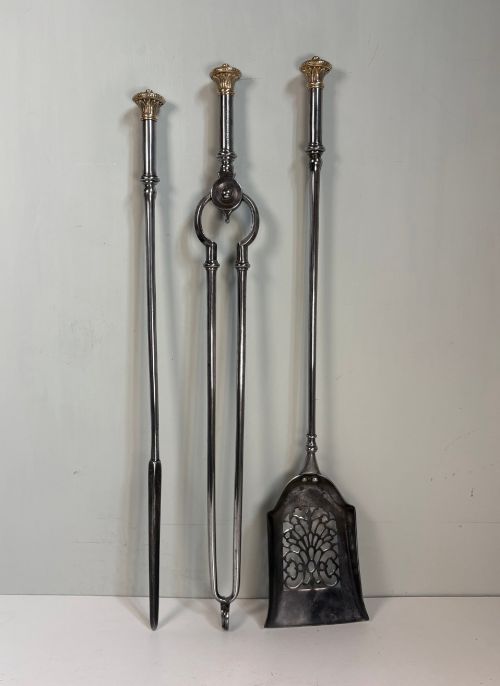
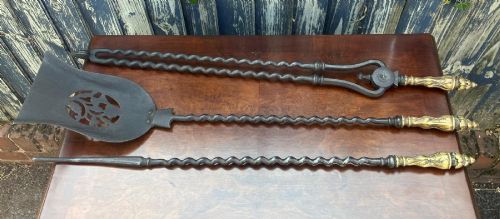
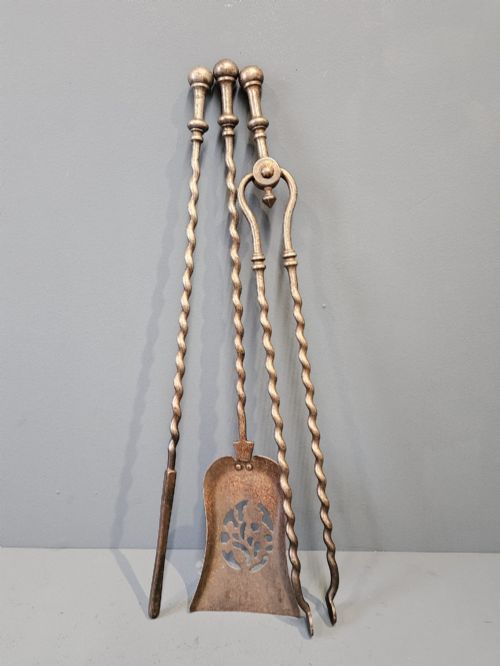
These georgian fire shovel examples are sturdy hearth implements forged to manage coal and ash with genuine period character.
Georgian Fire Shovel
A georgian fire shovel is a practical hearth implement designed for clearing grate ashes and tending coal fires during the eighteenth and nineteenth centuries. Buyers searching this phrase encounter substantial iron, steel, and brass pieces shaped for daily domestic use.
The pieces on this page appear individually or as part of matched fire irons, often grouped with pokers and tongs. Most examples date from the Georgian, Regency, and Victorian eras, reflecting the steady evolution of domestic hearth furniture.
How they were made
Blacksmiths and metalworkers shaped these tools using durable iron and steel, frequently pairing them with cast or turned brass handles. Polished and burnished steel finishes provided a bright surface that caught the hearth light.
Some shovels incorporate gilt brass details or distinctive claw and ball designs, showing the decorative ambitions of nineteenth century makers. Construction methods relied on solid forging and secure riveting to withstand intense fireside heat.
Georgian Fire Shovel Retail Price Guide 2026
Typical asking prices for georgian fire shovel among the pieces listed under this phrase on Sellingantiques today, from the lower quarter to the upper quarter. They describe what is for sale here now, not the wider market.
Some Victorian fire tools feature earnest little brass claws clutching spheres, determined to keep a firm grip on your hearth.
What varies in quality
Quality rests in the weight of the metal and the crispness of the handle turnings. A well proportioned shovel balances comfortably in the hand, with a blade thick enough to resist warping from hot coals.
Finishing sets the better examples apart, particularly where burnished steel or polished brass has been handled with restraint and skill. Surviving suites maintain a visual harmony across all implements, showing that the set was conceived as one.
The Georgian Fire Shovel Glossary
- Gilt brass
- Metal alloy treated with a thin layer of gold to produce a rich decorative sheen. This treatment appears on handles and mounts to catch the flickering light of the hearth.
- Burnished steel
- Metal rubbed to a high, reflective polish using fine abrasive materials. It yields a bright finish common on Regency and Georgian fire tools.
- Fire irons
- A collective term for the poker, tongs, and shovel used together at the fireplace. These implements were often sold as matched sets.
- Claw and ball
- A decorative foot or terminal shape mimicking a bird's talon grasping a sphere. This stylistic detail occurs on Victorian fireside suites.
Georgian Fire Shovel: Frequently Asked Questions
Were these shovels used every day?
These implements served as essential daily tools for clearing ash and arranging burning coal in open grates.
Their sturdy iron and steel construction allowed them to withstand heavy daily use across generations.
How do I clean polished steel?
Historic steel surfaces require careful maintenance with dry cloths and appropriate metal conservation products to prevent rust.
Avoid harsh abrasives that can strip away centuries of accumulated character and patina.
Are these tools sold as sets?
Many listings present shovels alongside matching pokers and tongs as complete companion sets.
Others appear individually, having become separated from their original hearth suites over time.
How can I tell the period?
Dating relies on observing material choices, such as burnished steel versus later Victorian brass, alongside handle styles.
Construction marks and overall weight also provide clues to whether a piece belongs to the Georgian or Victorian era.