


Georgian Elm Carver
A georgian elm carver brings robust provincial character to a room, offering sturdy seating hewn from tough native timber.
Georgian Elm Carver
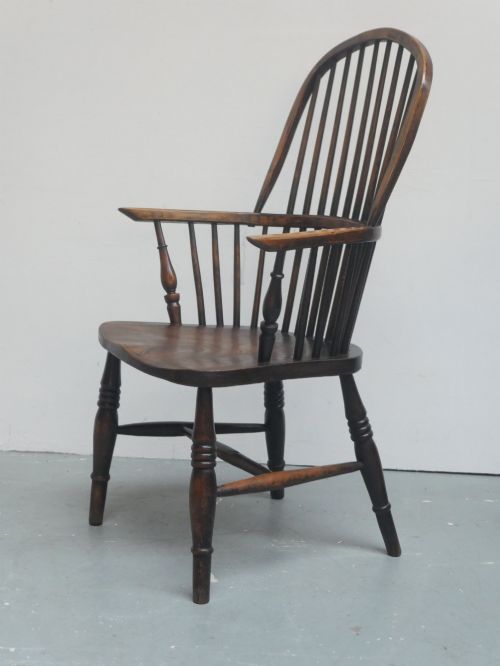
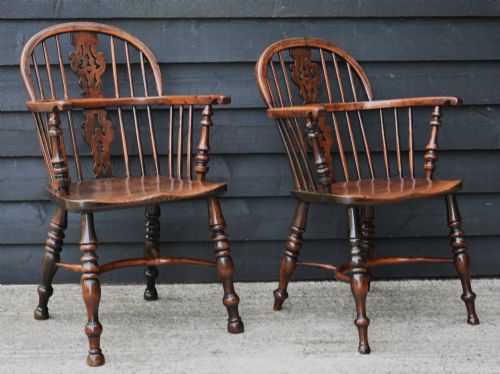
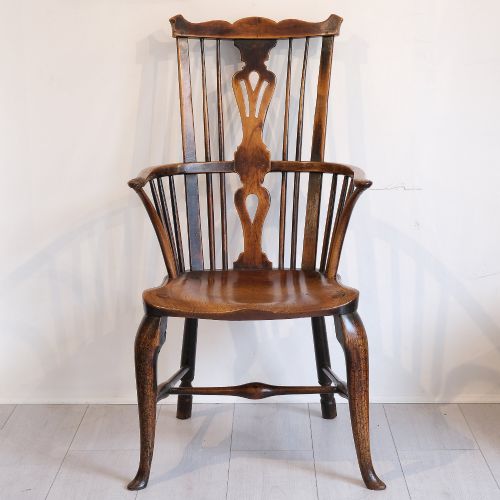
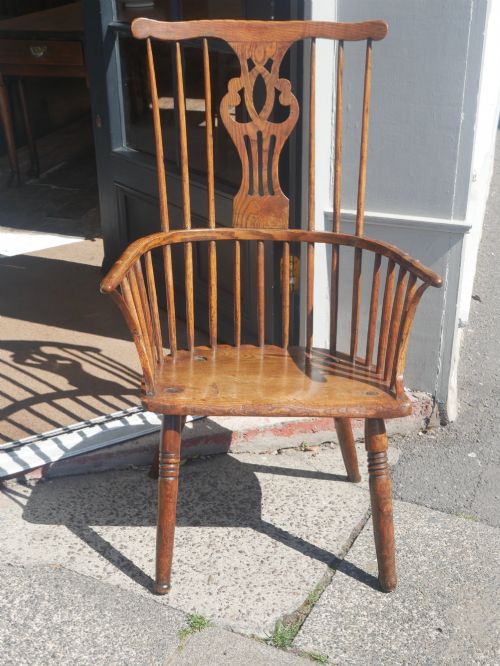
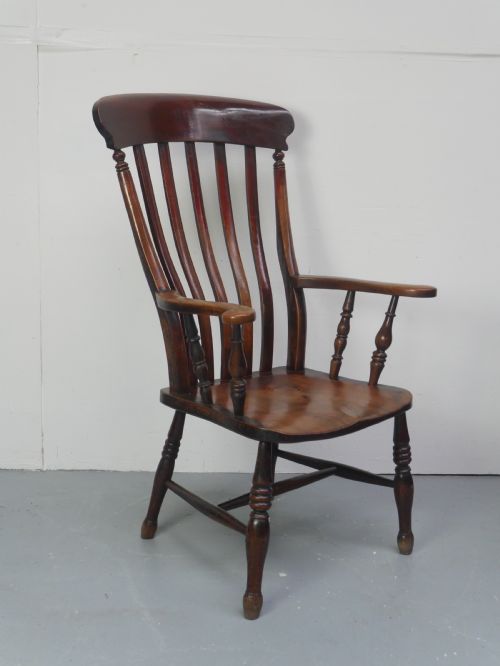
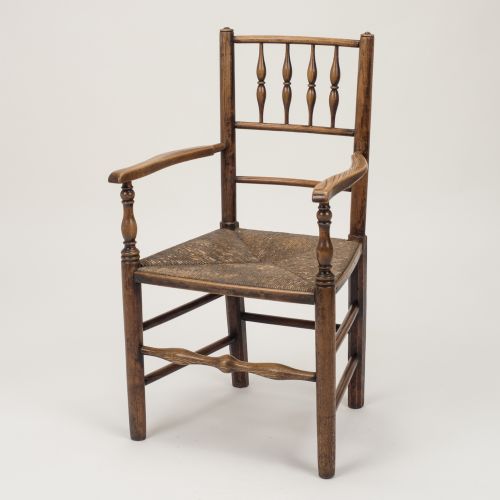
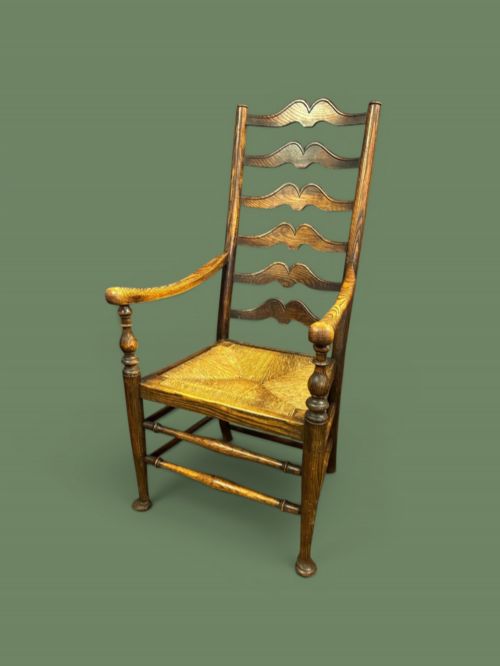
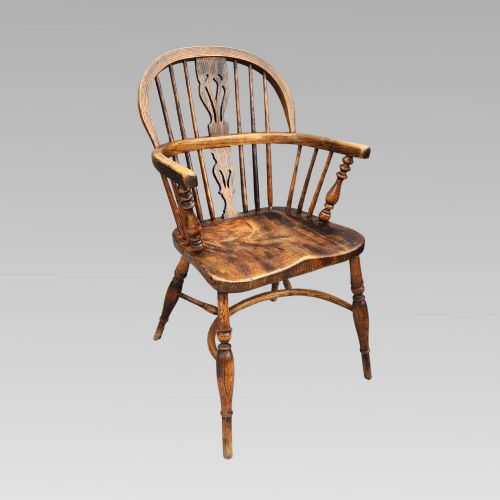
A georgian elm carver is a sturdy wooden armchair intended for domestic use in country houses, farmhouses and provincial homes. These seating pieces span the eighteenth century, the regency period and the nineteenth century, reflecting regional vernacular traditions across England.
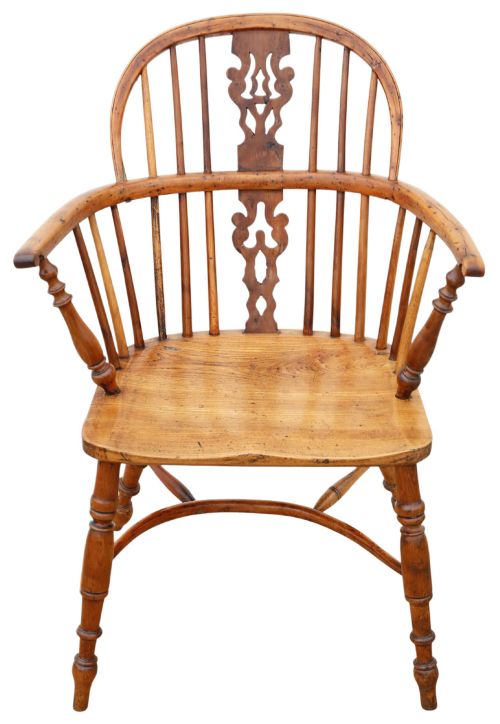
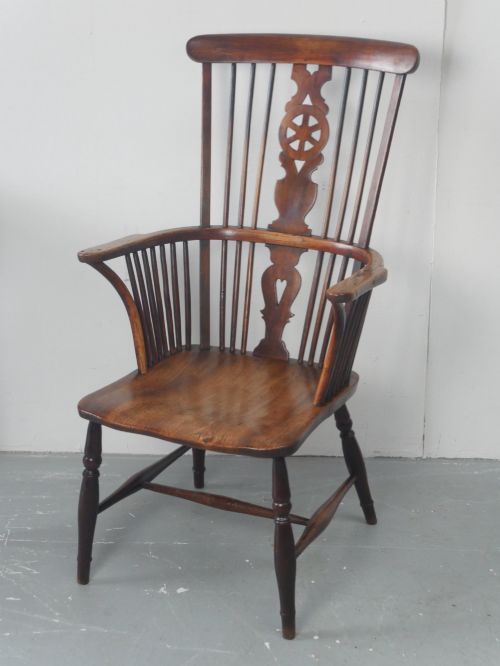
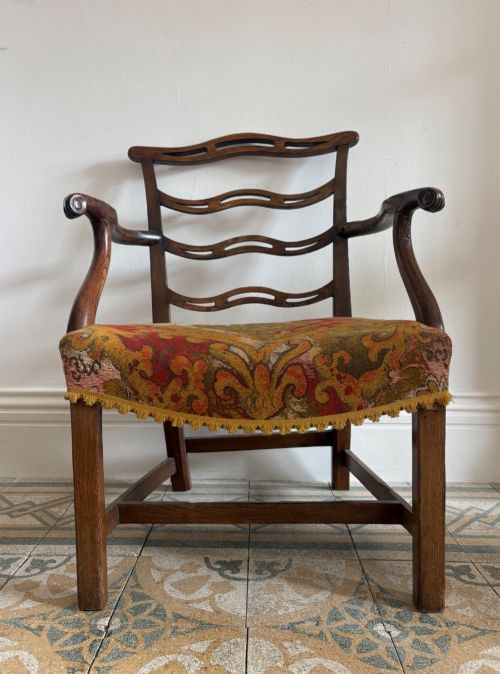
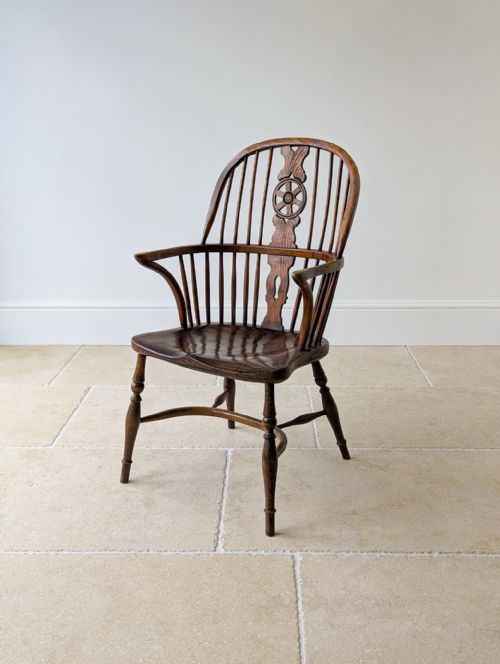
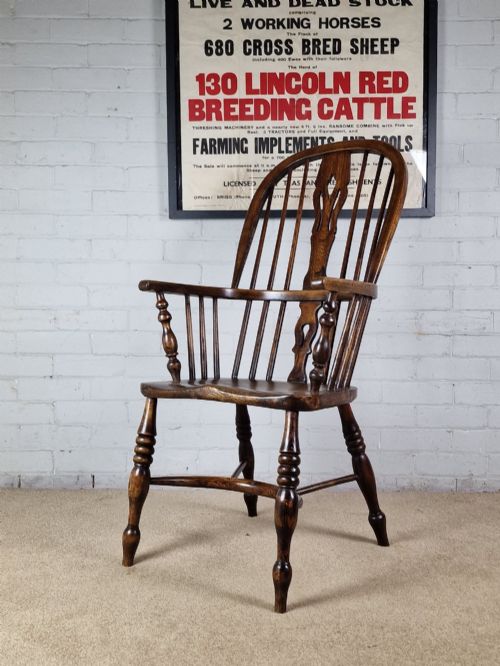
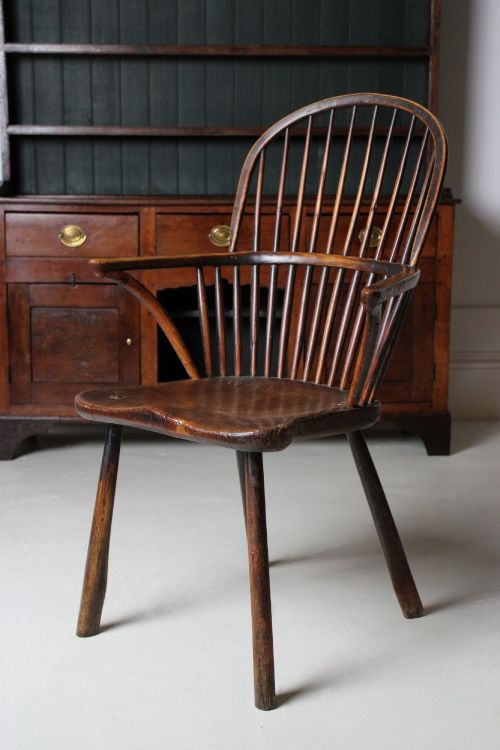
The most common forms on this page include windsor armchairs with distinct spindle or comb backs, wheelbacks, and ladderback or rush-seated country chairs. Makers built these carvers with arms for use at the head of a dining table or beside a fireplace.
How they were made
Craftsmen utilised tough native timbers, pairing elm seats with ash, yew, fruitwood or beech for the spindles, legs and bow frameworks. Elm provided a resilient, interlocking grain for solid seats that resisted splitting under heavy use.
Traditional greenwood working methods governed construction, involving steam-bending for the continuous arm bows and hoop backs. Joinery relied heavily on wedged tenons and turned components fitting tightly into bored seats.
Many country wheelbacks carry subtle pencil marks underneath the solid elm seat left by provincial joiners counting out their daily output.
What varies in quality
The balance of timber selection drives much of the distinction between pieces, particularly the presence of richly figured yew wood paired with deeply grained elm. Superior examples exhibit harmonious proportions in the turning of spindles and stretchers rather than clumsy or heavy-handed shaping.
Structural integrity and the retention of original surface patination separate standard regional pieces from exceptional survivals. Untouched aged timber surfaces show depth and warmth that over-restored or stripped chairs lack.
The Georgian Elm Carver Glossary
- Carver
- An armchair designed to match a set of dining chairs, usually placed at the head of a table. These pieces feature substantial armrests to support the sitter.
- Windsor chair
- A chair built with a solid wooden seat into which the legs and back spindles are directly inserted. The top rail is often steam-bent into a hoop or comb shape.
- Crinoline stretcher
- A curved lower stretcher connecting the legs of a Windsor chair in a continuous loop. This design adds significant rigidity to the underframe.
- Vernacular
- Objects made by local rural craftsmen following regional traditions rather than formal London pattern books. These pieces prioritise practical utility and local material availability.
- Rush seat
- A seating surface woven from dried marsh rushes twisted into cords. This traditional technique creates a resilient and flexible platform for everyday sitting.
Georgian Elm Carver: Frequently Asked Questions
Where should I place a carver?
A georgian elm carver works well at the head of a dining table or as a standalone reading chair in a living room. The sturdy arms make them comfortable for prolonged sitting.
Because these chairs have strong regional character, they suit traditional country interiors as well as modern spaces needing textural contrast.
How do I clean elm wood?
Dust the timber regularly with a soft, dry cloth to prevent dirt accumulation in the grain. Avoid modern chemical sprays or silicone polishes.
Feeding the dry wood occasionally with traditional beeswax preserves the historic surface patination and protects the fibres.
Are these chairs comfortable?
The saddle-shaped solid elm seats offer surprising ergonomic support moulded to the body through centuries of vernacular design evolution. High backs and supportive arms add to the comfort.
Adding a loose linen or wool squab cushion provides extra padding for extended dining or lounging.