
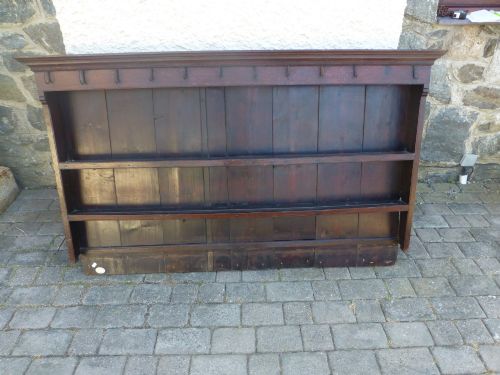
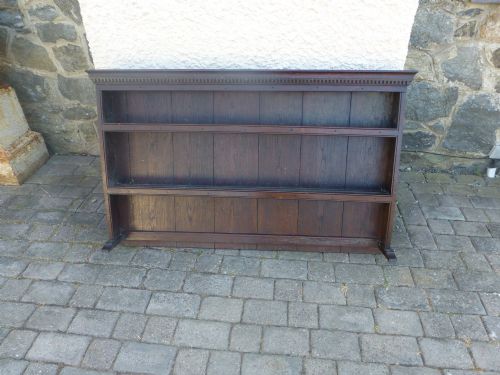
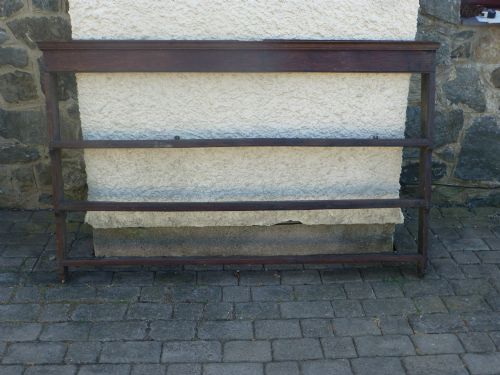
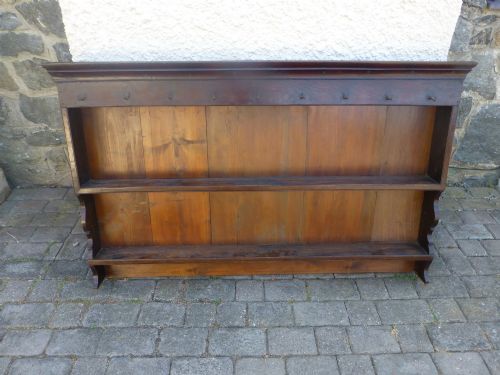
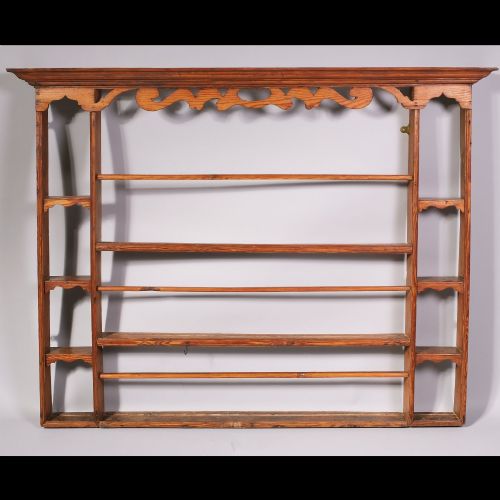
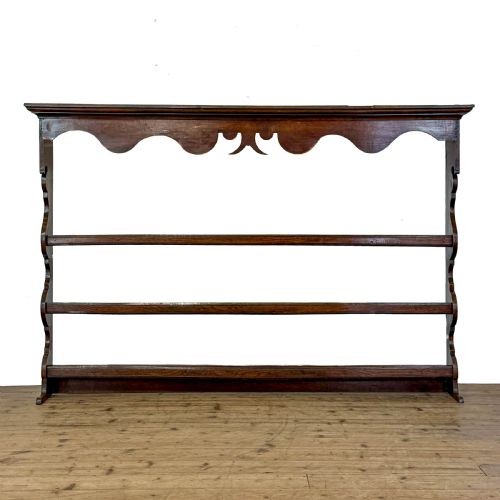


Georgian Delft Rack Dresser
A georgian delft rack dresser brings warmth and practical storage to a room, offering open shelves designed to display earthenware plates.
Georgian Delft Rack Dresser
A georgian delft rack dresser combines a base unit with upper shelving, built to hold ceramics securely in domestic kitchens and dining spaces. The pieces seen here span the eighteenth century and the Georgian period, alongside occasional later interpretations.
Most examples consist of robust oak or pine, taking the form of wall shelves, plate racks, and complete dressers with integrated hanging space. These items reflect traditional English country craftsmanship, designed for everyday utility and display.
What separates the better examples
Quality rests on the selection of timber and the proportion of the moulding and shelving. Pieces constructed with carefully chosen oak show deeper character in the grain and greater structural integrity over time.
The refinement of decorative elements, such as fretwork panels or architectural columns, distinguishes more ambitious provincial pieces from simpler utilitarian shelving units.
Listings feature oak and pine predominantly, spanning the eighteenth century and the Georgian period.
The Georgian Delft Rack Dresser Glossary
- Delft rack
- An open wooden shelving unit mounted to a wall or placed upon a dresser base, specifically constructed to display ceramic plates upright.
- Oak
- A hard, durable timber widely utilised in eighteenth-century furniture making for its strength and distinctive grain pattern.
- Pine
- A softer softwood commonly employed for secondary woods or entire regional furniture pieces during the Georgian era.
- Fretwork
- Openwork carving in wood, creating ornamental geometric or scrolling patterns along the edges of shelves or friezes.
Georgian Delft Rack Dresser: Frequently Asked Questions
What is a delft rack?
A delft rack is an open wooden shelving unit designed to display plates and ceramics upright against a wall. These racks often feature grooved shelves to prevent plates from slipping.
They were traditionally mounted above a matching dresser base or hung independently in kitchens and dining rooms for easy access to everyday tableware.
How were these racks used?
These racks served as both storage and display for ceramic plates, platters, and bowls in historical households. They kept frequently used earthenware visible and within arm's reach during food preparation.
Today, they function similarly in modern homes, offering a practical way to showcase collections of vintage ceramics or everyday kitchenware.
Are these pieces made of oak?
Many of the pieces seen here are constructed from solid oak, which provides exceptional strength and durability. Oak was the premier timber for English country furniture during the eighteenth century.
Pine is also frequently found, particularly in regional examples or internal components, offering a lighter alternative to denser hardwoods.
How do I date an 18th century rack?
Dating relies on observing construction methods, timber characteristics, and decorative details such as fretwork or column styles. Eighteenth-century pieces typically display hand-cut joinery and signs of age in the wood grain.
Comparing the proportions and hardware to documented examples from the Georgian period helps narrow down the decade of manufacture.