



Georgian Decanter Set
These georgian decanter set pieces bring period spirit to a dining room, offering matched glass and silver for serving spirits at table.
Georgian Decanter Set
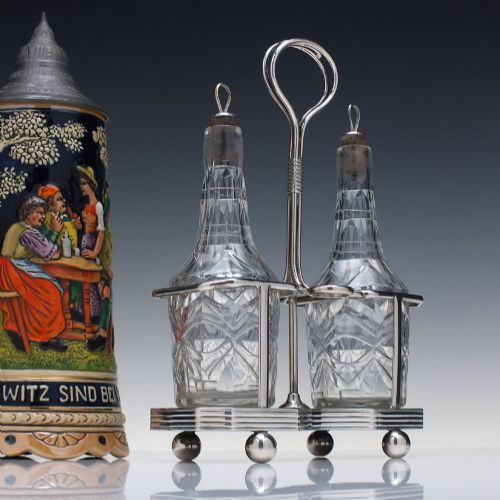
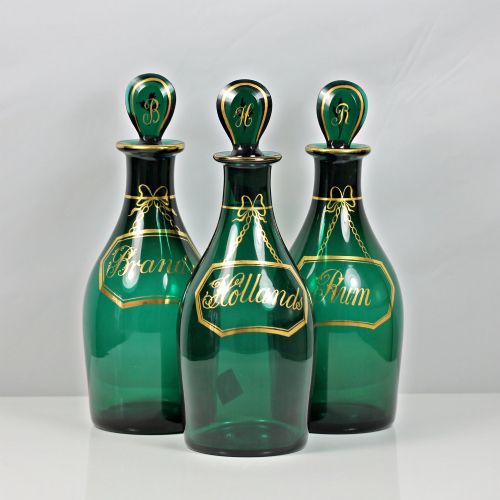
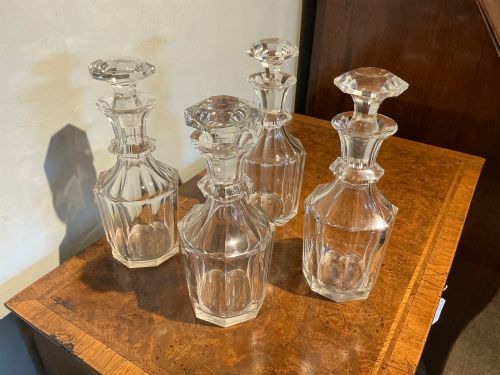
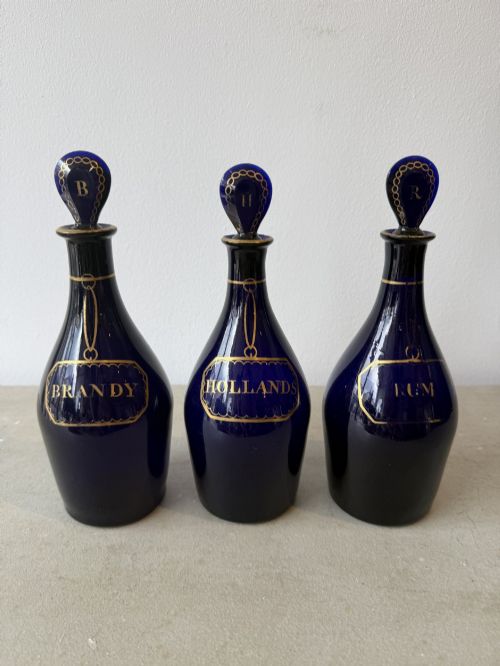
A georgian decanter set gathers glass decanters, cruet bottles or wine coasters together on stands or within fitted boxes, serving the dining ritual. The inventory reveals matching collections of Bristol Blue bottles, liqueur vessels and officers campaign sets.
Most examples date across the Georgian and Regency periods, alongside later nineteenth century interpretations like Edwardian crystal and Old Sheffield Plate stands. Buyers encounter fitted mahogany boxes, tantalus frames and silver cruet stands holding multiple glass bottles.
Companions to the glassware include sterling silver wine coasters and hallmarked decanter labels that identify port, sherry or brandy. These functional groupings form the core of what collectors find when searching for a georgian decanter set.
Materials and construction
Makers shaped heavy lead glass and crystal through cutting, blowing and gilding, creating deep prismatic facets on decanter bodies and cruet bottles. Bristol Blue glass provides a striking contrast to clear cut crystal in multi-bottle formations.
Cabinetmakers constructed fitted boxes and tantalus frames from solid mahogany, accommodating glass contours with precision joinery. Metalwork relies on sterling silver from makers such as Hester Bateman and Charles Thomas Fox, alongside Old Sheffield Plate and silver plate.
Stands and frames incorporate brass hardware, while labels feature engraved silver sheet hanging from chains. Gold leaf decoration appears on campaign sets, adding rich detail to transportable officer glassware.
Georgian Decanter Set Retail Price Guide 2026
Typical asking prices for georgian decanter set among the pieces listed under this phrase on Sellingantiques today, from the lower quarter to the upper quarter. They describe what is for sale here now, not the wider market.
Officers carried portable campaign sets featuring gold-decorated decanters, ensuring fine port remained accessible even in military tents.
Assessing quality
Quality rests upon the crispness of glass cutting, the depth of the metalwork engraving and the integrity of fitted wooden housings. Superior decanter sets display matching bottles with original stoppers, uniform colour saturation in coloured glass, and heavy lead weight.
In silver components, clear hallmarks from recognised silversmiths elevate a cruet stand or label set above unmarked wares. Fitted mahogany boxes demonstrate finer cabinetmaking through dovetailed joints, sound lock mechanisms and well-preserved interior linings.
Charles Thomas Fox·Hester Bateman
The Georgian Decanter Set Glossary
- Cruet set
- A matched group of glass bottles mounted on a metal or wooden frame for holding condiments, oil, vinegar or sauces at the table. These stands often feature central carry handles and silver frames.
- Tantalus
- A locked wooden cabinet or frame holding decanters securely so the contents remain visible yet inaccessible without a key. Irish examples in mahogany are particularly robust.
- Wine coaster
- A small shallow tray on a turned wooden base with a metal gallery, designed to protect dining tables from bottle rings. They often appear in sets of matching silver or Old Sheffield Plate.
- Decanter label
- A small metal tag hung by a chain around the neck of a decanter to identify the spirit inside. Georgian examples feature hand engraving and sterling silver construction.
- Old Sheffield Plate
- A composite material made by fusing a thin sheet of silver to a thicker copper base. It was widely used for cruet stands and wine coasters before electroplating was invented.
Georgian Decanter Set: Frequently Asked Questions
How were decanter sets used?
These sets sat upon sideboards or dining tables during the eighteenth and nineteenth centuries to serve wine, spirits and condiments after meals. Servants or hosts used them to pour drinks directly for guests.
Fitted boxes and campaign sets allowed owners to transport their glassware securely while travelling or on military campaigns without breakage.
How do I date a set?
Dating relies on hallmarks upon silver stands and labels, glass manufacturing techniques, and the cabinetmaking style of wooden boxes. Georgian pieces show distinct hand-cut facets and specific silversmith stamps.
Later nineteenth-century sets often incorporate machine-rolled plate or Edwardian crystal characteristics that differ markedly from eighteenth-century work.
What is Old Sheffield Plate?
Old Sheffield Plate is an early fusing technique where a sheet of silver is melted onto a copper core before rolling into sheets. This method predates modern electroplating.
Items made this way, such as cruet stands and coasters, show a characteristic copper seam along cut edges where the base metal reveals itself.
Are original stoppers important?
Original matching stoppers greatly contribute to the integrity of any decanter set. Blowners and cutters shaped stoppers specifically to fit individual bottle necks during manufacture.
Finding a set where every bottle retains its correct, period-matching stopper is a significant indicator of completeness.