

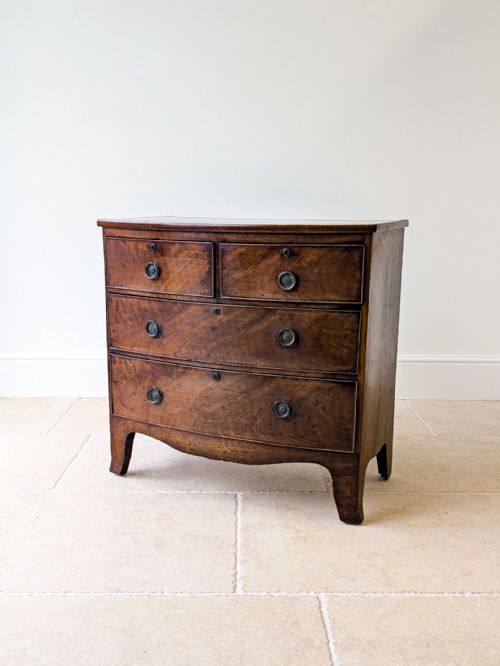
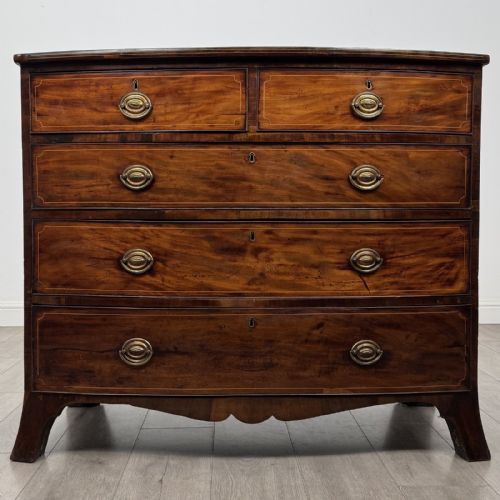
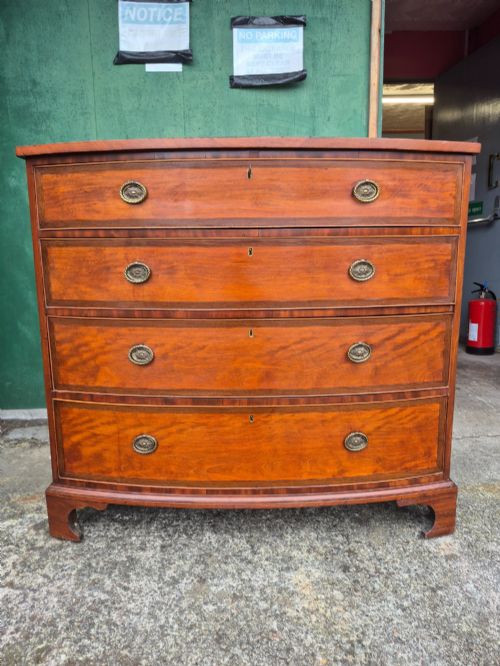
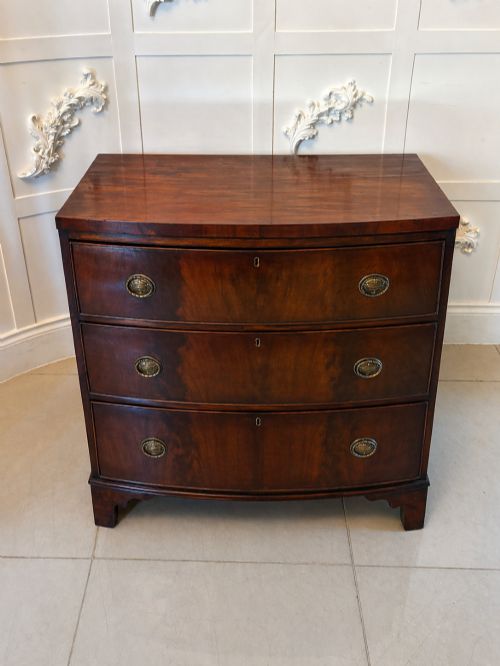
Georgian Curved Chest Drawers
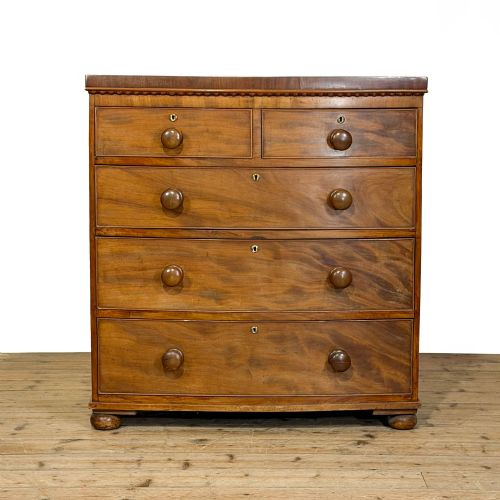
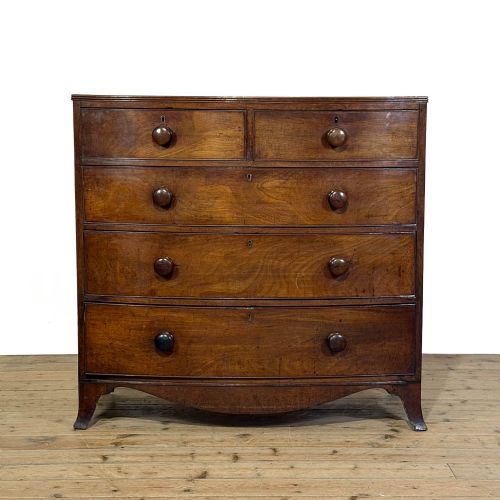
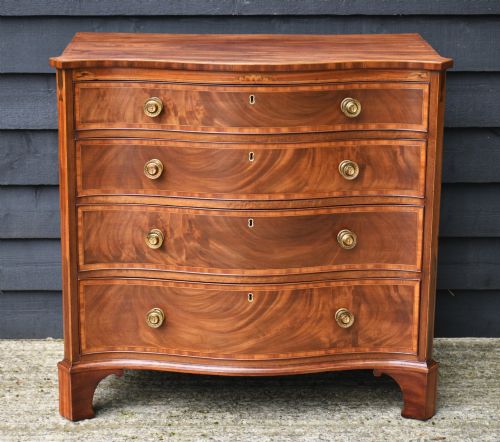
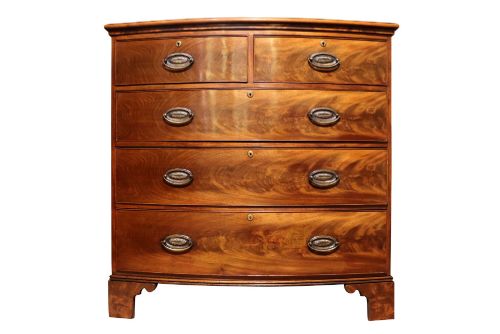
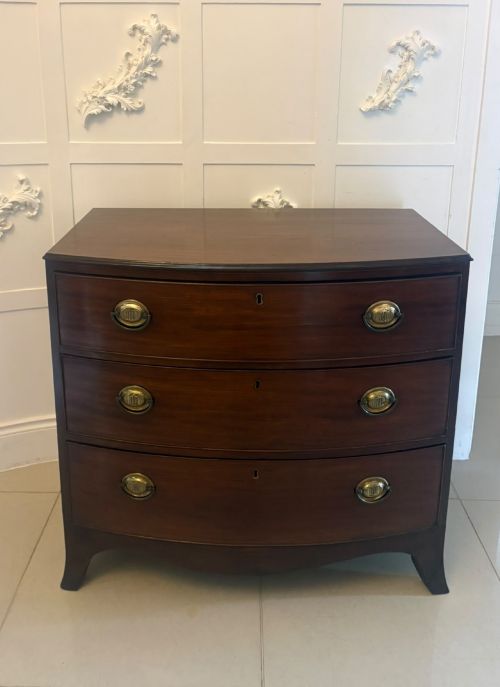
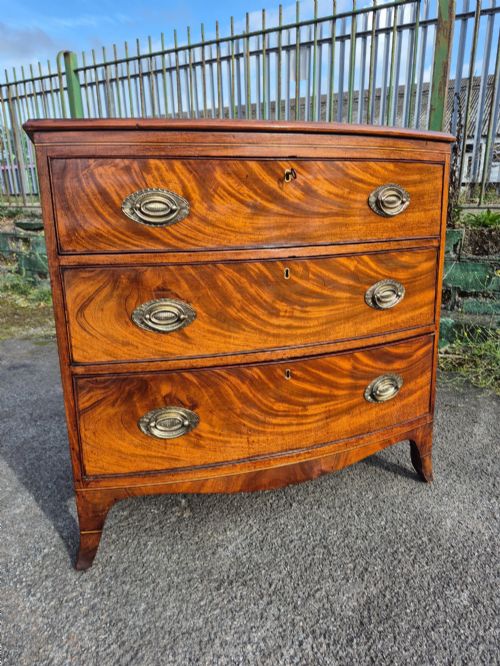
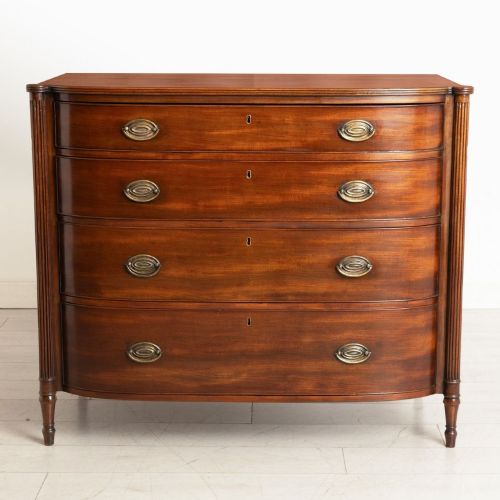
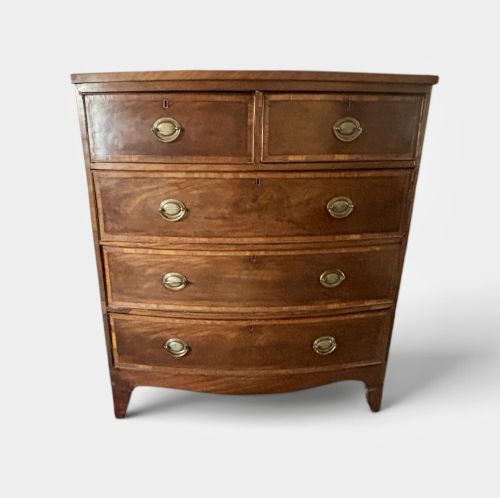
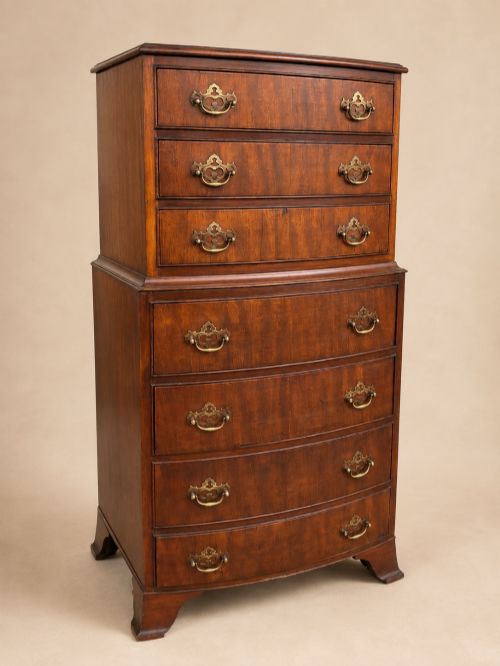
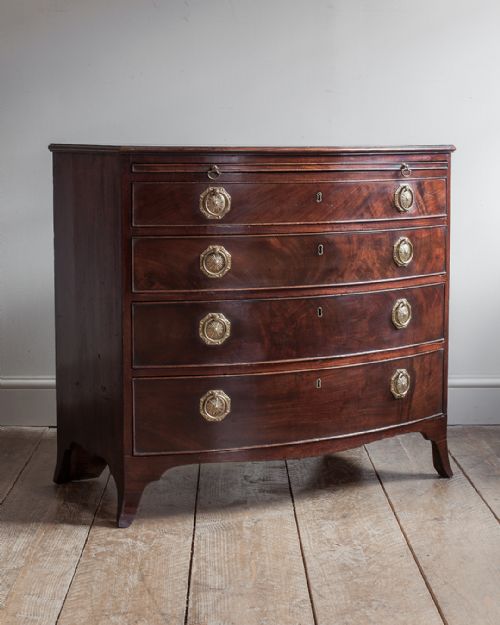
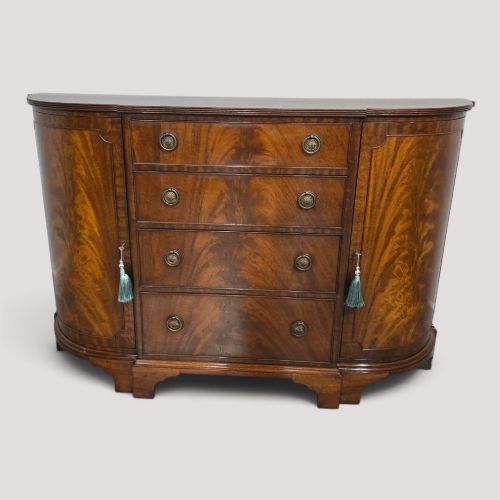
When you want a georgian curved chest drawers, you are looking at graceful room storage built with a bowed or swelling front that softens a bedroom or hallway.
Georgian Curved Chest Drawers
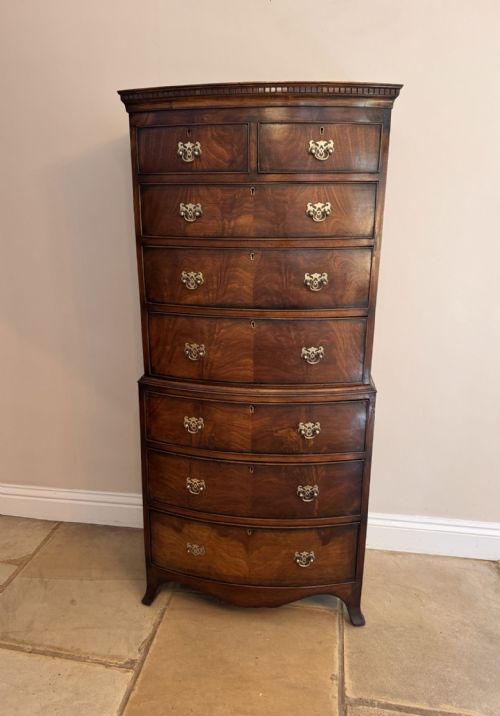
A georgian curved chest drawers typically presents a bow front or swelling profile, built during periods spanning the eighteenth and nineteenth centuries as well as later revivals. These pieces function primarily as bedroom storage while offering a distinct architectural silhouette that defines the room they inhabit.
Originating predominantly from English and Welsh workshops, these chests range from compact proportions designed for smaller rooms to large statement items. The curving lines require precise carpentry to ensure the drawers operate smoothly within a rounded framework.
Materials and Construction Techniques
Cabinetmakers constructed these chests using solid timbers like mahogany, oak, and walnut, frequently applying fine veneers such as flame mahogany or burr walnut across the curved drawer fronts. Boxwood and satinwood banding often provides contrasting borders that highlight the sweeping contours of the piece.
Brass handles and escutcheons punctuate the timber facades, while secondary woods form the internal drawer linings and carcass backs. The curved facade demands specialised joinery, utilising steam or shaped solid wood blocks to achieve the consistent bow without compromising structural integrity.
Georgian Curved Chest Drawers Retail Price Guide 2026
Typical asking prices for georgian curved chest drawers among the pieces listed under this phrase on Sellingantiques today, from the lower quarter to the upper quarter. They describe what is for sale here now, not the wider market.
Certain Welsh examples hide secret drawers within their frames, offering a tiny, unexpected compartment for your most private treasures.
Distinctions in Execution and Materials
The quality of a georgian curved chest drawers rests on the selection of timber veneers and the precision of the curved drawer joinery. Finer examples display carefully matched flame mahogany or intricate satinwood banding that flows seamlessly across the front facade.
Secondary elements such as original brass hardware, well-fitted internal drawers, and smooth running mechanics distinguish superior cabinetmaking from later or more utilitarian production. The crispness of the edge mouldings and the tightness of the dovetail joints further separate exceptional pieces from standard items.
The Georgian Curved Chest Drawers Glossary
- Bow front
- A convex curved cabinet front that swells outward from the corners. This shape became especially popular during the Regency and Georgian periods for chests of drawers and sideboards.
- Flame mahogany
- A veneer cut from the fork of the mahogany tree where the branch meets the trunk. It creates a distinctive, flickering flame pattern highly prized by cabinetmakers.
- Chest on chest
- A tall storage unit comprising one chest stacked directly upon a slightly larger bottom chest. Also known as a tallboy, this form maximises vertical storage space.
- Crossbanding
- A narrow strip of veneer laid around the border of a drawer front or tabletop with the grain running perpendicular to the surrounding wood. It frames the central panel.
- Secret drawer
- A concealed compartment built into the carcass or frieze of a piece, often accessed by removing a standard drawer or sliding a hidden panel.
Georgian Curved Chest Drawers: Frequently Asked Questions
Where should I place a curved chest?
These chests suit bedrooms, hallways, or living rooms where their softened lines break the monotony of straight walls. Their curved profiles also help prevent bumped hips in narrower walkways.
Ensure you measure the depth at the centre point of the bow rather than just the sides, as the protruding curve requires slightly more floor clearance than a flat-fronted chest.
How do I care for mahogany surfaces?
Keep wooden chests away from direct sunlight and heat sources to prevent the veneers from drying out or lifting. Dust regularly with a soft, dry cloth and apply natural beeswax sparingly when the timber appears dry.
Avoid silicone-based sprays, as they build up over time and dull the natural lustre of the aged polish.
Are curved drawers harder to use?
Well-constructed curved drawers operate smoothly on traditional wooden runners, provided the humidity in your home remains relatively stable. Wood swells slightly in damp conditions, which can temporarily affect the fit.
If a drawer sticks, check that the chest rests level on the floor, as uneven surfaces easily distort the alignment of antique frames.
How can I tell the period?
Examine the construction methods inside the drawers, including the hand-cut dovetails and the choice of secondary timbers like oak or pine. Georgian and Regency pieces generally display irregular hand-cut joints rather than uniform machine production.
Compare the timber grain, hardware style, and overall proportions against known period examples to confirm the age.