

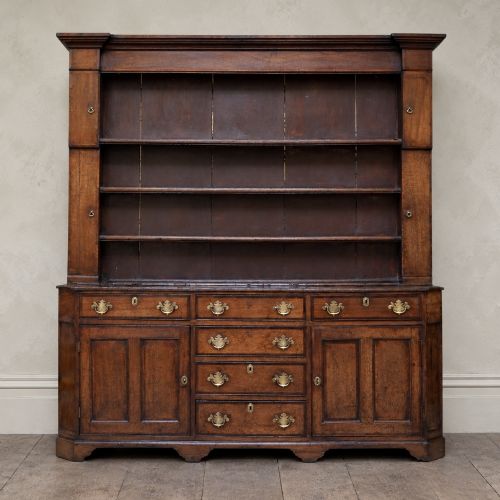
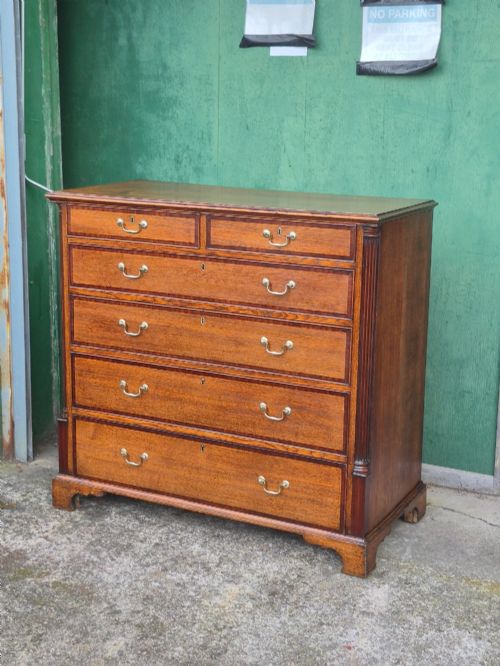
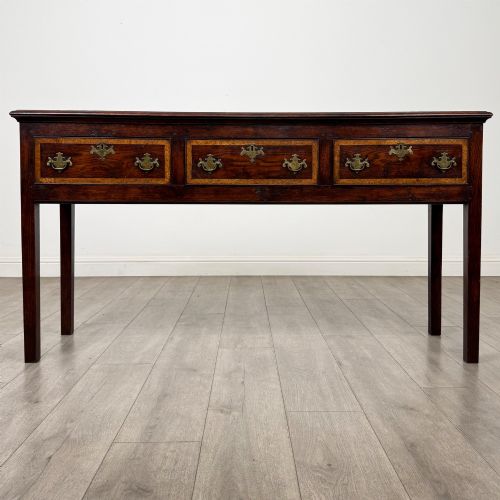
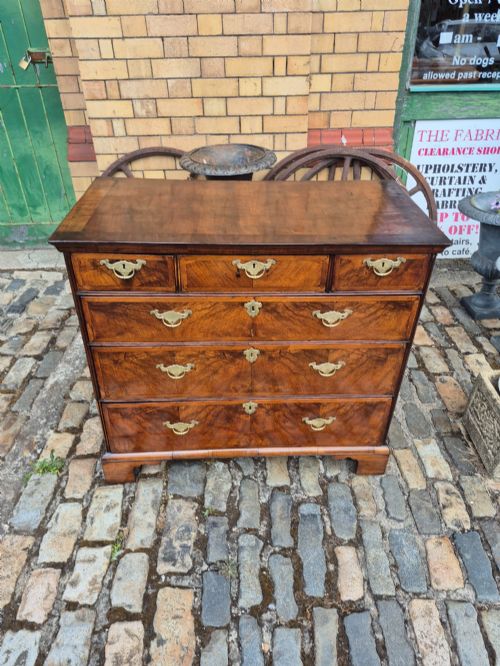
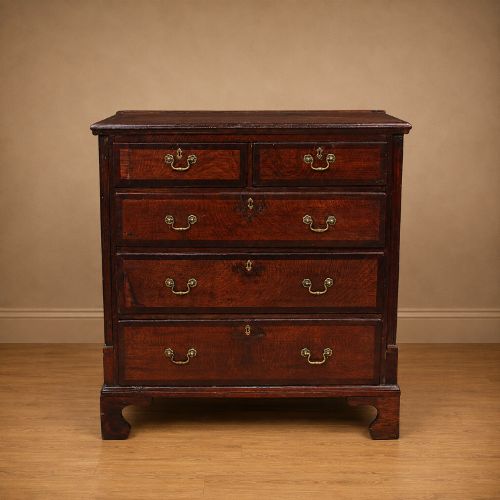
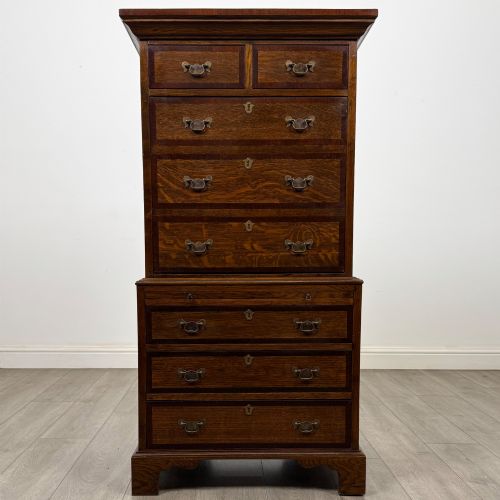
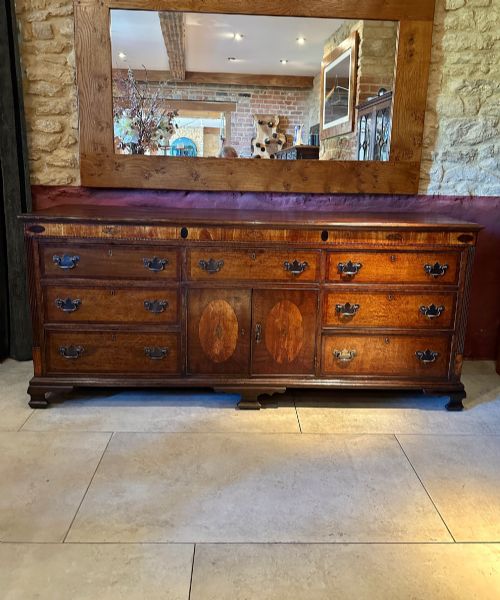
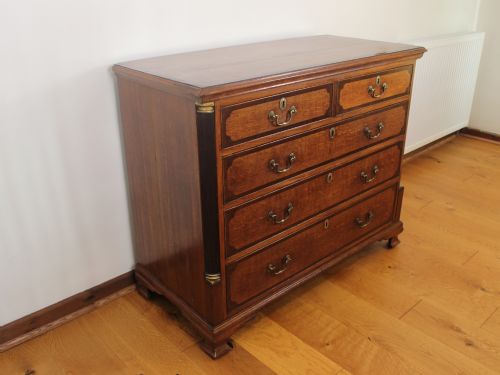


Georgian Crossbanded Oak Dresser
A georgian crossbanded oak dresser offers robust provincial utility paired with the refined contrast of contrasting timber borders.
Georgian Crossbanded Oak Dresser
When you search for a georgian crossbanded oak dresser, you encounter heavy timber furniture built primarily during the eighteenth and early nineteenth centuries. These pieces combine utilitarian local craftsmanship with decorative framing.
The versions most commonly met on this page are low dresser bases and chest of drawers formats featuring contrasting borders. They originate from English country workshops and period houses.
The form serves as a functional sideboard or storage unit, utilising the natural grain of oak alongside darker framing woods. Collectors find them practical for modern interiors while retaining historic character.
How they were made
Construction relies upon solid oak timbers joined for structural durability, often paired with fruitwood inlay or mahogany borders. Cabinetmakers applied thin strips of contrasting wood around drawer perimeters to frame the primary grain.
Brass hardware such as handles and escutcheons were fitted to drawers, while traditional joinery methods secured the framework. Surfaces were finished to highlight the natural figuring of the wood.
Georgian Crossbanded Oak Dresser Retail Price Guide 2026
Typical asking prices for georgian crossbanded oak dresser among the pieces listed under this phrase on Sellingantiques today, from the lower quarter to the upper quarter. They describe what is for sale here now, not the wider market.
Some provincial drawers still retain the original timber shrinkage gaps that prove hand-planed boards were seasoned by nature.
What varies in quality
Quality rests upon the crispness of the crossbanding and the preservation of the original timber surfaces. Pieces with well-matched grain and minimal timber replacement stand at the upper end of the range.
Proportion and the subtlety of the fruitwood inlay also separate standard provincial examples from finer cabinet work. The integrity of the structure and the depth of patina dictate overall desirability.
The Georgian Crossbanded Oak Dresser Glossary
- Crossbanding
- A border technique where thin strips of veneer are laid perpendicular to the surrounding grain. This frames drawer fronts and top surfaces with a contrasting visual band.
- Dresser base
- The lower cabinet portion of a traditional kitchen or dining dresser, typically fitted with drawers and cupboards. It functions independently as a sideboard.
- Lancashire dresser
- A regional variant of the traditional storage unit originating from northern England. These pieces often feature deep proportions and substantial bankings of drawers.
- Fruitwood inlay
- Decorative elements set into the primary oak surface using lighter or darker orchard woods. It provides subtle tonal variation without heavy reliance on exotic veneers.
Georgian Crossbanded Oak Dresser: Frequently Asked Questions
What is a crossbanded border?
A crossbanded border involves laying strips of wood veneer so the grain runs across the width of the frame rather than along its length. This creates a contrasting visual border around drawer fronts.
Cabinetmakers utilised this technique to add refinement to provincial furniture constructed primarily from domestic timbers like oak.
How do I date an oak dresser?
Dating relies upon construction methods, timber choice, and hardware styles found across the piece. Eighteenth-century examples typically feature hand-cut joints and distinct board widths.
Later pieces from the Edwardian or 1930 periods often emulate earlier Georgian styles while utilising machine-cut elements and different internal woods.
Where were these dressers used?
These pieces originally served utilitarian storage roles within the domestic spaces of country houses and farmhouses. They held household provisions, textiles, and dining equipment.
Today, their robust construction allows them to function as sideboards or serving surfaces in dining rooms and living spaces.
Are all oak dressers Georgian?
Not all oak dressers date from the Georgian era, despite many sharing similar stylistic traits. The listings include pieces spanning the eighteenth century through to later revival periods.
Stylistic markers help distinguish authentic period furniture from twentieth-century interpretations built in the traditional manner.